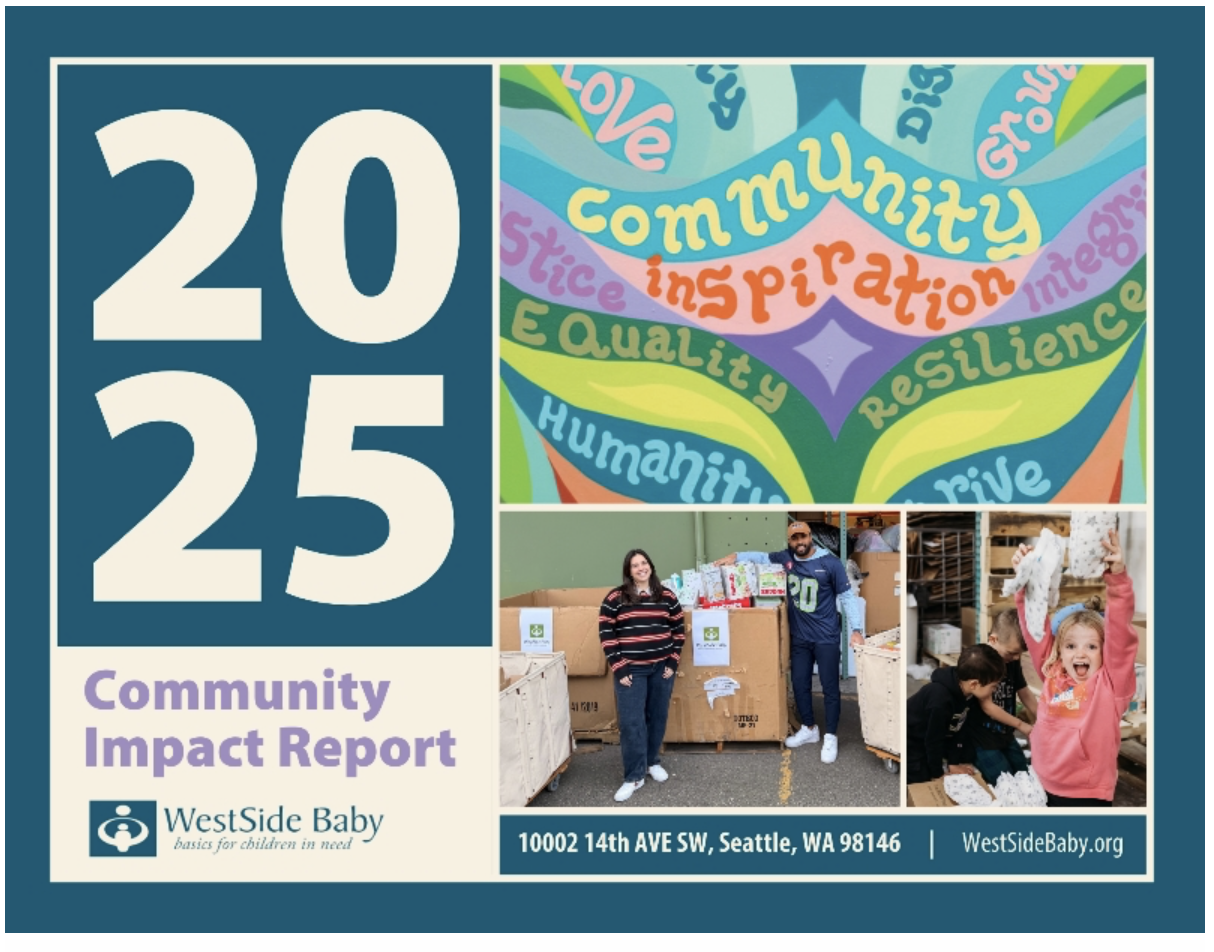
As WestSide Baby celebrates its 25th year of service, the organization has released its 2025 Community Impact Report, revealing a massive effort that distributed $2.62 million worth of essential items to children across the Puget Sound region. Despite a challenging economic landscape characterized by declining pandemic-era funding and government support, the nonprofit successfully provided diapers, clothing, and safety equipment to 28,687 children.
Last year was described as an "inflection point" for the Seattle-based organization. To ensure long-term sustainability, leadership undertook "thoughtful rightsizing," which resulted in a 14% increase in revenue and a 10% decrease in expenses. By the end of 2025, WestSide Baby achieved a balanced budget and secured six months of operating reserves, positioning itself to navigate future funding uncertainties.
A cornerstone of the organization’s success remains its bulk diaper partner program, which fully reopened in the fall of 2025. For the fifth consecutive year, the nonprofit distributed more than 2 million diapers (specifically 2,083,405) to families in need. Other significant distributions included:
• 30,047 hygiene products
• 8,208 bags of clothing
• 2,727 car seats
• 1,456 coats and 175 pairs of boots
The report highlights a deep commitment to equity, noting that structural inequities cause basic needs gaps to disproportionately affect communities of color. Demographically, the families served in 2025 were diverse: 33.5% identified as Hispanic/Latina/o/x, 29.5% as Black/African American, and 18.8% as Asian. Furthermore, 38% of caregivers served were unemployed, and 17% were experiencing homelessness or living in transitional housing or shelters.
This work was powered by 993 volunteers who dedicated 10,779 hours to sorting clothes, bundling diapers, and filling 17,508 orders. Operating through a partnership model, WestSide Baby works with more than 100 social service agencies and over 400 agency workers to deliver items free of charge.
The real-world impact of these partnerships was illustrated by a story from the Highline School District Early Learning Program. A provider described helping a family with a three-month-old and two young children who were living without electricity during a February snowstorm. Through WestSide Baby, the provider secured coats and blankets for the family that same day. "I felt better about the family being able to weather the cold," the provider noted, "I could not have done this without WSB".
As WestSide Baby looks toward the next quarter-century, Executive Director Allie Lindsay Johnson and Board Chair Nicole DeCario expressed optimism, stating that the community's "extraordinary generosity" has ensured that local children have what they need not just to get by, but to thrive