
Seattle City Council fails to override Mayor's veto on RV parking permit bill after heated debate
Seattle City Council fails to override Mayor's veto on RV parking permit bill after heated debate
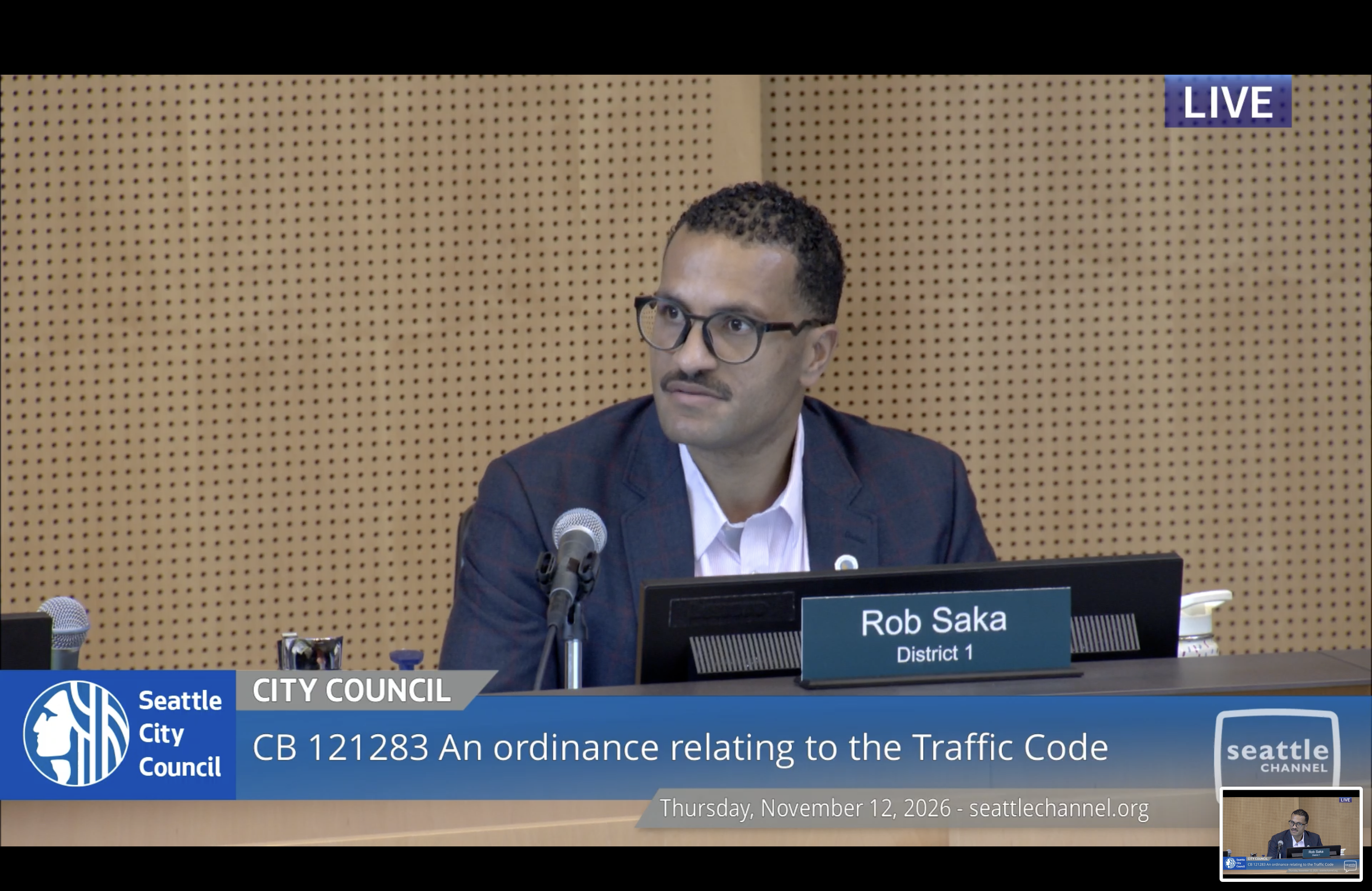
District 1 Seattle City Councilmember Rob Saka was the vote that sustained Mayor Katie Wilson's partial veto on RV legislation in a sometimes heated debate on November 12.
Thu, 11/12/2026
A high-stakes effort to enact new parking and permitting rules for recreational vehicles in Seattle collapsed on November 12, 2026, when the Seattle City Council failed to secure the necessary two-thirds majority to override Mayor Wilson's veto. The final reconsideration vote on Council Bill 121283 ended 5–4 in favor of the override, falling short of the six votes required under the city charter, meaning the mayor's veto was officially sustained.
The vote capped months of intense public debate and exposed deep personal and political fractures within the council, culminating in an explosive exchange on the dais just moments before roll call.
A Contested Legislation
Council Bill 121283, sponsored by Councilmember Dan Strauss as part of a broader six-bill legislative package, sought to limit RV parking on city streets to two hours at a time while creating a permit system allowing vehicle residents to stay in place while connecting to services. The council initially passed the bill on October 20 by a 6–3 vote, but Mayor Wilson vetoed it on November 2, citing concerns over administrative complexity, long-term storage costs, and a proposed one-time census requirement.
Supporters framed the measure as a balanced, humane approach to regulating street parking while providing structured pathways to housing. Opponents and homelessness advocates argued the permitting criteria effectively created a ban that would criminalize unhoused residents.
Public Comment Exposes Community Divide
Over 30 community members testified during public comment, highlighting sharp divisions across the city.
Business representatives urged the council to override the mayor. Eugene Wasman of the North Seattle Industrial Association called the bill "a humane way to end drug dealing in our area". Mike Stewart, executive director of the Ballard Alliance, urged councilmembers to reaffirm their previous vote, calling the legislation a "comprehensive solution that needs to be implemented".
However, housing advocates and unhoused residents strongly urged the council to sustain the veto. Allison Eisinger of the Seattle King County Coalition on Homelessness warned that the rules constituted a "draconian ban" on hundreds of vehicle residents. Jeff Paul of House Our Neighbors called the proposed restrictions "super harmful and probably illegal".
Brandon Craig, a Nickelsville participant, characterized the measure as an "RV ban. Period," calling the process "sneaky, dishonest, [and] inhumane". Public commenter Casey Ross added, "This is a collective punishment for an individual crime. We should be going after the violent actors and leaving everyone else alone".
Councilmembers Clash Over Vision and Strategy
Inside chambers, councilmembers debated whether the bill represented compassionate progress or an unrealistic policy.
Bill sponsor Dan Strauss defended his work, emphasizing that "a permit is literally allowing people to stay in place" and warning colleagues that sustaining the veto amounted to "voting for the status quo". Councilmember Debora Juarez backed the override, arguing that urgent action was needed because "a parking spot is not a home". Councilmember Bob Kettle also supported the override, stressing public safety and neighborhood impacts: "We must also lead with wisdom knowing that on one hand we have neighbors in crisis but also neighborhoods in crisis". Councilmember Maritza Rivera noted that "both are true," acknowledging both the plight of unhoused families and neighborhood safety concerns tied to illicit activity in some RVs.
Conversely, councilmembers who supported the veto pointed to policy flaws and alternative executive actions. Councilmember Sara Foster highlighted concerns over the bill's design, arguing that a "one-time census and a permit that corresponds with that one-time census is not an effective way to address what is an ongoing challenge". Councilmember Mark Lynn defended members shifting their positions, stating, "it's okay that we change our minds from time to time".
Council President Joy Hollingsworth voted to override but stressed that structural execution matters most: "at the end of the day, the people experiencing homelessness are the ones paying the price when we, the government, do not deliver".
Tensions Boil Over: Strauss vs. Saka
The philosophical disagreement turned personal during closing remarks when Strauss accused supporters of sustaining the veto of engaging in reasoning he called "duplicitous," arguing that work group objectives could be met without killing the bill.
The remark prompted Councilmember Lynn to raise a point of order regarding rules against imputing motives. Councilmember Rob Saka, who had voted for the original bill in October but decided to sustain the mayor's veto after evaluating her executive order, directly confronted Strauss on the dais.
"Seattle passive aggressive subtle slights... Councilmember Strauss, if you have a problem with me, I promise you I'm not the one. You can take it up with me directly; our offices are right next to each other," Saka declared. "Do not under any circumstance impugn my motives, my character, or my integrity. I don't do that to anyone else. Do not do it to me".
Strauss responded that his comments were focused on procedural timelines rather than personal motives: "It is not intending to impugn motives. It is intended to speak to fact".
Council President Hollingsworth quickly intervened to diffuse the room before taking the final vote: "We couldn't get through the meeting without a clip on the internet, y'all... Everybody's cool".
Final Vote and Aftermath
When the clerk called the roll, five members voted yes to override (Strauss, Juarez, Kettle, Rivera, Hollingsworth) and four voted no to sustain (Foster, Lynn, Rink, Saka).
Because an override requires six affirmative votes, the legislation failed, sustaining Mayor Wilson's veto and leaving the city to pursue alternative executive strategies and upcoming budget adjustments.
