
City working to shape Ballard transit for next 20 years
City working to shape Ballard transit for next 20 years
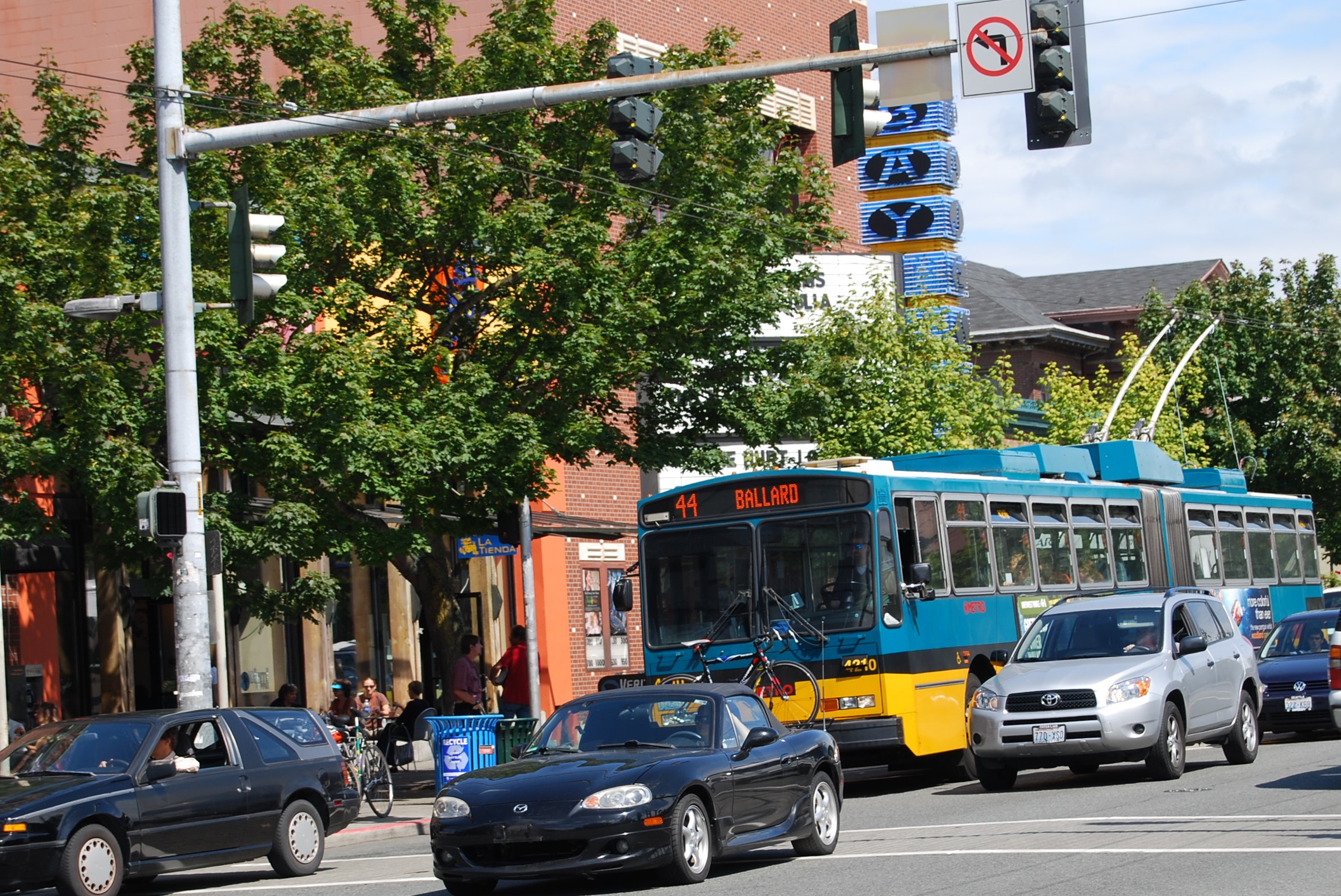
The Seattle Department of Transportation has begun work to shape the city's transit infrastructure for the next 20 years.
Michael Harthorne
Thu, 11/11/2010
In 2030, how will Ballardites be moving about the city? Will they be taking light rail to Downtown and West Seattle? Will they board a bus with its own lane to the University District? Will they hop on a high-speed streetcar to Fremont?
The Seattle Department of Transportation started work on its Transit Master Plan this September in order to answer those questions and to invest and plan accordingly.
The old Transit Master Plan from 2005 focused on connecting the city's urban villages via a network of high-frequency bus service, but a lot has happened to Seattle transit since then, including light rail, Tony Mazzella, project manager for the Transit Master Plan, said during the Nov. 10 Ballard District Council meeting.
Now, the Department of Transportation is trying to design a transit system that is the best and highest-performing it can envision given financial capacities during the next 20 years, Mazzella said.
According to the Transit Master Plan Project Summary, its goals are to:
- Make riding transit easier and more desirable in order to affect a mode shift.
- Use transit to create a more equitable transportation system for all.
- Use transit as a tool to meet Seattle's sustainability and growth management goals.
- Create great places at locations in neighborhoods where modes and corridors connect to facilitate seamless integration of the pedestrian, bicycle and transit networks.
Mazzella said the department is looking at what transit infrastructure exists today and what demand will be in the future. The department wants a world where transit is a competitive choice with other modes of transportation and where quality of experience isn't a consideration, only what is most efficient, he said.
"What could you do to make the system better?" he said. "What can you do to induce demand?"
Mazzella said the city has to find the best places to make transit investments, whether that is making street improvements to speed up buses, such as what is happening currently along Metro Route 44, or having the city assume a more prominent role as a transit provider, as it has done with the South Lake Union Streetcar.
Other possibilities mentioned include a rail system from Ballard to Downtown Seattle or buses with their own, grade-separated lanes.
"Frankly, all of those have a place," he said. "Whether they have a place for us over the next 20 years is the issue."
For example, Mayor Mike McGinn has stated his support for creating light rail lines that connect Ballard to Downtown/West Seattle and Ballard to the University District. But while everyone agrees those are high-demand corridors, there is little agreement light rail is the best option, Mazzella said.
The first phase of the Transit Master Plan, which began in September, will last until the end of January. At that time, the Seattle City Council will hold a number of hearings. After that, the Department of Transportation will proceed with phase two.
For more information on the Transit Master Plan, click here.
