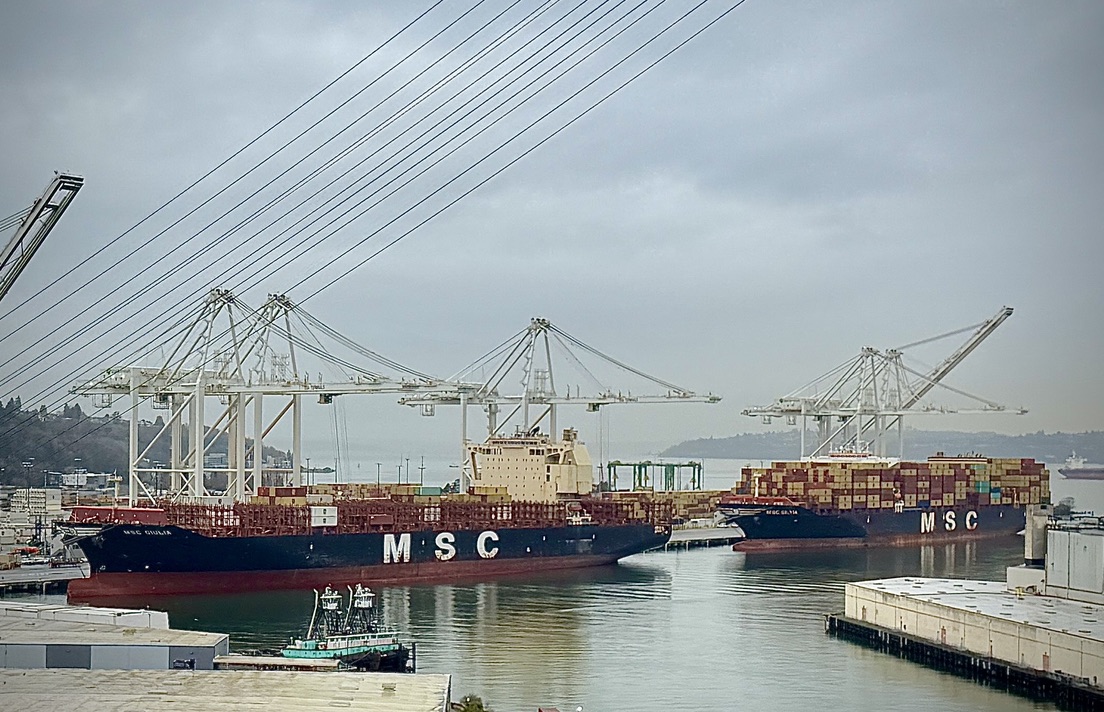
The Northwest Seaport Alliance forecasts a surge in container volume in local ports by 2030.
Photo by Patrick Robinson
According to the latest 5-year forecast from the Northwest Seaport Alliance (NWSA), total container volumes are projected to reach 3,634 thousand TEUs by the year 2030. This forecast indicates a steady upward trajectory for container traffic following a projected low of 2,974 thousand TEUs in 2024.
The sources reveal that this growth will be driven primarily by international container shipments, which are expected to rise from 2,237 thousand TEUs in 2024 to 2,854 thousand TEUs by 2030. Domestic container volumes are also slated for a modest increase, growing from 738 thousand TEUs to 780 thousand TEUs over the same period. After a projected 3.4% decline in 2025, the alliance anticipates consistent annual growth ranging from 1.1% to 2.7% through the end of the decade.
In contrast to the rising container numbers, the outlook for non-containerized cargo is more subdued. Total tonnage in this category is forecasted to decrease from 1,844 thousand metric tons in 2024 to 1,703 thousand metric tons by 2030. This decline is largely attributed to a drop in breakbulk cargo, which is expected to fall from 453 thousand tons to 279 thousand tons. Meanwhile, petroleum and logs are forecasted to remain at zero through 2030.
The logistics and transport sector will see a significant expansion in total intermodal lifts, which are projected to increase from 412,175 in 2024 to 474,322 by 2030. This growth includes activity across the Hyundai, North, South, and Pierce County Intermodal Yards. In a general economic context, rising container and intermodal volumes typically correlate with sustained or increased demand for longshore labor, terminal operators, truck drivers, and rail workers.
However, the vehicle units sector faces a downward trend according to the sources. Following a high of 338,917 units in 2024, the forecast predicted a sharp 17.4% decrease in 2025, with volumes eventually settling at 270,262 units by 2030. This suggests that segments of the local workforce dedicated to auto processing and non-containerized cargo may see a reduction in activity over the next five years.
Despite the decline in vehicle units, the overall year-over-year change for the alliance's cargo activity is expected to stabilize at a 2.0% growth rate starting in 2027.
The data suggests the local economy will likely see a continued shift toward containerized trade and rail-based logistics as the primary drivers of port-related economic health, while the importance of vehicle imports and breakbulk cargo is expected to diminish.