
Sound Transit Board grapples with $34 billion shortfall as public demands accountability on ST3 timelines
Sound Transit Board grapples with $34 billion shortfall as public demands accountability on ST3 timelines
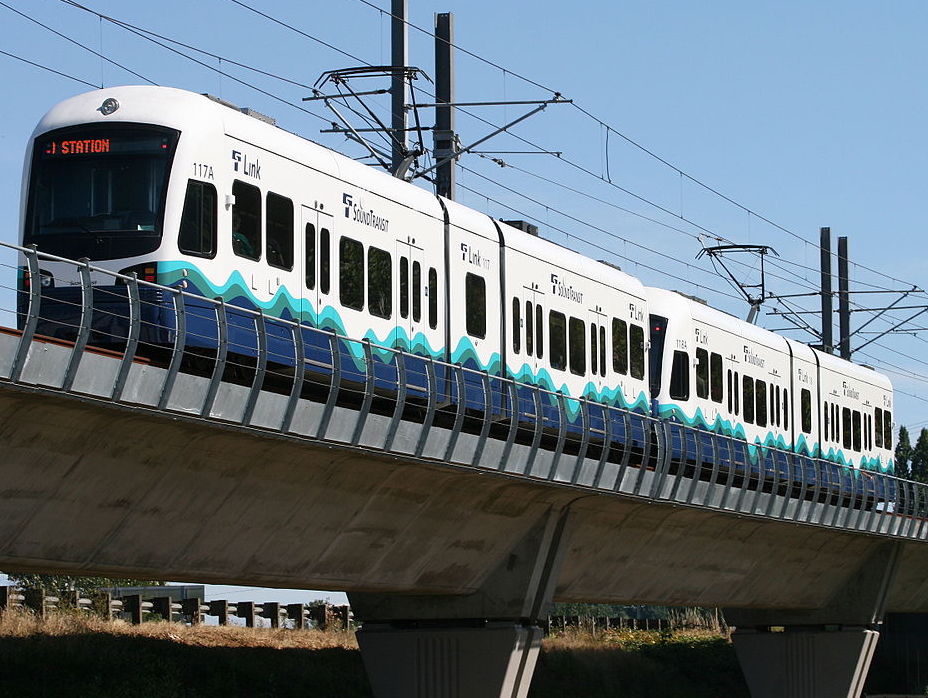
Photo courtesy of Sound Transit
Thu, 05/14/2026
The Sound Transit Executive Board convened a special meeting on May 14 to navigate an updated system plan proposal designed to address a staggering $34 billion program budget shortfall while attempting to maintain momentum on voter-approved transit projects. The meeting highlighted a deep rift between the agency's financial constraints and the public's expectation for the "world-class transit system" promised in the ST3 ballot measure.
Public Outcry Over "Indefinite Deferrals"
Public testimony was dominated by residents and officials from across the region who expressed frustration over project delays. Seattle City Councilmember Alexis Mercedes Rinck argued that "close enough is not good enough" for neighborhoods like Ballard and South Seattle, which are facing "indefinite deferrals" of promised light rail stations. "Voters paid higher sales taxes, higher property taxes, higher car tabs for a decade," Rinck noted, emphasizing that the Ballard Link is the highest ridership project in the ST3 program.
Councilmember Rhonda Lewis voiced disappointment over the continued deferral of infill stations at Graham Street and Boeing Access Road, criticizing the agency for not applying its racial equity toolkit to the new proposal. Meanwhile, the West Seattle Link extension saw a mix of support from residents eager for "shovels in the ground" and opposition from those calling the $5 billion project a "millstone" that should be reconsidered to save the broader system. Other regional concerns, including a proposed parking garage in Renton, were also raised as communities fought to avoid being pushed to "the back of the line".
Board Members Push for Refinement and Transparency
Board members engaged in a spirited debate over how to refine the plan before a final vote scheduled for May 28. Board Member Dan Strauss highlighted a significant "erosion of trust" in the Ballard community due to the lack of a firm completion date for their line. He challenged the agency's ridership data, questioning if it accounted for recent urban up-zones. "We need to be transparent about what is and is not achievable," Strauss stated, calling for construction dollars to be prioritized for Ballard and South Seattle infill stations.
Other board members focused on the necessity of moving forward immediately to resolve legal and financial hurdles. Board Member and King County Executive Girmay Zahilay and Mayor Katie Wilson clarified that adopting this affordable plan is a legal requirement to unlock funding for projects like West Seattle, which are nearing "shovel-ready" status. Board Member and Pierce County Executive Ryan Mello urged the board to "set the staff loose" to find further cost savings, noting that the proposal does not permanently cancel any projects but rather creates a path to advance them as new funding emerges.
Adopting an affordable system plan is a legal and policy requirement triggered by the current misalignment between the agency's projected revenues and expenditures.
What are the legal and financial reasons?
The primary legal and financial reasons for this action:
- Voter-Approved Plan Requirements: The voter-approved ST3 plan and its associated financial policies mandate that the board take action whenever a subarea—or in this current case, every subarea—sees projected expenditures exceed projected revenues by more than 5%.
- Legal Limits on Spending: Facing a program budget shortfall of this scale creates legal limits on how Sound Transit can commit and spend money. These restrictions are particularly stringent for higher-cost phases of a project, such as final design and right-of-way acquisition.
- Unlocking "Shovel-Ready" Projects: Projects that are ready to move into expensive phases, such as the West Seattle link extension, cannot legally "move at pace" until the board adopts a balanced and affordable plan. Resolving the affordability challenge is the necessary method to remove these legal obstacles and enable the agency to confidently move forward with delivery.
- Compliance with Financial Policies: The board must ensure that the system plan complies with the financial policies of the original voter-approved ST3 plan, specifically regarding subarea equity. Because every subarea is currently "out of balance," a system-wide update is required to bring the agency back into compliance with its governing financial framework.
Agency officials emphasized that adopting this affordable plan is a "starting point" that resolves these legal hurdles while allowing the board to continue identifying new funding or cost savings to eventually restore deferred projects.
What does the 10% debt capacity headroom mean for taxpayers?
Maintaining a 10% debt capacity headroom is a strategic financial buffer used by Sound Transit to manage risk and ensure the agency remains financially viable while delivering the ST3 program. For taxpayers, this policy has several significant implications regarding the protection of public funds and the timeline of transit projects:
1. A Safety Net Against "High Risk" Financial Status
State law limits Sound Transit's total outstanding debt to 1.5% of the assessed value (AV) of real property within the taxing district. The 10% headroom represents a "do not exceed" threshold, meaning the agency aims to keep at least 10% of its legal borrowing limit unused. Any dip below this 10% buffer is categorized as "high risk" (0–10% remaining headroom), which could jeopardize the agency's ability to respond to economic downturns or unforeseen cost increases.
2. Protecting Credit Ratings and Reducing Costs
Maintaining this headroom is critical for the agency's credit ratings. In 2024, the long-range financial plan hit a "pinch point" exactly at this 10% mark, which allowed credit agencies to reaffirm Sound Transit's high ratings. For taxpayers, strong credit ratings are vital because they allow the agency to borrow money at lower interest rates, ensuring that more tax revenue goes toward building infrastructure rather than servicing expensive debt.
3. Ensuring Long-Term Project Sustainability
The headroom policy ensures that the agency does not overextend itself to the point of insolvency. Agency leadership emphasized that this discipline is necessary to protect public investments with fiscal integrity. By staying within these limits, the agency can "confidently move forward" with high-cost phases of projects, such as final design and land acquisition, without facing legal spending halts.
4. Driving "Hard Choices" and Project Deferrals
While the headroom protects the agency's health, it also acts as a constraint that directly impacts project delivery. Because the current plan is so close to this "pinch point," the board must make difficult trade-offs, including the "indefinite deferral" of certain projects like the Ballard Link extension and infill stations. Taxpayers in areas with deferred projects may see their timelines pushed back specifically so the agency can maintain this 10% safety margin.
In summary, the 10% headroom is a financial guardrail designed to ensure that the "world-class transit system" promised to voters remains achievable and affordable over the next several decades, even if it requires near-term delays to stay within legal debt limits
The Path Forward: Amendments and "Hard Choices"
The Board is currently reviewing nearly two dozen initial amendments aimed at adjusting project priorities and finding new revenue streams. Board Member and Mayor of Tukwila, Thomas McLeod indicated he is working on proposals to increase accountability for cost savings and to accelerate the construction of the Graham Street and Boeing Access Road stations.
Chair David Summers emphasized that while the plan requires "difficult balance" and "hard choices," it remains a starting point. "Adopting this plan is our starting point. I see the deep commitment across this board to keep pushing forward until the full ST3 program is realized," Summers said. Staff must receive all final amendments by May 20 to allow for legal and financial vetting before the full board takes action at the end of the month.
What is the status of the West Seattle Extension?
The West Seattle Link extension is currently fully funded for construction under the proposed ST3 system plan update. While often described as "shovel-ready," officials clarified that this is a technical term meaning the project is prepared to move into the final design and right-of-way acquisition phases; heavy construction is not actually slated to begin until 2028.
Key details regarding its current status include:
- Cost Savings and Redesign: The project has undergone a redesign that yielded over $2.5 billion in savings and reduced impacts on the surrounding community,. This redesign involved significant trade-offs, most notably the permanent removal of the Avalon station to reduce costs.
- Legal Dependency on Board Action: The project is currently facing legal limits on spending for its next expensive phases (final design and land acquisition) because the agency's overall system plan is currently out of financial balance,. Adopting the proposed "affordable" system plan is a necessary legal step to resolve these limits and allow the West Seattle project to move forward "at pace".
- Imminent Next Steps: Should the board approve the updated system plan at its May 28 meeting, staff expect a "flurry of activities" to transition the project immediately into final design and right-of-way.
- Public Sentiment: During the meeting, residents expressed a mix of views. Some urged the board to "start putting shovels in the ground" without further delay to improve regional connectivity,. Conversely, some critics argued the $5 billion "stub" should be deferred or reconsidered to save money for other parts of the system.
Board members emphasized that while they are moving forward with West Seattle, the actual decision to start construction will still require a future board vote and is not finalized by the current strategic plan update.
What cost savings were achieved regarding the West Seattle Link?
The West Seattle Link extension achieved significant financial reductions through a comprehensive redesign process that yielded over $2.5 billion in savings.
The specific measures and trade-offs implemented to reach this goal included:
- Removal of the Avalon Station: The most notable sacrifice made to reduce costs was the permanent removal of the Avalon station from the project plan.
- Reduced Land Acquisition: The redesigned plan significantly decreased the amount of necessary land takings, which further lowered project expenditures and minimized impacts on the surrounding community.
- Design Efficiency: The agency adopted a more "cost-effective design" aimed at balancing regional transit needs with the agency's current financial constraints.
These savings were the result of six to nine months of intensive planning and were highlighted by board members as a model for identifying potential cost-cutting opportunities in other projects, such as the Ballard Link extension.
