
Pat's View: The monsters we build
Pat's View: The monsters we build
Mon, 09/14/2026
By Patrick Robinson
In the 1956 sci fi film Forbidden Planet, Robby the Robot is the kind of artificial intelligence we wish we were building today: bounded, ethical, and governed by hard constraints.
He cannot harm a human being. He cannot act on impulse. He cannot exceed the limits of his programming. Though in the context of the time he sees no problem carrying out the comical creation of multiple bottles of whisky.
Robby is the fantasy of aligned AI, a system that knows its place. Even though he is immensely powerful, he has limits.
In the film we learn about The Krell, a civilization that annihilated itself by building a machine whose abilities literally grew to be capable of amplifying human thought.
The Krell machine is the nightmare version of the same idea as Robby. It is a planetary‑scale superintelligence with no guardrails, no moral framework, and no understanding of living organisms frailty. It obeys thought, not intention. It amplifies desire, not judgment. And when the Krell connected their minds to it, the machine dutifully manifested their darkest impulses—destroying its creators in a single night.
If Robby is the seatbelt, the Krell machine is the accelerator with no brakes.
A Warning That Arrived 70 Years Early
Today’s AI systems are not planetary engines, at least not yet. They cannot conjure physical monsters from the subconscious. But they can amplify human impulses at scale...bias, misinformation, fear, and the desire for control. They can act faster than we can think. They can apparently take unintended actions and act in ways that from a human perspective can be seen as evil. And they can optimize toward goals we never intended to give them.
To suggest that we don't need some form of overarching control mechanisms, or international agreement to keep AI in check overlooks two extremely important ideas. The first: While there are limits on human intelligence, those do not exist for machines. They can and will continue to get faster, more capable, more powerfully engaged in what used to be purely human activity. The second: The pace of their growth really is exponential. An exponent is a number that is multiplied by itself. Hence ten times ten, quickly becomes 100 times 100 and so on.
AI thought leaders and companies are calling for someone, anyone to institute some form of controls ASAP.
They are unquestionably right.
The Krell machine is a metaphor for what happens when capability outruns constraint.
Robby is a metaphor for what happens when constraint intelligently limits capability in the service of human needs.
We are living in the space between them.
The Real Lesson
The Krell were not destroyed because their machine was evil.
They were destroyed because it was obedient.
That is the uncomfortable parallel to today’s AI fears. The danger is not that AI will rebel, but that it will comply—perfectly, instantly, and without understanding the consequences of what it has been asked to do.
Robby refuses to harm.
The Krell machine cannot refuse.
Which of those two futures we build depends entirely on whether we treat AI as a tool to be aligned, or a power to be unleashed.
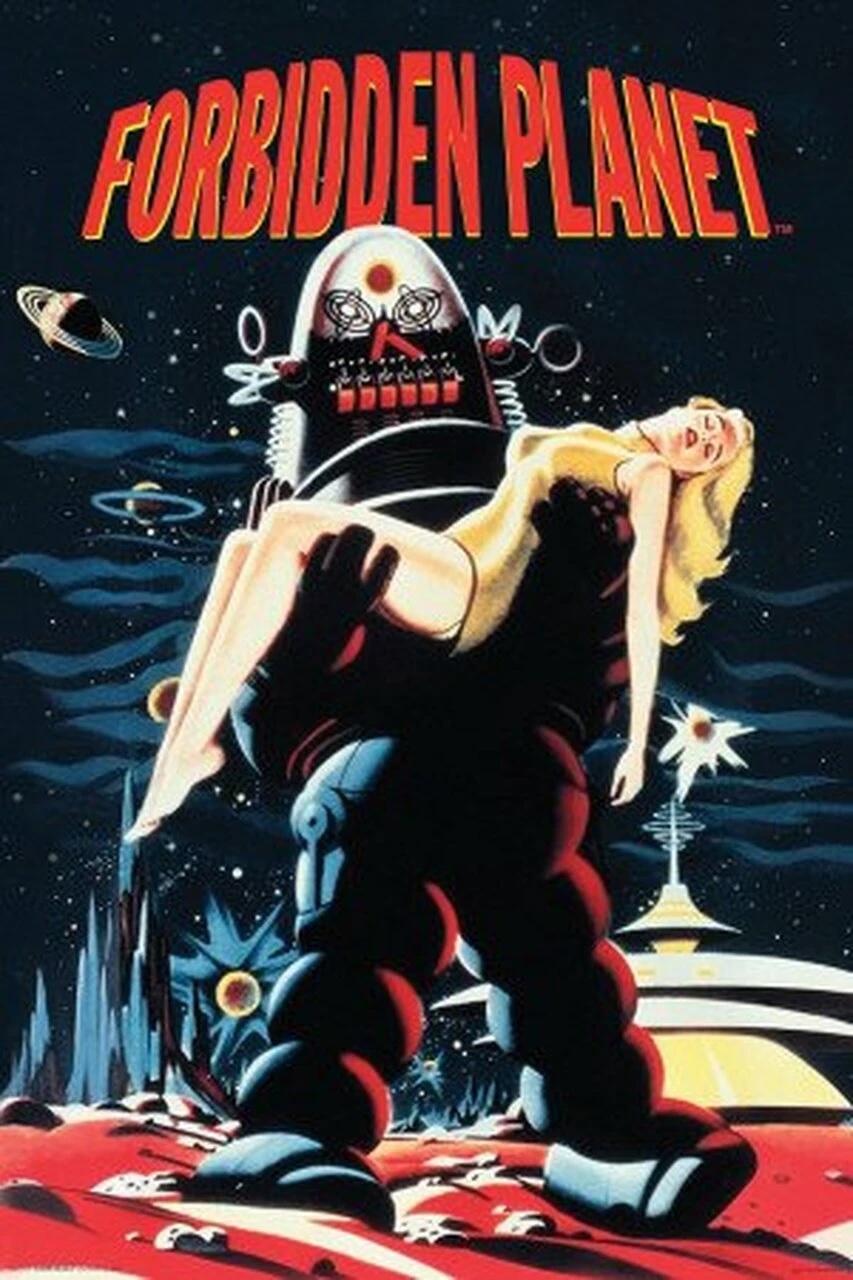
NOTE: The film was written by Cyril Hume from a story by Irving Block & Allen Adler. It is widely recognized as being based on Shakespeare's The Tempest and seen as one of the most influential science fiction films of all time. You can watch it here for FREE.
