
OP-ED Wilson transfers tiny portion of outside contractor budget to city employees; Everyone is very disappointed
OP-ED Wilson transfers tiny portion of outside contractor budget to city employees; Everyone is very disappointed
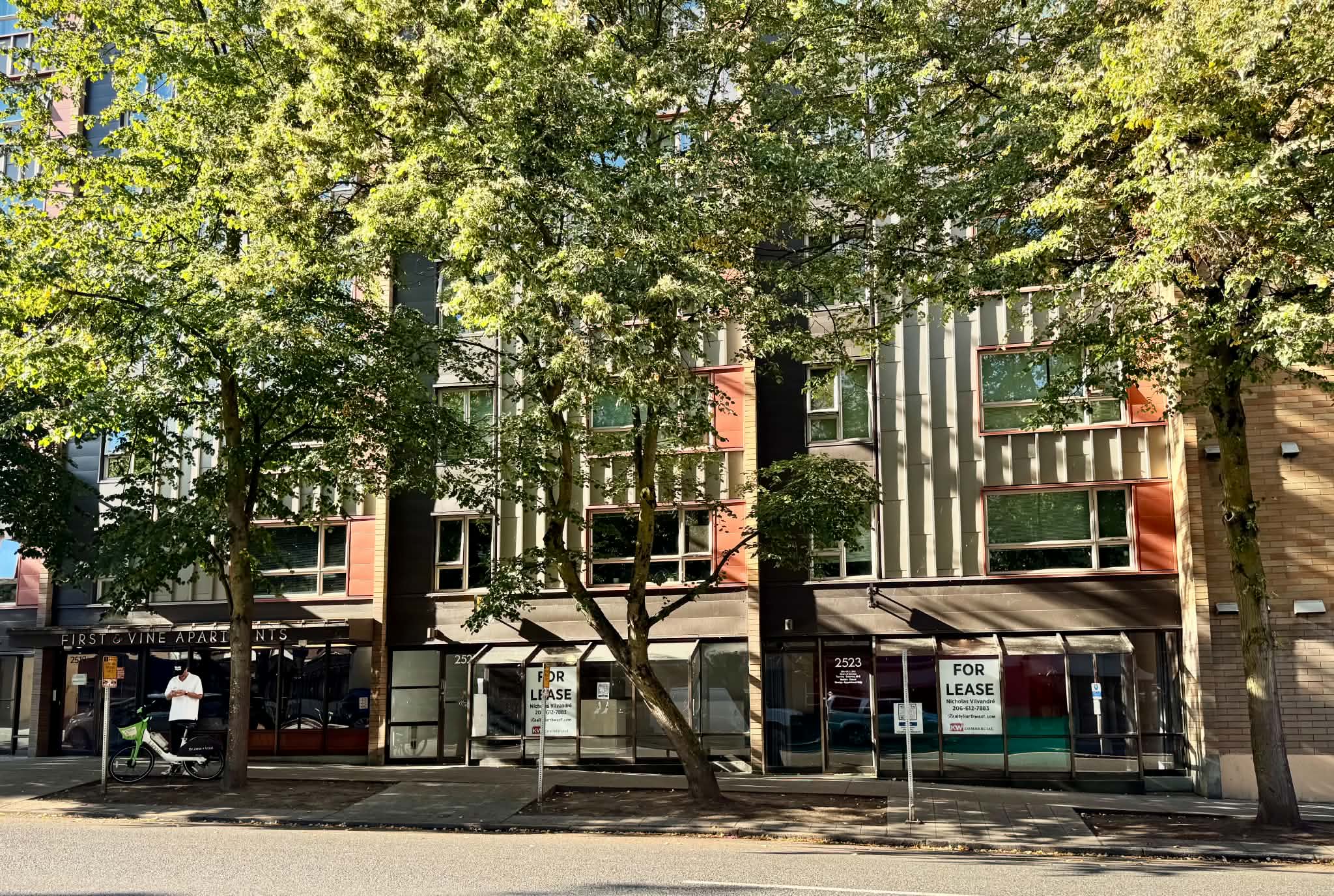
photo by Liz Steen
Wed, 09/16/2026
By Liz Steen
In a move sure to spark breathless Fox News headlines and some lively family dinners with conservative relatives, socialist Seattle Mayor Katie Wilson unveiled a Gun Violence Plan Tuesday in which she promised cops on bikes pedaling past citizens with slightly abridged second amendment rights, without, she said, any new spending. Wilson’s four-page plan promised to establish a dedicated city attorney to remove firearms from individuals identified as a danger to the community, to push for state-wide and local gun control legislation, and to expand Seattle Police bike patrols in the neighborhoods of Belltown, North Aurora Ave N, Little Saigon, and Rainier Beach. Wilson also called for “more police” and said the city is “on track” to hire 140 police officers in 2026 - less than the 165 officers hired in 2025, but more than the 84 officers hired in 2024, and more than double the 61 officers hired in 2023.
The $5 Million Fight
Most headlines Tuesday ignored the guns and the police to focus on the money for contracts for city services, however. Unnamed city contractors lost $5 million in city funding to the city’s CARE department, as Wilson followed King County’s lead to pull some contracted public safety work back in-house. Like King County’s 2025 reorganization that removed funding from non-employee contractors, Wilson’s plan announced a “reassignment” of “more than $5 million annually in contracts across nine community organizations, from the Human Services Department to CARE so that CARE providers can respond more quickly alongside Seattle Police Department and Seattle Fire Department when someone calls about a shooting.” CARE will now “lead the City’s work to stop gun violence and help people affected by shootings,” she said. This innocent-sounding plan to slightly change a handful of contracts went off like a grenade in a city where spending on homelessness and housing totals more than the police and fire departments, respectively.
Follow the Money
To put Wilson’s $5 million contract “reassignment” in context, it equals about 2.2% of the around $225 million that city officials proposed spending on homeless services in last year’s budget, most of which already goes to outside contractors rather than unionized city employees. (Progressive Seattle’s heavy reliance on non-union temporary contractors is an irony the conservatives haven’t mocked us for yet, but probably should). The city’s budget hierarchy for public safety looks something like two bears, Police, Fire, and a combined Frankenstein elephant of Homeless Services outside contractors for $225 million, and Affordable Housing, totaling $344 million, and everyone else, in terms of city priorities. In the same budget awarding homeless services contracts and housing affordability combined at $569 million, the city proposed to spend about $486 million on the Seattle Police Department and $348 million on the Seattle Fire Department. CARE got $45 million, the City Attorney Office got $48 million, and the Office of Emergency Management got about $4.24 million to coordinate a city-wide response to public disasters. 2026 Proposed Budget Book.pdf
How CARE Became the Third Public Safety Department
The history of CARE explains why both sides felt like they lost Tuesday. Wilson’s plan appeared to anger both Progressives, who wanted nonprofit community groups to keep the contracts, and Conservatives, who wanted more of the money to go to police. After the George Floyd protests in 2020 fueled demands for alternatives to armed police response, Seattle moved 911 dispatch out of the Police Department and into a civilian-led agency in 2021. Two years later, that agency became CARE and began “dual dispatch,” sending civilian crisis responders alongside police to some mental-health and behavioral-crisis calls. CARE started in 2023 as a “targeted pilot” to provide city-employed behavioral health specialists and a crisis response team for 911 call responses. In 2025, under former mayor Bruce Harrell, CARE became Seattle’s “third public safety department” with police and fire.
The Contractors Aren’t Going Away
On Tuesday Wilson moved only a relatively tiny amount of money away from the city contractors who won the hundreds of millions in contracts but she seemed to signal a larger role for CARE, the program she inherited from Harrell. Wilson said HSD contractors will keep $8 million in already funded gun violence programs that will now operate under two new city-employed coordinators. But she also promised two new coordinator positions to oversee the community services already provided via contracts with non-profit agencies funded by the city’s Human Services Department. She was basically saying that the days of easy money for city contracts are over. The city is going to use employees for anti-violence, instead of non-profits. And those employees will not be police.
King County Tried Wilson’s Plan First
King County presaged Wilson’s move last year, when the county reorganized a contracting system that produced federal criminal cases, allegations of kickbacks and a county audit that found potential fraud and improper payments. Two high-profile examples are SE Network SafetyNet / Boys & Girls Clubs of King County, where Executive director Matelita “Marty” Jackson was federally indicted in connection with a multistate fentanyl operation laundering money; and Community Passageways, where the organization’s finance director, Susana Tantico, was investigated by the FBI beginning in 2022 and ultimately pleaded guilty to federal wire fraud for stealing nearly $893,000. Community Passageways was also involved in a 2022 scandal when a subcontractor running the “Regional Peacekeepers Collective” anti-violence organization was found to be a convicted sex offender who had used false credentials.
Seattle Keeps the Money Moving
While King County adjusted contracts with the community anti-violence organizations affected by drug trafficking and embezzlement, Seattle took a different route. The city of Seattle wrapped up its contract with SE Network SafetyNet using Community Passageways to administer the work until June 2026. Community Passageways announced layoffs in its Restorative Justice program as the contracts were up for renewal and collected more than 450 signatures asking to save the jobs.
Community Passageways was one of the pool of nine contractors that will lose some city funding under Wilson’s plan. However Seattle’s budget, which compares the apples of contract awards for services to the oranges of each organization’s total award, made it impossible to tell which specific organizations would lose the $5 million. The list of last year’s gun violence contracts that will be affected is here: HSD invests in community-led strategies as part of Seattle’s citywide effort to reduce gun violence - Human Interests
Wilson eskewed both controversial contractors in her Tuesday announcement. Her office released a video of the mayor visiting a community mural with Cathie Wilmore from Rainier Beach: A Beautiful, Safe Place for Youth, who is a project manager with Seattle Neighborhood Group.
And Then the Council Hired Another Contractor
If you’re already baffled by the list of names of people who are getting money from the city, well just hold on. There’s a new player. The Seattle City Council responded to Wilson’s plan Wednesday by fighting for a completely different community violence contractor from Maryland. Council Member Maritza Rivera’s plan to hire a $418,000 gun violence contractor to hold meetings with stakeholders and target individuals identified as being high risk was approved. The contract notes available to the public is here: SEATTLE CITY COUNCIL - Record No: Res 32217
Fighting Over Crumbs
Ironically, the contracts making headlines for Wilson this week are crumbs compared with the money Seattle pours into affordable housing and homelessness programs. Progressives love the story of the billionaire who goads two poor people into fighting over a single cookie while he holds the plate. We seem unable to see it happening to us, though.
The mayor and City Council jabbed at each other all week over anti-violence contracts worth $5 million and $418,000, and city contracts for CARE worth a comparatively paltry millions, while citizens have repeatedly warned that understaffed emergency services cannot handle the load. Meanwhile, Seattle budgeted roughly $483 million in 2025 for the Office of Housing and HSD homelessness services alone. In a city where no one thinks housing is affordable.
The big story in Wilson’s Gun Violence Plan isn’t what’s in the plan. It’s how fiercely Seattle organizations battle over cookie crumbs while barely looking at the plate. The controversy playing out this week over how many cops we put on bikes, which handful of 911 jobs move back to unionized city employees, and which college or university gets paid to organize our theoretical response to hypothetical future gun violence distracted us. People died. We can focus on what matters and, maybe, even show our conservative relatives—already warming up their complaints about Seattle for the next family holiday dinner—that we can make a city that works.
