
Washington State Ferries sees partial recovery on Tuesday as wage freeze and burnout fuel engine-room labor crisis
Washington State Ferries sees partial recovery on Tuesday as wage freeze and burnout fuel engine-room labor crisis
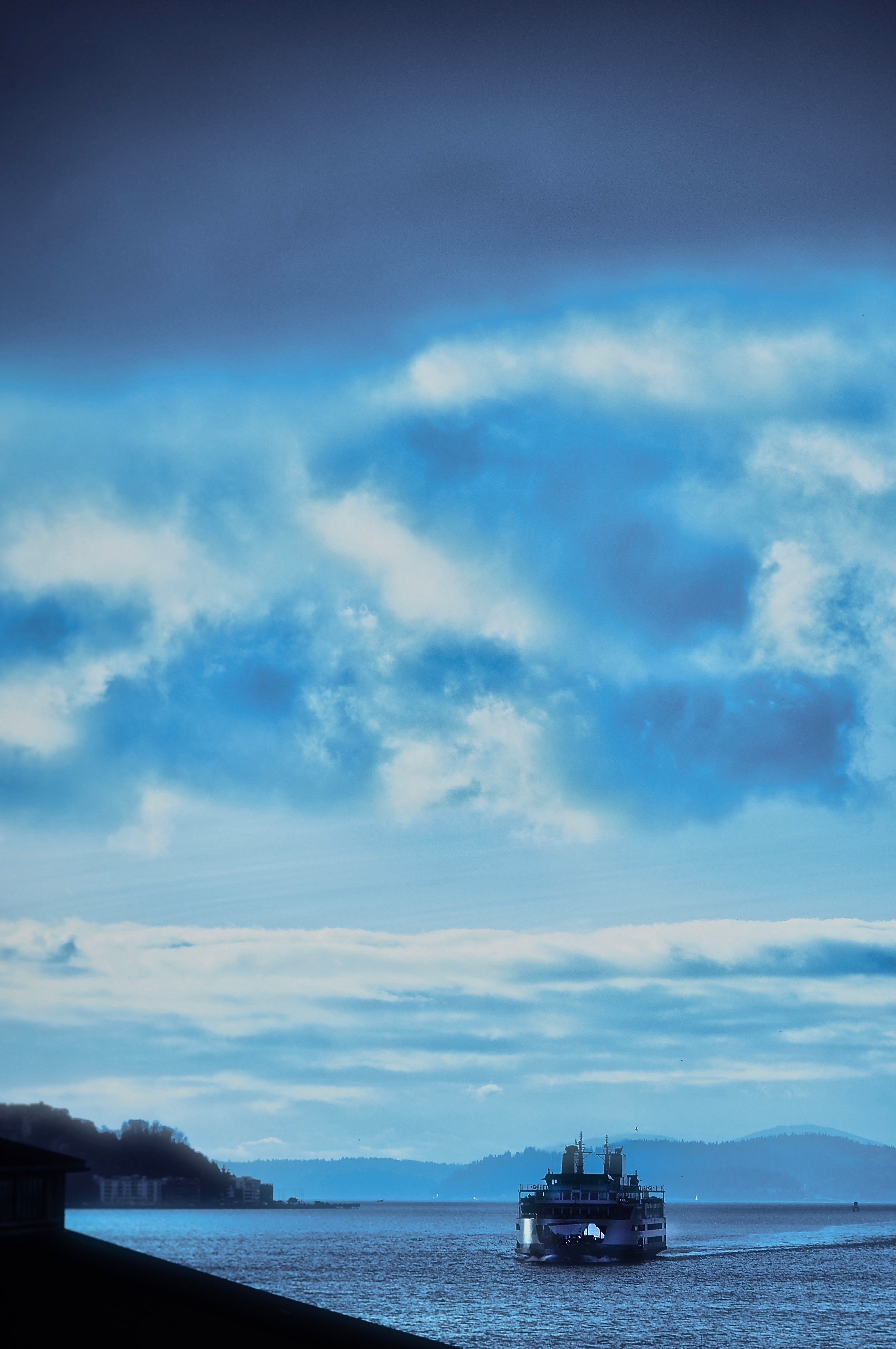
Service disruptions are continuing for the Washington State Ferries on Oct. 6.
Photo illustration by Patrick Robinson
Tue, 10/06/2026
Ferry operations across Puget Sound are experiencing lingering disruptions today (Tuesday, October 6), as Washington State Ferries (WSF) works to rebuild schedules following widespread cancellations caused by an engine-room labor call-out. While overall service has improved compared to Monday's widespread shutdown, spot cancellations and reduced schedules remain active across several key routes due to ongoing staffing limits and crew availability constraints.
The continued disruptions follow emergency interventions by Governor Bob Ferguson, who met with WSF leadership and state representatives after Monday's severe commuter gridlock to demand operational fixes, wage solutions, and an immediate restoration of full service. Although the Governor called for all routes to be fully restored by Tuesday morning, operational realities continue to fall short of that goal.
Current Tuesday Route Status
As of Tuesday, October 6, route conditions across the WSF network remain varied:
- Fauntleroy / Vashon / Southworth: Operating on a reduced two-boat schedule. The third vessel, the Kitsap, remains out of service due to an unfilled crew position.
- Edmonds / Kingston: Early morning sailings were cancelled due to crew shortages before regular service resumed later in the morning. However, the route faces a complete overnight suspension starting at 7:00 PM tonight through Wednesday morning due to scheduled BNSF railroad work blocking terminal access.
- Mukilteo / Clinton: Experienced several early morning cancellations before returning to its regular schedule.
- Seattle / Bainbridge Island & Seattle / Bremerton: Operating on normal schedules.
- Anacortes / San Juan Islands & Port Townsend / Coupeville: Operating on normal schedules.
WSF cautions that the overall operational outlook remains fluid throughout the day. Because United States Coast Guard regulations strictly mandate minimum engine-room staffing before a vessel can pull away from the dock, even a small number of unexpected call-outs or unfilled relief shifts can force last-minute sailing cancellations.
The Catalyst: Arbitration Ruling and Pay Disparities
The immediate trigger for the labor disruption was a recent interest arbitration award that granted engine-room workers a 0% scheduled base-wage increase for their contract cycle. Contract negotiations are conducted directly between the Marine Engineers' Beneficial Association (MEBA) and the Washington State Office of Financial Management (OFM). Union negotiators had sought a 20% wage increase to combat severe inflation, address retention issues, and bring compensation in line with private maritime industry benchmarks. The state countered with minimal adjustments of around 2%, leading to a complete impasse.
Under Washington state law, work stoppages and strikes by public ferry workers are strictly illegal. Because of this legal prohibition, the deadlock was submitted to an independent interest arbitrator, whose ruling awarded 0% scheduled base-wage increases while leaving open a mechanism for pay re-negotiations in the second year of the contract. The zero-increase decision immediately ignited widespread backlash among workers.
While 23 engine-room personnel called in sick and off-duty qualified workers refused to cover open shifts, MEBA officially denied directing or organizing any coordinated work action. The union attributed the call-outs entirely to individual worker exhaustion and a total collapse in morale.
Engine-room employees, including engineers, oilers, and wipers, have long highlighted stark pay disparities within the ferry system. Deck personnel earn up to 20% more than engine-room staff at comparable seniority levels, while private-sector maritime employers offer significantly higher compensation for identical professional credentials.
Exhaustive Conditions and Years of Unheeded Warnings
The pay impasse compounded working conditions that engine crews describe as brutal. Chronic staffing deficits routinely force engine personnel into demanding shift patterns, including "flips" between consecutive seven-day, 12-hour day shifts and 12-hour night shifts, enforced through relentless mandatory overtime.
State officials, the Washington State Department of Transportation (WSDOT), and WSF management have been formally aware of these escalating vulnerabilities for years:
- Chronic Understaffing: Union leadership and internal ferry reports repeatedly warned officials that the system was operating 40 to 50 engineers below the baseline necessary to reliably meet US Coast Guard crew requirements.
- High Attrition Risk: A MEBA survey conducted earlier in 2026 revealed that over 60% of engine-room staff were actively planning to retire early or leave for private maritime jobs due to low wages and extreme burnout.
- Systemic Fragility: Management was repeatedly notified that because Coast Guard rules mandate strict minimum engine personnel before a boat can launch, losing even a small cluster of qualified workers would paralyze major ferry corridors.
As emergency talks continue between state leaders, WSF management, and union representatives, the ongoing disruptions underscore how dependent the state's maritime transit network remains on a small, highly specialized, and deeply exhausted workforce
