
Seattle City Council approves contested Vehicle Residency Package as debate rages over parking restrictions and unhoused support
VRAP Program set to take effect in April; Enforcement starts August 1
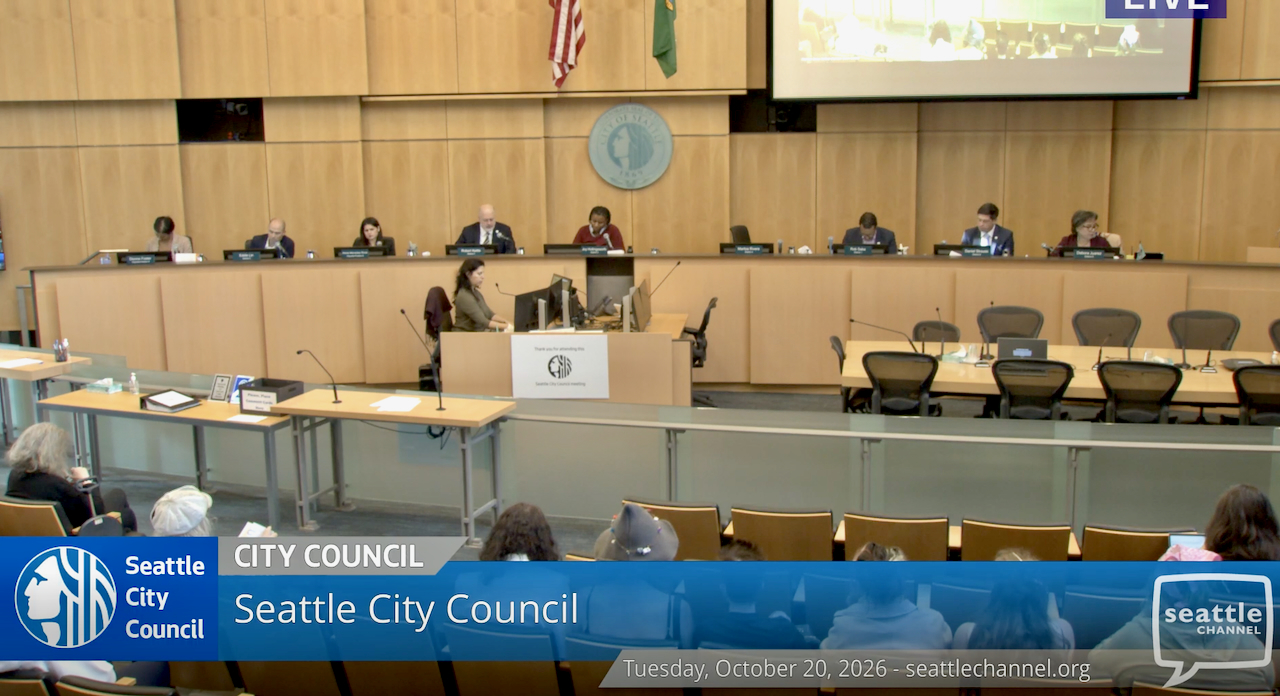
The Seattle City Council passed the VRAP RV program on October 20 which will take effect in April.
Tue, 10/20/2026
In a lengthy meeting on October 20, 2026, the Seattle City Council passed a sweeping, six-part legislative package establishing the Vehicle Resident Assistance Program (VRAP). The legislation creates a new permitting framework and support services for residents living in recreational vehicles, while placing strict two-hour parking limits on unpermitted RVs parked on public streets.
Sponsored by Councilmember Dan Strauss, the VRAP package attempts to strike a balance between expanding social services and regulating public space. Under the program, vehicle residents who register through a one-time census and remain connected with case management can receive permits allowing them to park in designated industrial zones. The package also authorizes "shelter storage" locations, allowing unhoused individuals to store their vehicles safely while transitioning into indoor shelter or housing.
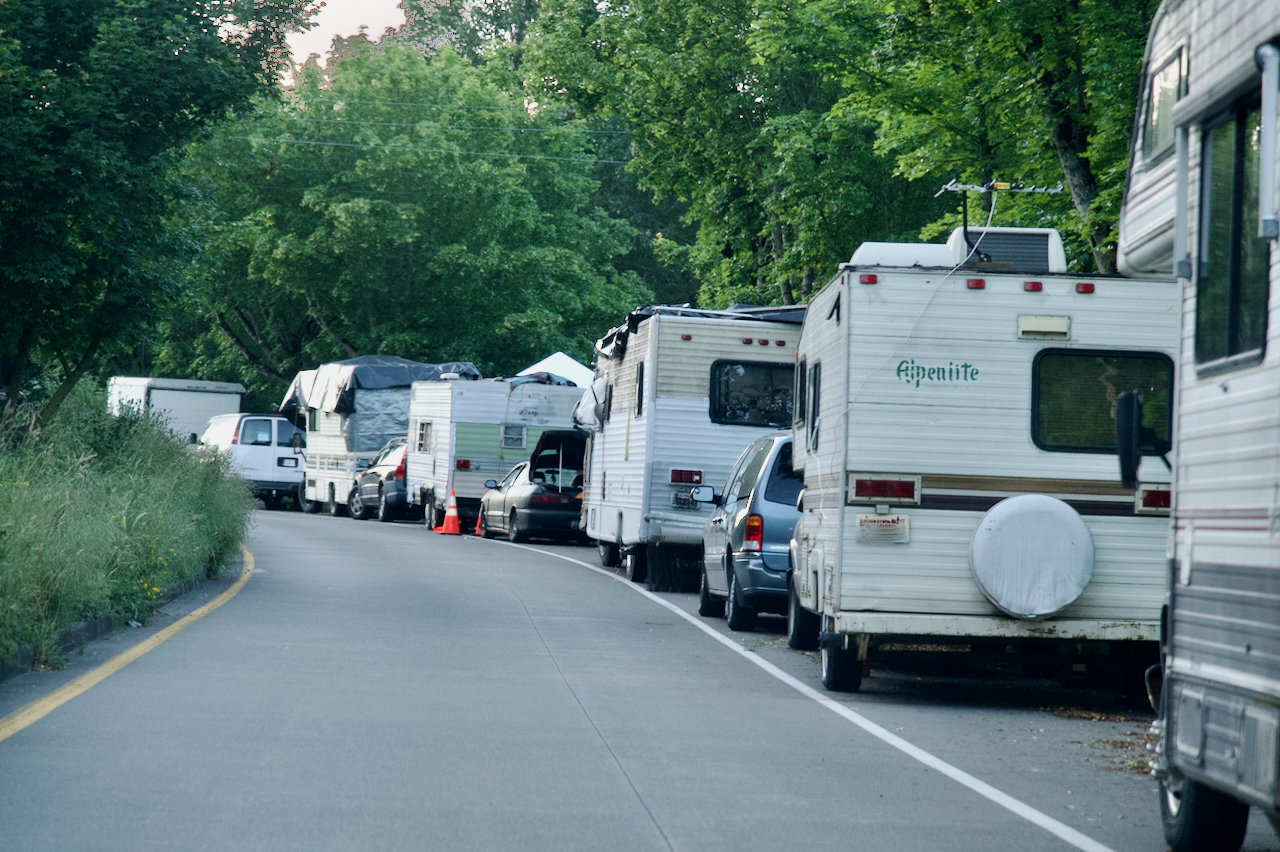
Program Effective Dates and Warning Timeline
The new regulations and permit system will take effect on April 30, 2027. Following the effective date, the city will observe a mandatory 90-day warning period. Active enforcement of the two-hour parking restriction for unpermitted motor homes will begin no earlier than August 1, 2027.
To monitor the rollout, the council adopted an amendment establishing a "Check and Adjust" working group. This working group will evaluate program metrics, gather community feedback, and recommend statutory adjustments to the council before the April 2027 effective date.
Detailed Breakdown of Council Votes
The council voted individually on each component of the VRAP legislative package:
Councilmember Debate and Saka's Perspective
Debate among councilmembers highlighted sharp divisions over whether the policy offers a compassionate bridge to housing or an overly restrictive mandate.
Councilmember Rob Saka, who represents District 1, voiced strong support for the package while emphasizing the need for equitable enforcement across neighborhoods. "In District 1, we see the consequences every single day in residential neighborhoods, near schools, parks, and public spaces," Saka stated. "These impacts are real, and our constituents deserve meaningful relief. I will be voting yes today as I did in committee because at a high level I believe it strikes a good balance between compassion and accountability. But I also want to be very clear on one thing. Passing legislation is not the same as solving a problem... We also cannot continue concentrating a disproportionate number of Seattle's RV challenges in certain neighborhoods and a handful of neighborhoods. Geographic fairness does matter."
Bill sponsor Dan Strauss argued that maintaining the status quo was unsustainable. "Our current system is failing and doing nothing is not an option," Strauss said. "We need to do better for the people who are living in vehicles and we need to do better for our entire community."
Opposing the permit restrictions, Councilmember Alexis Rinck raised concerns regarding vehicle impoundment . "Under this, people who lack a permit cannot legally park overnight," Rinck noted. "If they cannot access a safe lot, there would be nowhere for them to go." Councilmembers Cathy Lynn and Sarah Foster also voted against the permitting bill, arguing that a one-time census excludes neighbors who become unhoused in the future.
Significant Funding Authorization
The council did pass significant funding authorization alongside the parking rules through Council Bill 121282, which amended the city's 2026 budget.
The Funding Breakdown
Concerns Over Bypassing the Standard Budget Process
While the vote itself occurred in an open council meeting with public testimony, several councilmembers strongly criticized the funding bill for bypassing the city's formal annual budget process [140–141, 169]:
Regarding the amendments considered during the meeting, none of them added hidden millions to the bill on the floor . Amendments A and B focused on expanding working group membership and adding annual reporting metrics , while Amendment C proposed revoking permits upon certain criminal convictions. The multi-million dollar spending projections were built into the core appropriations bill (CB 121282) itself rather than introduced via a floor amendment
Impact on West Seattle
District 1, which includes West Seattle Pioneer Square and surrounding industrial corridors, stands to experience direct local impacts from the legislation.
The Low Income Housing Institute (LIHI) confirmed it is preparing to open the Glassyard Commons RV safe lot in District 1, providing wraparound case management and utility hookups.
During public comment, West Seattle resident Kevin Lorenson warned of potential unintended consequences for housed residents who own recreational trailers.
"My wife and I own a small travel trailer that we use often," Lorenson testified. "Restricting us to just two hours during the day or banning overnight parking altogether would create an immense physical and logistical hardship when we provision and clean up traveling. Today, I urge you to amend this proposal to include a clear, straightforward exemption for recreational vehicles parked within the 72-hour limit at the address where the vehicle is legally registered."
Salient Public Comment
Over 60 community members testified during the hybrid public comment period, expressing starkly opposing viewpoints.
Supporters from business and civic groups:
Opponents and unhoused advocates:
Other Business Before the Council
In addition to the VRAP debate, the City Council addressed several other major agenda items during the October 20 session:
Domestic Violence Awareness Month Proclamation
The council unanimously approved a proclamation declaring October 2026 as Domestic Violence Awareness Month in Seattle and designating October 15 as Purple Thursday Introduced by Councilmember Rinck, the proclamation honored community partners including the Coalition Ending Gender-Based Violence, Jewish Family Service's Project D'Vora, and the Seattle Women's Commission Rinck drew attention to municipal court backlogs, noting that domestic violence accounts for roughly one-third of cases referred to the City Attorney.
Confirmation of Chief Technology Officer
Councilmembers voted 9–0 to confirm Shannon Smith as Chief Technology Officer for the Seattle Information Technology Department for a term extending to July 1, 2030. Council President Joy Hollingsworth commended Smith for her focus on digital equity and community outreach.
Youth Bicycle and Pedestrian Safety Education
The council passed Council Bill 121299 on a 9–0 vote, authorizing an interlocal agreement between the Seattle Department of Transportation (SDOT) and Seattle Public Schools. Sponsored by Councilmember Saka, the agreement funds bicycle and pedestrian safety training programs ("Let's Go" and "Let's Go Further") for elementary and middle school students in grades 3 through 8.
Skinner Building and Fifth Avenue Theatre Centennial
Councilmember Rivera presented a ceremonial proclamation recognizing 2026 as the Skinner Building Centennial Year in Seattle, marking 100 years since the opening of the landmark Fifth Avenue Theatre in 1926 .
Public Testimony on Transgender Safety
Dozens of trans community members and allies provided testimony regarding hate crimes, street violence, and housing displacement affecting trans refugees in Seattle. Speakers urged the city to maintain dedicated funding for specialized housing and survivor support programs.
Council President Condemns Hate Symbols
Closing the meeting, Council President Joy Hollingsworth delivered a solemn address condemning an attendee who displayed a sign in the council chambers bearing the label "KK Kettle," referencing Councilmember Robert Kettle. Joined by Councilmembers Foster and Juarez, Hollingsworth strongly denounced the use of Ku Klux Klan references as political props.
"The Ku Klux Klan was a terrorist organization founded in 1865... meant to terrorize Black families in their homes," Hollingsworth stated. "When I see that sign, I feel pain. I feel anger... Freedom of expression does not make every expression worth respect. Political disagreement is not an excuse to weaponize the history of white supremacy."
Consent Calendar
The council passed its standard consent calendar on a 9–0 vote, approving bill payments, employment corrections, and committee appointments. Item 12 (Council Bill 121276, regarding institutional zoning) was removed prior to the vote to allow required state notice periods to conclude.

© 2025 Robinson Communications Inc. All Rights Reserved.