City crews clear Rotary Viewpoint Park encampment; What's next and what works
City crews clear Rotary Viewpoint Park encampment; What's next and what works

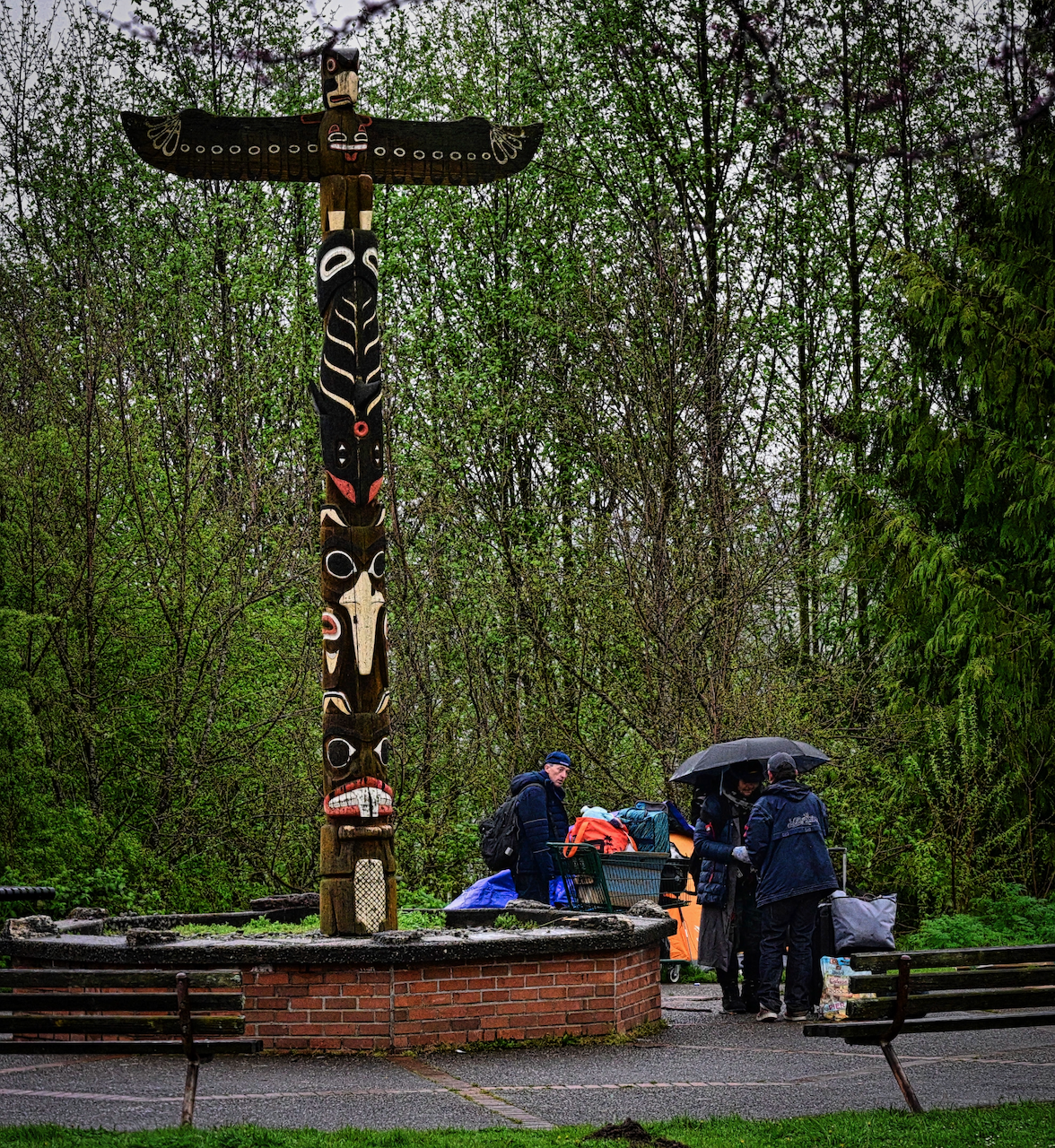
City crews worked to remove campers from Rotary Viewpoint Park on 35th SW on Wednesday morning. 16 tents were removed and those on site were offered services and shelter.
Photo by Patrick Robinson
Wed, 04/15/2026
On Wednesday morning, April 15, city crews conducted a sweep of an encampment at Rotary Viewpoint Park on 35th SW, removing approximately 16 tents. The operation is part of a continuing pattern of removals in the West Seattle corridor, including recent actions at Golden Gardens, Magnuson Park, and other Seattle parks. The park had become the scene of open drug use, a violent assault and one overdose death in recent weeks.
Seattle’s Removal Policies and Procedures
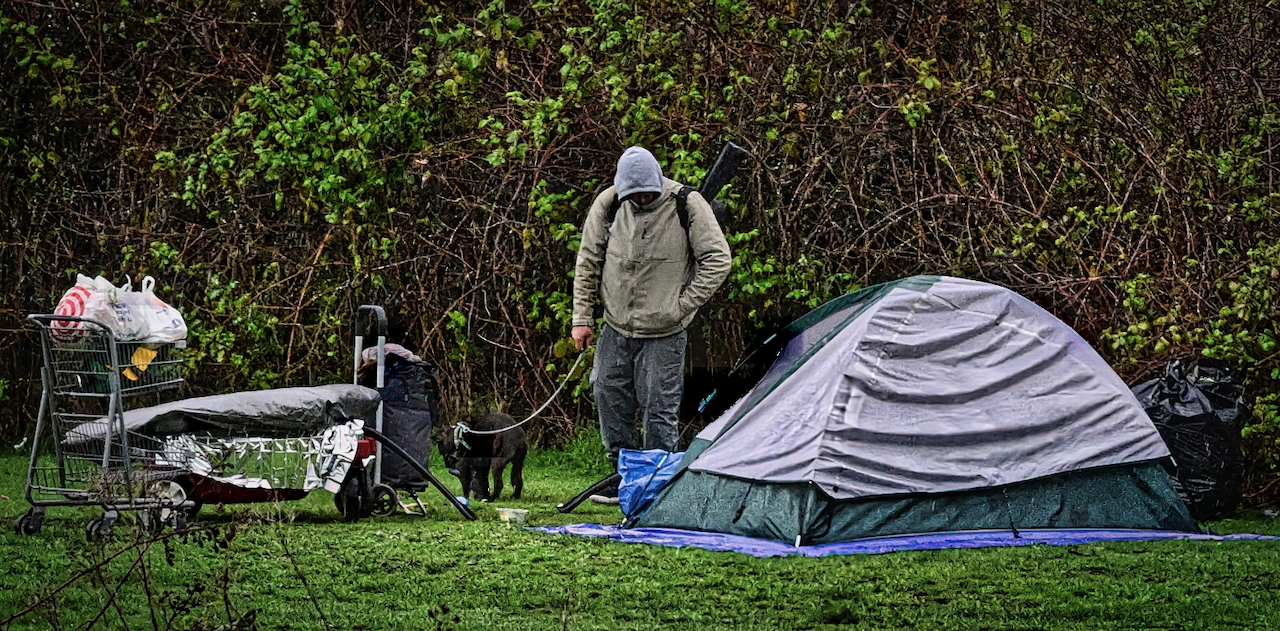
Seattle’s official protocols for such removals are governed by the Multi-Department Administrative Rule (MDAR). Under these rules, formal 72-hour removals require that outreach and offers of shelter be provided before the site is cleared. During these scheduled removals, the city typically guarantees:
- Shelter placement offers, ranging from congregate shelters to tiny-house villages and enhanced shelters with case management.
- Storage of personal belongings.
- Outreach engagement before and during the removal process.
For encampments designated as "obstructions" or "hazards," the city may move faster, and while shelter offers are often made by request, they are not strictly guaranteed by policy. While outreach teams like REACH and Seattle Homeless Outreach (SHO) are present to offer rides to shelters and referrals for mental health or addiction treatment, they do not provide immediate on-site placement into treatment programs.
Despite these offers, city officials and outreach workers note that acceptance rates are often low in high-acuity encampments—sometimes described as "service-resistant"—where individuals may decline help due to addiction, mental health symptoms, or safety concerns.
Statement from District 1 Councilmember Rob Saka
“A park is not a place for someone to live. It is inhumane to leave people outside in the cold and rain, and it is also unfair for neighbors to lose safe access to public spaces. My office consistently hears from residents across West Seattle about the real impacts. Seniors tell us they no longer feel safe waiting at nearby bus stops. Parents share concerns about walking their children to nearby daycares, passing open drug use, discarded needles, and volatile behavior along the way. Small business owners describe lost foot traffic, safety concerns for employees, and the strain of operating in these conditions.
During remediations, the social workers and other outreach workers from the Unified Care Team are onsite offering critical shelter, services, and connections to providers. At the same time, many individuals are facing addiction, mental health challenges, or trauma, which can make accepting help more complex. I support expanding tiny home villages and have worked closely with the Mayor’s office to advance solutions that are compassionate, effective, and focused on bringing people indoors and moving toward long term stability while restoring safety for the broader community.”
Statement from the Mayor’s Office
Sage Wilson, Deputy Director of Communications for Mayor Katie Wilson, provided the following statement regarding the administration's approach:
“She is acting urgently to rapidly expand non-congregate shelter with wrap-around services. She has repeatedly stated that we can't just keep moving people from place to place and calling that progress, and also emphasized that the city does have a responsibility to keep parks & trails & public spaces accessible. In addition to the extremely high cost of housing in Seattle, the biggest barrier to progress has been a lack of shelter - only 13 net units were added over the previous mayor's term. I do agree that the city needs to show results to generate the public will to make the dramatic progress necessary, and that's what this administration is determined to show this year.”
Consistent with that statement and slated for a June opening is the Glassyard Commons at 7200 West Marginal Way S.
That site, which has raised concern from neighbors in the Highland Park neighborhood and elsewhere is said to be set up like this:
The site is designed for two distinct housing types:
-
72 RV parking spaces
-
20 tiny houses
This makes Glassyard Commons one of the largest combined RV safe‑lot + tiny‑house village models in Seattle.
Intake & occupancy process
Every resident goes through a structured, multi‑step process:
-
Referral & outreach
-
Outreach is led by the UHeights Vehicle Resident Outreach (VRO) team, focusing on District 1 RV residents.
-
-
Initial intake with a case manager
-
Residents review the code of conduct, safety expectations, and site rules.
-
Case managers begin building an individualized service plan.
-
-
Ongoing case management Case managers help residents secure:
-
Identification
-
Income support / SNAP
-
Employment resources
-
Healthcare and behavioral health services
-
Long‑term housing options
-
-
Transition planning
-
The goal is to move residents from RVs → tiny homes → permanent housing.
-
LIHI works with residents to sign over unsafe RVs for demolition once they are housed.
-
Security & onsite staffing
-
24/7 security presence
-
Onsite Shelter Operations Manager
-
Continuous staff monitoring, cameras, and controlled entry
Models for Success: What Works in Other Cities
While Seattle continues to rely on a cycle of sweeps—which research suggests can displace people and make situations more chaotic—other cities have found success through different strategies:
- Helsinki, Finland: Known as the global "success story," Helsinki uses a "Housing First" model, placing people directly into permanent supportive housing rather than temporary shelters. They pair a zero-tolerance policy for street camping with immediate, real housing options.
- Vienna, Austria: By maintaining a massive stock of social housing (over 40% of the city), Vienna ensures rapid rehousing for those who fall into homelessness, making street encampments rare.
- Houston, Texas: Over a decade, Houston reduced homelessness by 60% by unifying all government agencies and nonprofits under a single coordinated system and prioritizing housing placements before using law enforcement to clear sites.
- Lisbon, Portugal: This city focused on low-barrier treatment and mobile addiction-treatment teams, leading to a sharp drop in visible drug use and street homelessness.
The common thread among these successful cities is providing actual housing with on-site services and no sobriety requirements, rather than relying solely on temporary congregate shelters. Research indicates that without a real alternative to the street, sweeps alone do not reduce homelessness; they often result in encampments returning within days or weeks.