Highland Park Action Coalition to tackle contentious roadway safety project at April 22 meeting
Highland Park Action Coalition to tackle contentious roadway safety project at April 22 meeting
6:30pm at Delridge Branch Library
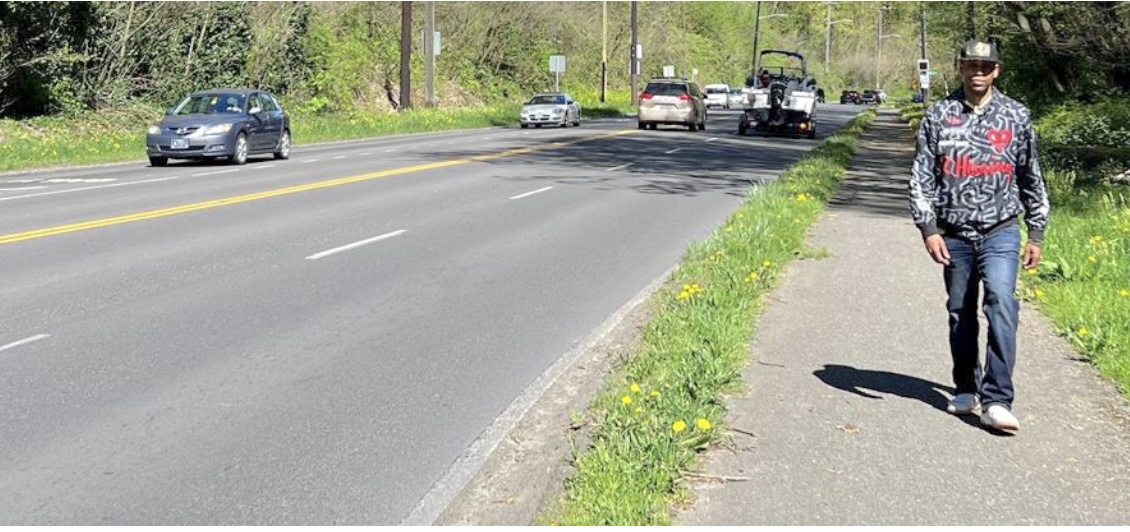
The Highland Park Way SW Connection Project will be a focus of the Highland Park Action Coalition meeting April 22 at the Delridge Branch of the Seattle Public Library.
Photo courtesy SDOT
Tue, 04/21/2026
The Highland Park Action Coalition (HPAC) has scheduled its next community meeting for Wednesday, April 22nd, at 6:30 p.m. to be held in person at the Delridge Branch Library. This meeting follows what the coalition described as a "long and contentious" March session with the Seattle Department of Transportation (SDOT) regarding the Highland Park Way Safety Project. HPAC leaders intend to use this time to formulate a response to the City and discuss how the coalition can best support community concerns.
Beyond transportation, the meeting will also address Mayor Wilson’s proposal for the Glassyard Commons RV Safe Lot and Tiny House Village at 7200 W Marginal Way SW. HPAC has invited a representative from the Low Income Housing Institute (LIHI) to discuss the project and share actions taken with the City so far.
The Highland Park Way SW Connection Project: A Deep Dive
The Highland Park Way SW Connection project is a major safety and infrastructure initiative intended to modernize the corridor between Highland Park and the regional Duwamish River Trail. The project is a response to the street’s inclusion in the city’s "High Injury Network," with a documented history of speeding (motorists often traveling 40+ MPH in a 25 MPH zone) and collisions involving vehicles crossing the centerline or striking people biking.
Core Design Proposals
While several options are on the table for the bottom of the hill, all early designs share foundational changes for the "mid-hill" section:
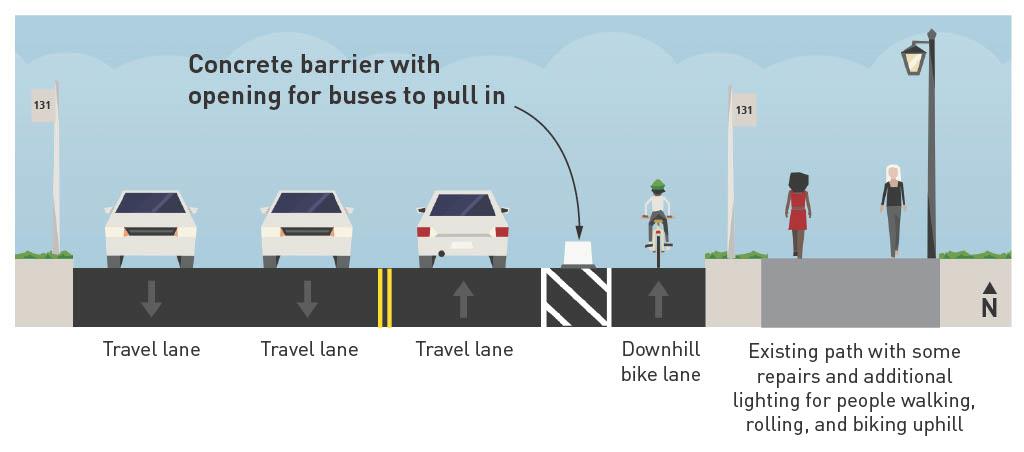
Lane Reduction: Removing one northbound (downhill) general traffic lane starting at SW Holden St to slow vehicle speeds.
Enhanced Path: Widening and repairing the surface of the existing multi-use path and adding new lighting to improve visibility.
Safety Barriers: Installing semi-permanent concrete "Jersey" barriers to provide physical separation between the roadway and people walking or biking.
The Three Intersection Options
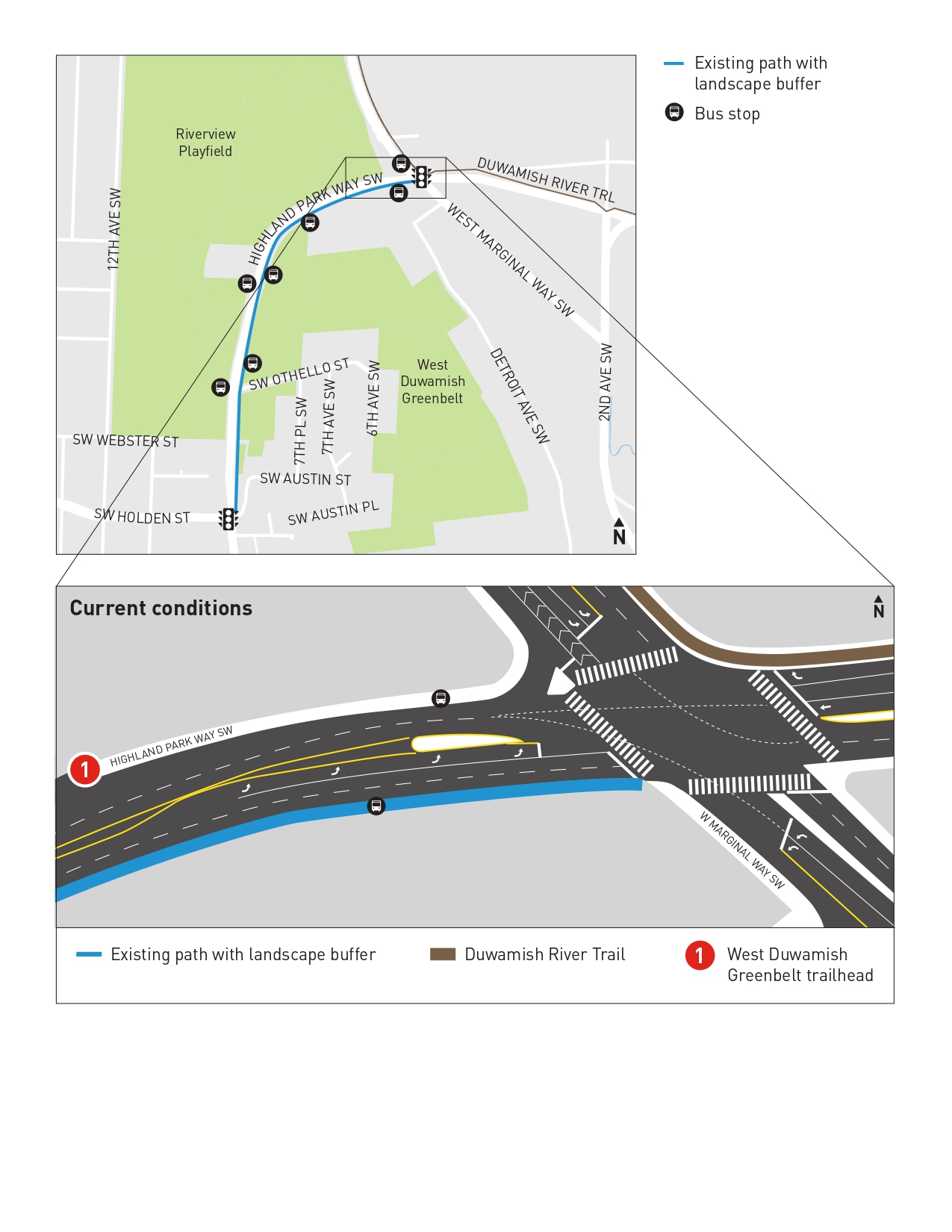
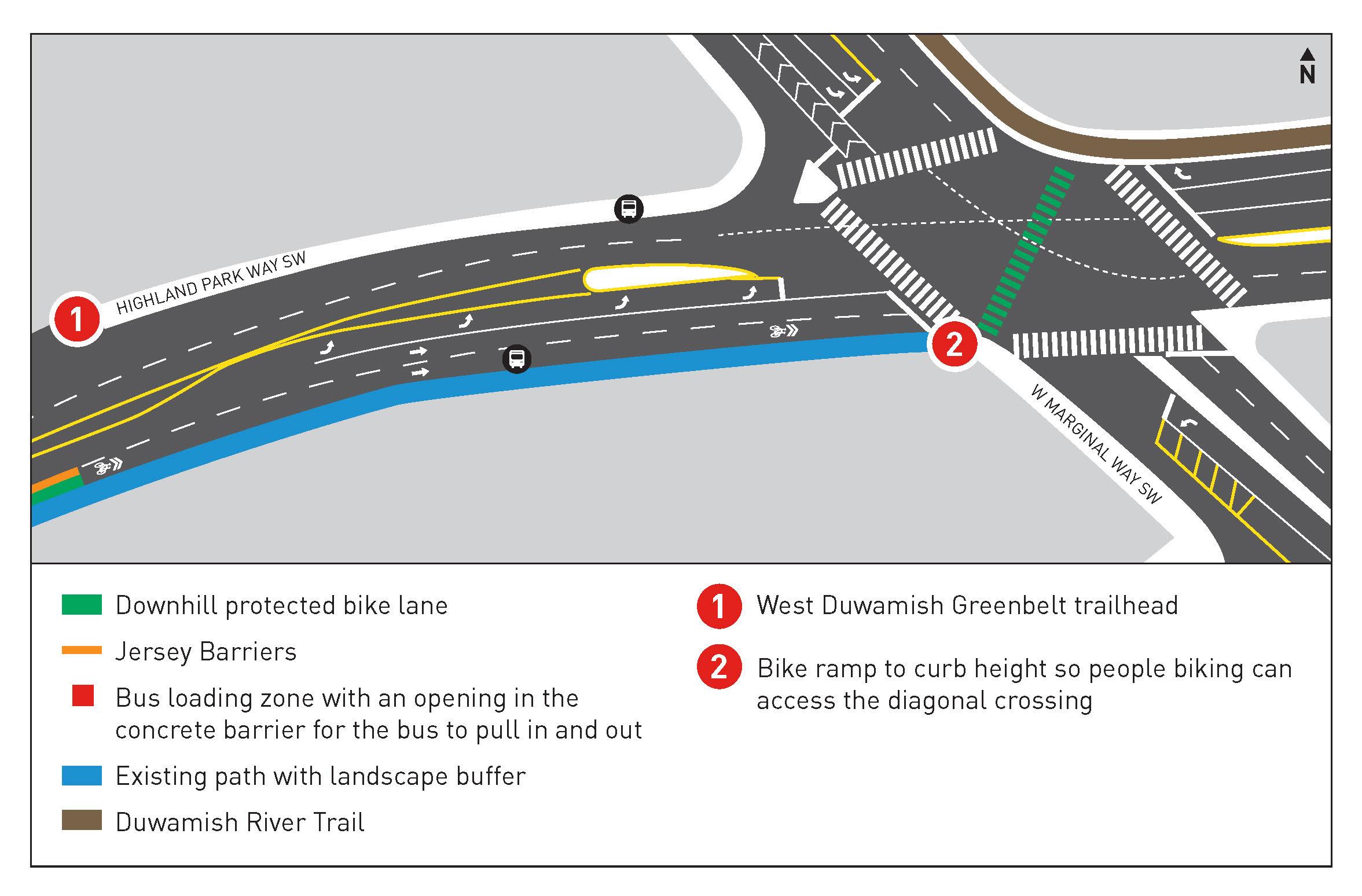
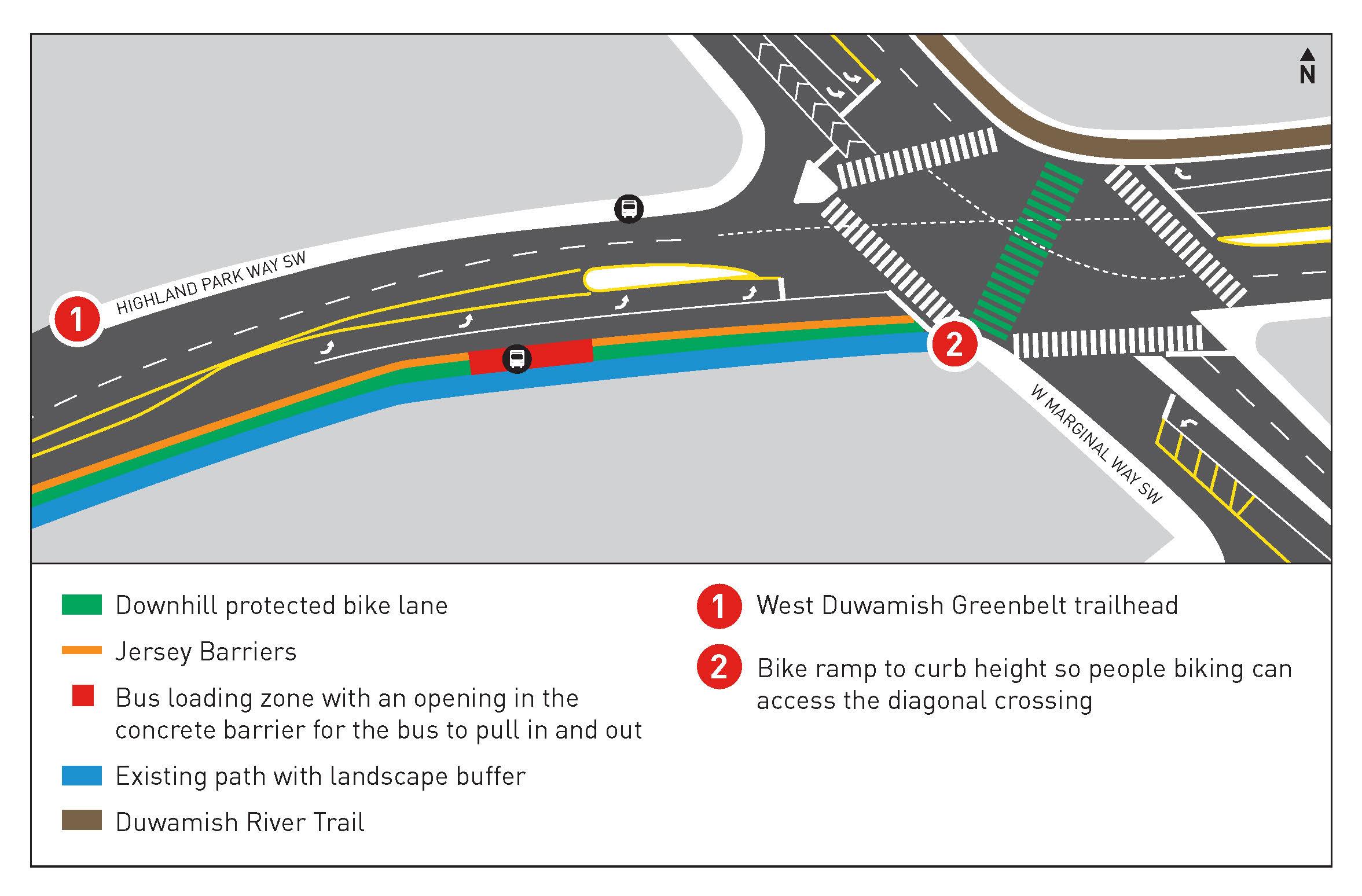
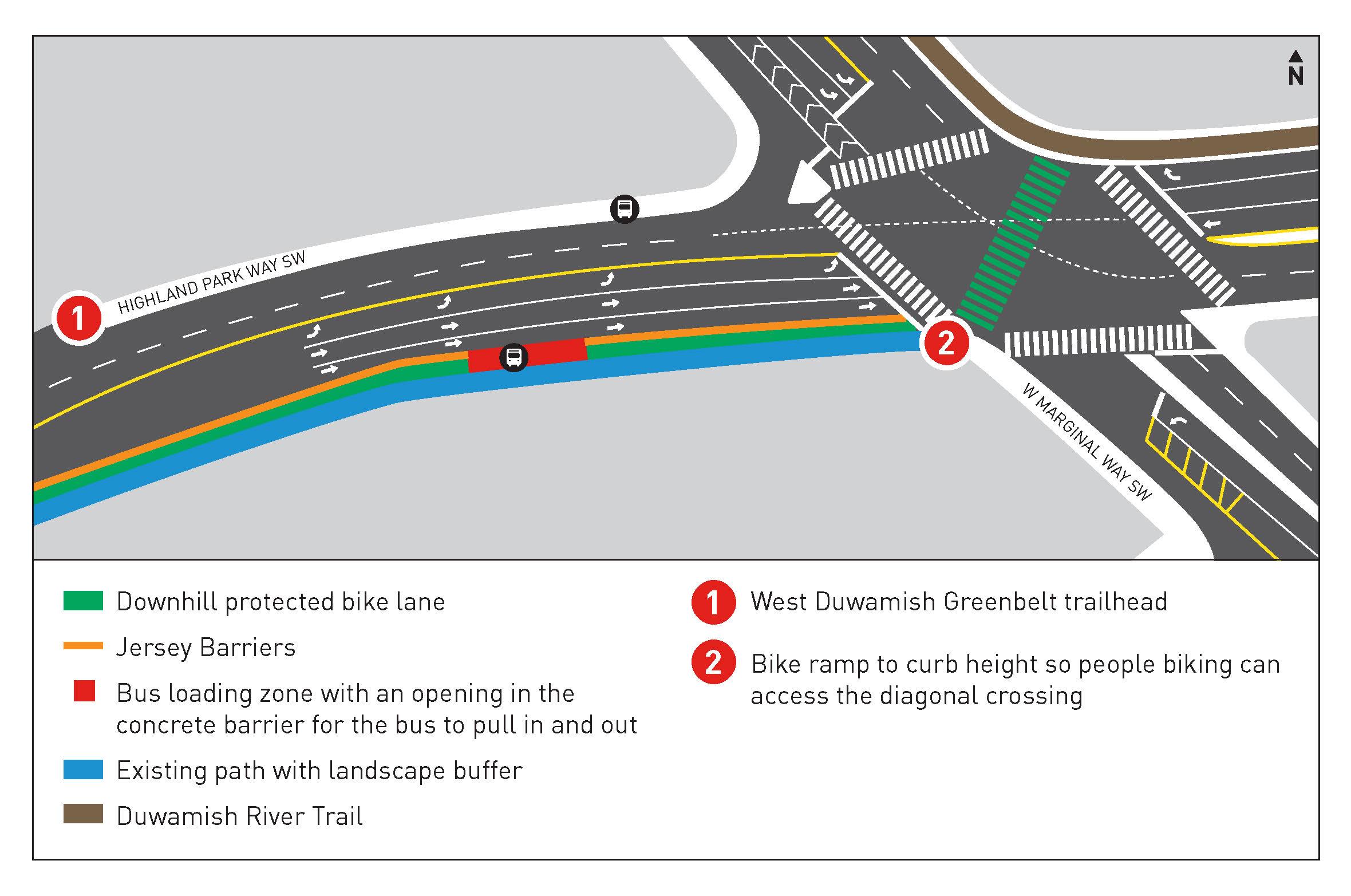
SDOT is currently evaluating three distinct designs for the intersection of Highland Park Way SW and West Marginal Way SW, each with different trade-offs:
Option 1: This design maintains five general-purpose lanes at the intersection to prioritize vehicle flow. However, the protected bike lane would end 400 feet before the intersection, forcing downhill cyclists to merge with vehicles.
Option 2: This version extends the protected bike lane all the way to the intersection. To accommodate this, vehicle capacity is reduced to four lanes (one eastbound through lane, one left-turn lane, and two westbound through lanes).
Option 2B (New Design): Developed in response to feedback about wait times, this option extends the protected bike lane while maintaining five lanes. This is achieved by removing the existing center median and reconfiguring lanes on West Marginal Way SW.
Option 1
Option 2
Option 2B
Community Feedback and Concerns
The project has met with significant community resistance. Key themes identified by SDOT from previous public meetings include:
Driver Wait Times: Residents fear that consolidating downhill traffic into a single lane will dramatically increase congestion, particularly during peak hours or West Seattle Bridge disruptions.
Barrier Placement: Some neighbors have suggested that concrete barriers should separate uphill and downhill vehicle traffic at the centerline, rather than just protecting the bike lane.
Local Access: There are concerns that consolidated traffic will make it harder for residents on side streets, such as SW Othello St, to turn onto Highland Park Way.
Emergency Response: Questions remain about how emergency vehicles will navigate the hill if the remaining lanes are heavily congested.
Next Steps
The project is currently in the early design phase, which is scheduled to continue through 2026. Construction is not expected to begin until winter 2026-27. Community members are encouraged to share their feedback via SDOT’s project hotline, email, or online form prior to the finalization of the design.