
A journey through time in West Seattle: Brian Blevins’ 4.6 billion-year mission
A journey through time in West Seattle: Brian Blevins’ 4.6 billion-year mission
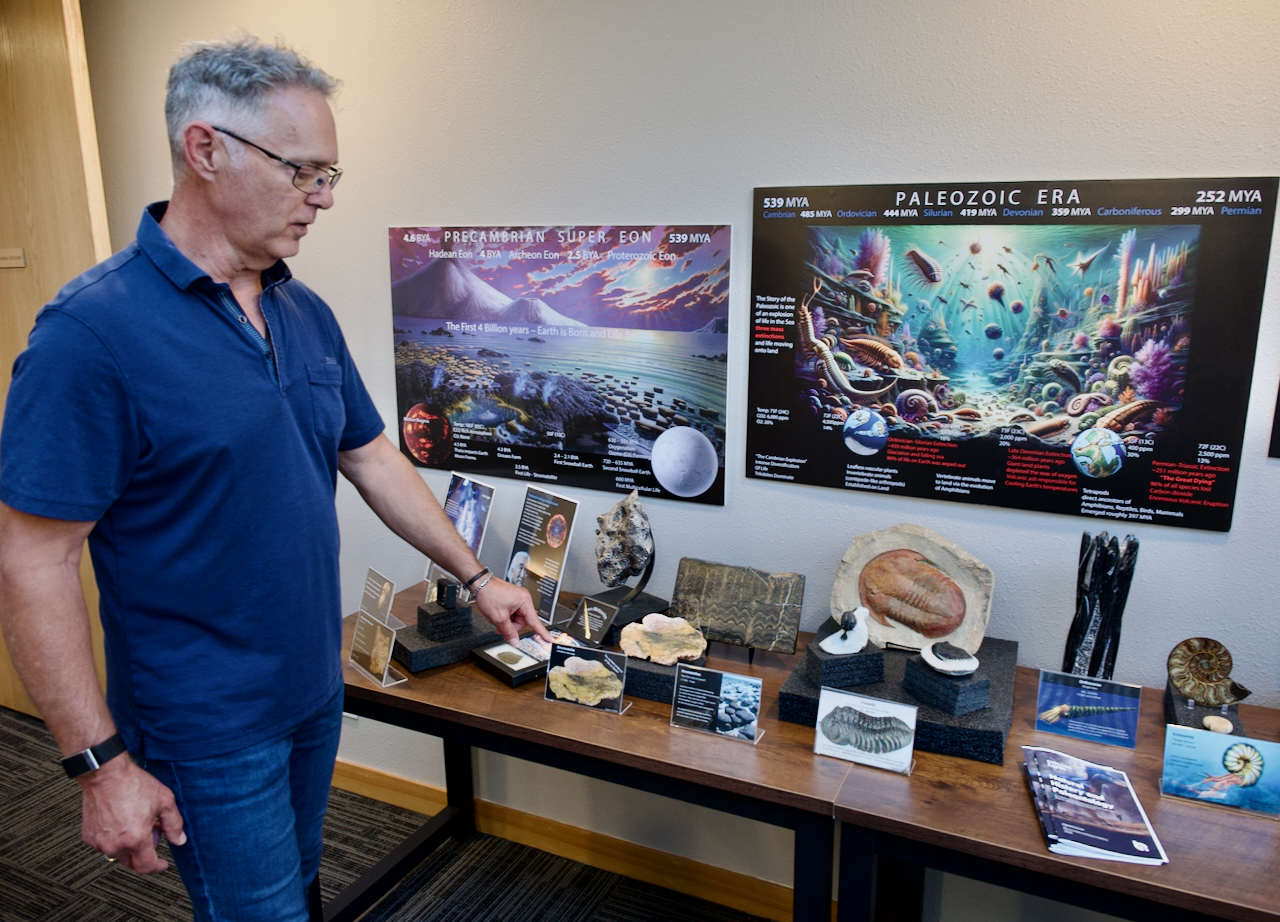
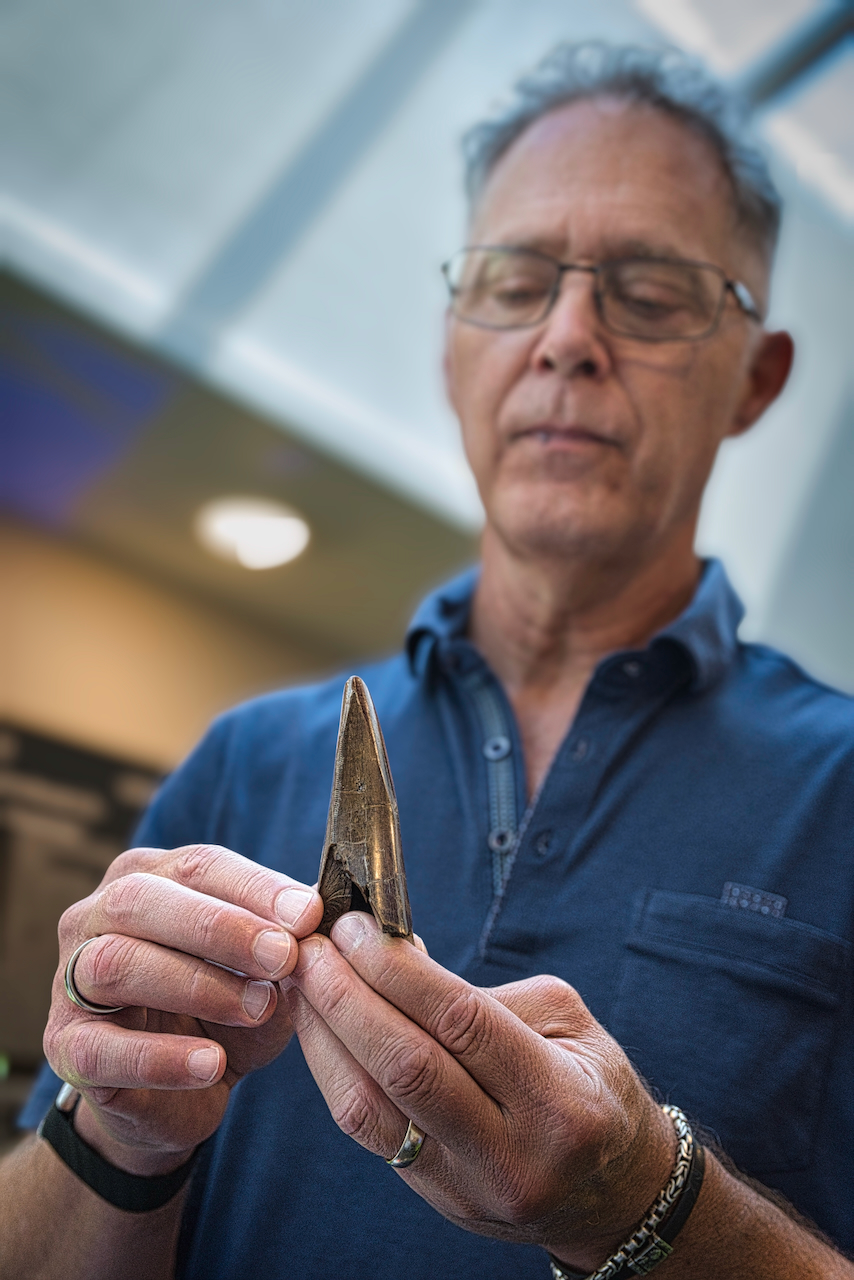
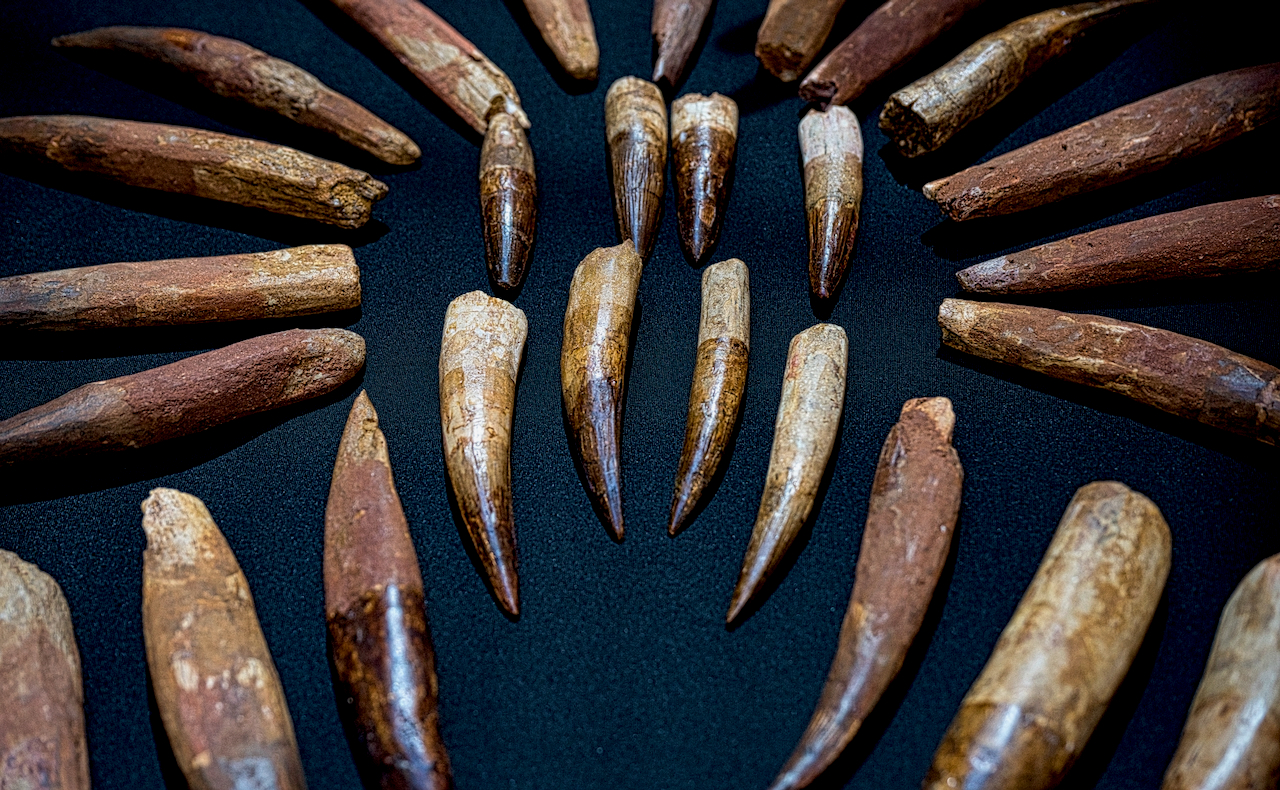
Brian Blevins, who regards himself as an "informal educator" has amassed a gallery of fossils and educational materials he often shares with libraries and schools. Here he is pointing out the teeth of a Prognathodon—a 70-million-year-old mosasaur from Africa.
Photo by Patrick Robinson
Thu, 07/30/2026
In a quiet corner of West Seattle, the entire history of our planet is laid out in a meticulous timeline that spans from the swirling dust of the early solar system to the rise of modern humans. This is the Blevins Natural History Gallery, a labor of love and "asset-level investment" created by Brian Blevins, supported by his wife Pamela, who has operated her own local business, Pilates at Fauntleroy, for twenty-five years.
From Surveying the Land to Preserving Its Past
Brian Blevins did not start his career as a paleontologist. For 30 years, he worked as a professional land surveyor, making maps for major infrastructure and highway projects across Washington and Oregon. "I spent most of my adult life outside making maps," Blevins says, a career that fostered a deep appreciation for the geography and geology of the land.
His fascination with the natural world, however, stretches back half a century to his youth in Walla Walla, where he spent his summers exploring the Blue Mountains. "I've always been into the natural world," Blevins explains, citing influences like Henry David Thoreau. This lifelong passion eventually evolved from a hobby into a world-class collection of fossils, minerals, and meteorites.
4.6 Billion Years Under One Roof
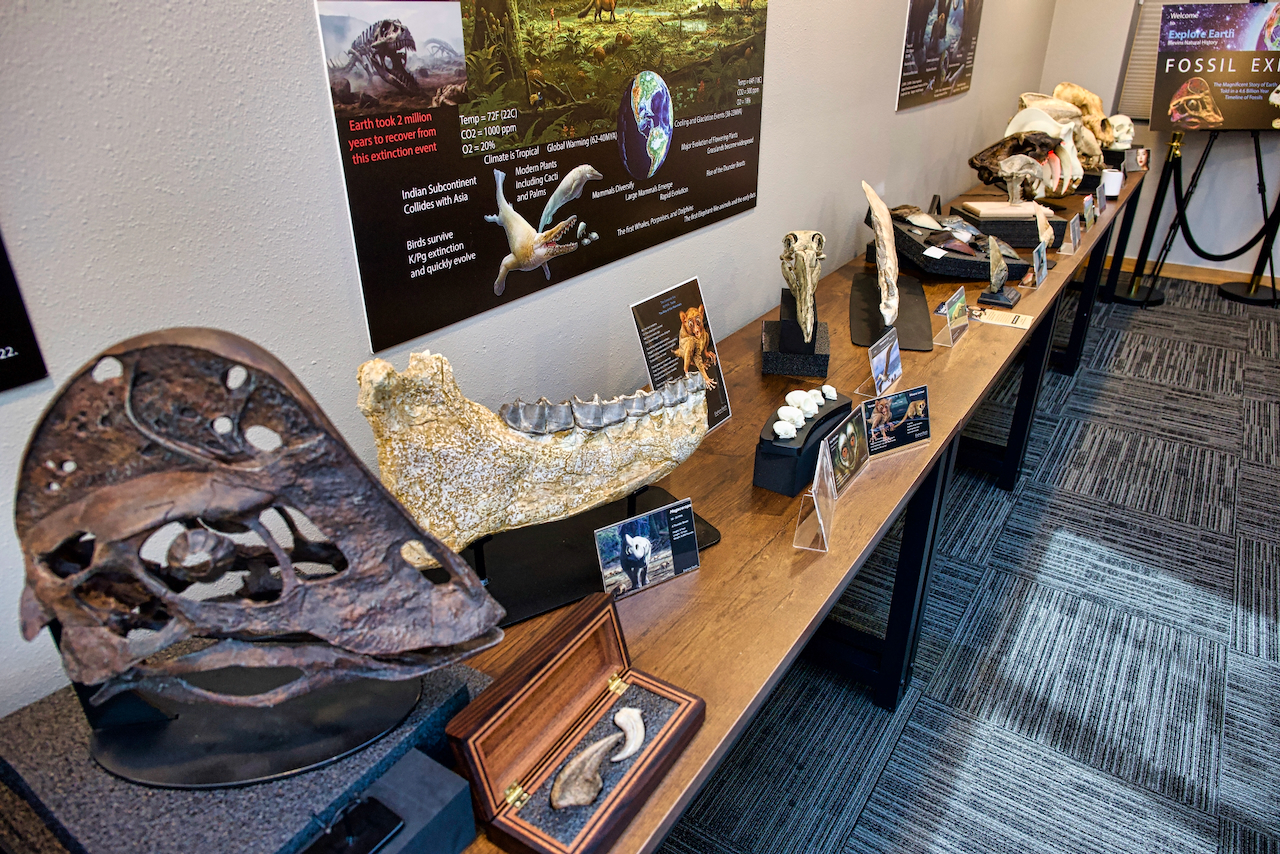
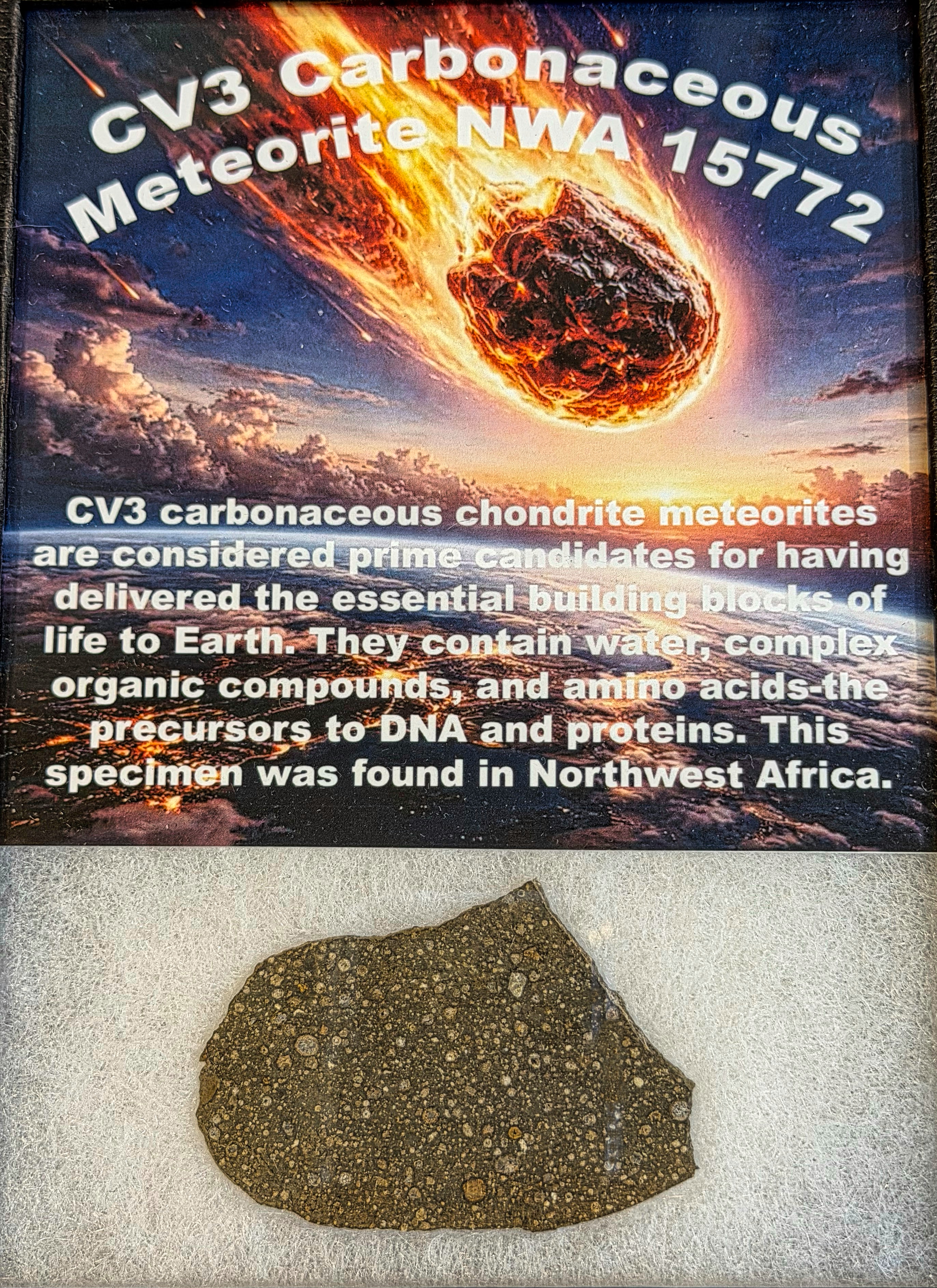
The gallery show titled "Explore Earth," begins at the very beginning—4.6 billion years ago. Blevins uses self-designed storyboards to guide visitors through the eons. The tour starts with real meteorites, including an iron-nickel specimen weighing 20 pounds and a rare carbonaceous chondrite that Blevins notes contains "the building blocks required for life".
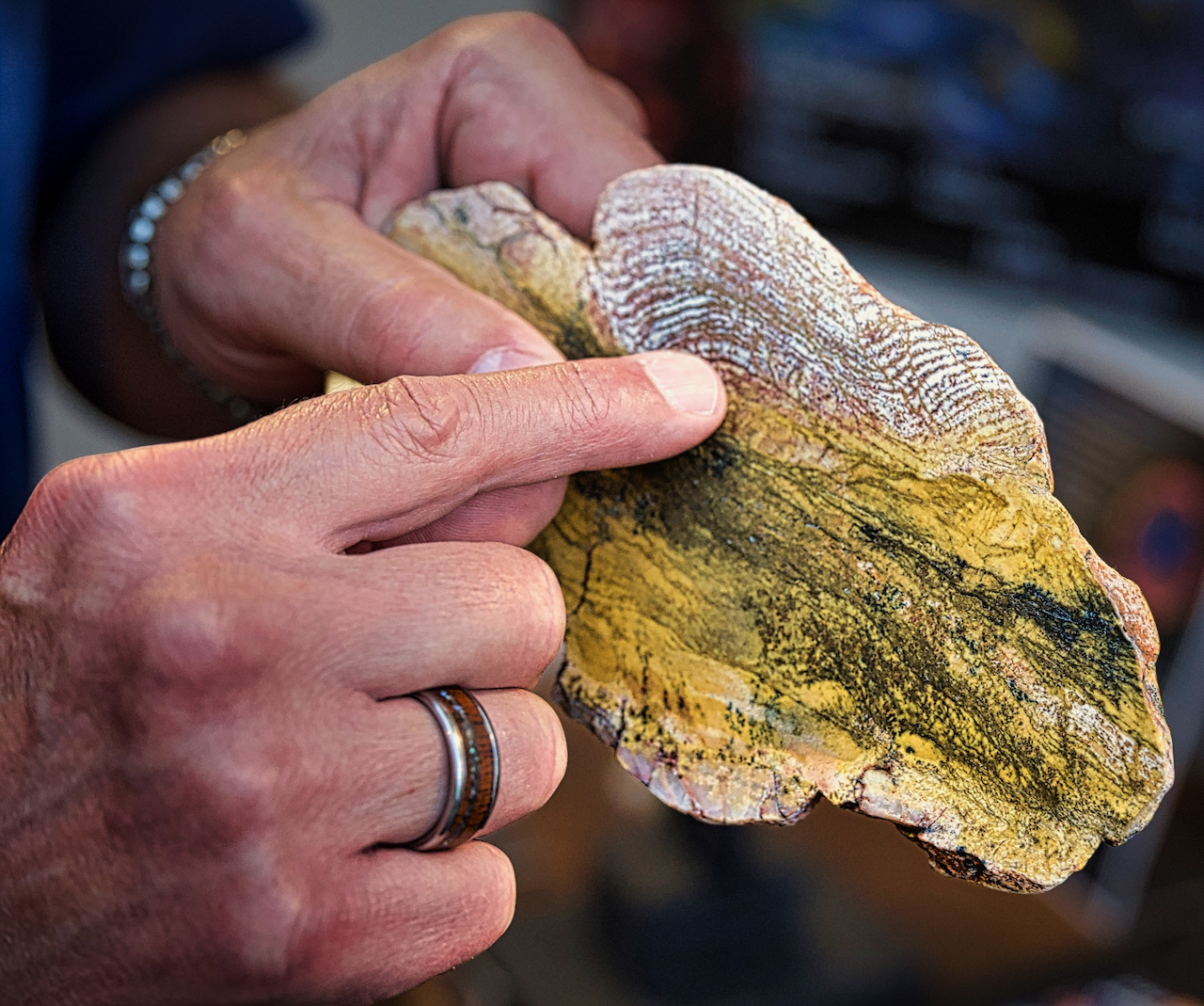
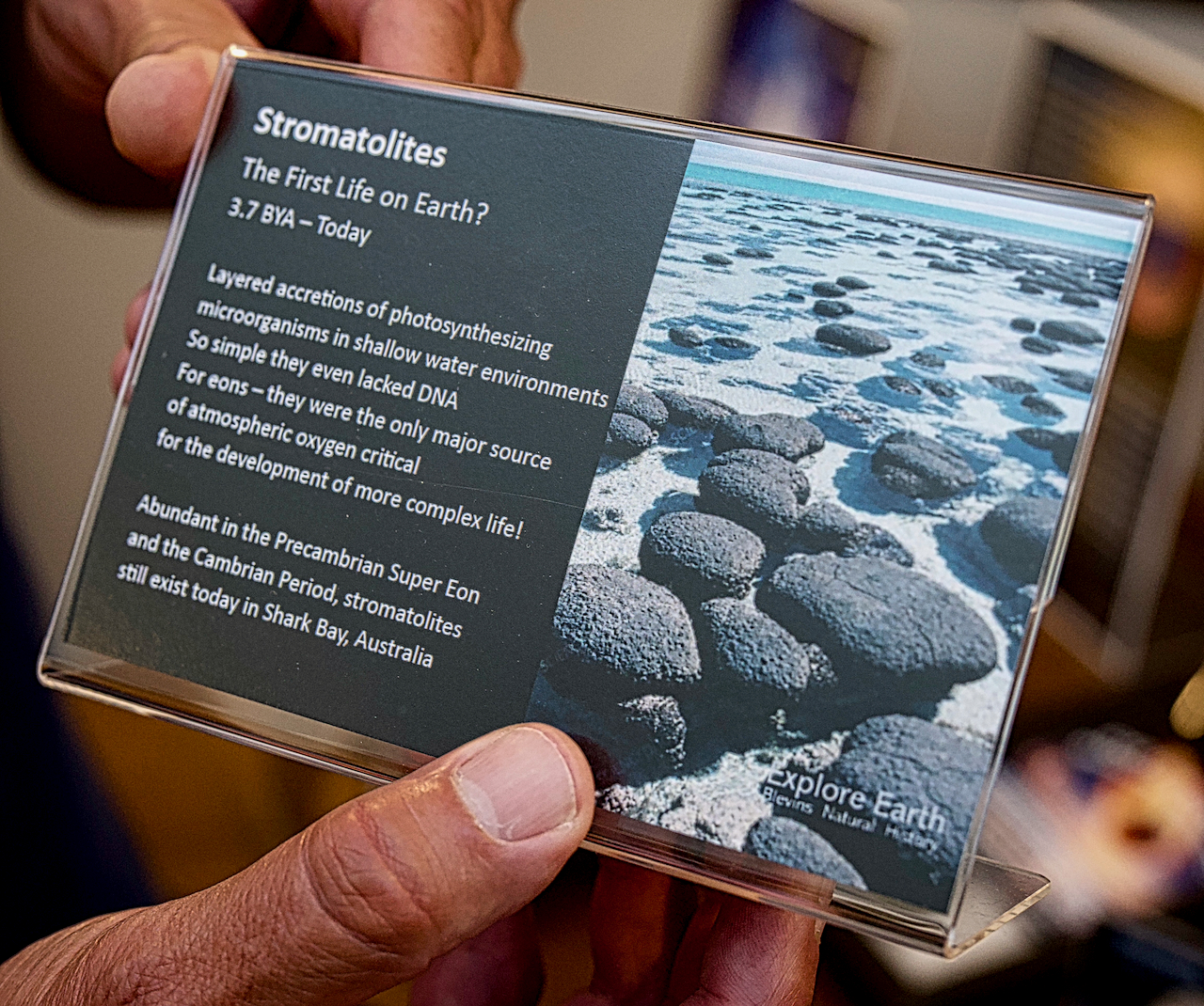
As visitors move through the timeline, they encounter the earliest signs of life: 3.43 billion-year-old stromatolites from Australia. Blevins shares a surprising fact about these ancient microorganisms: "The first color of life on earth was pink".
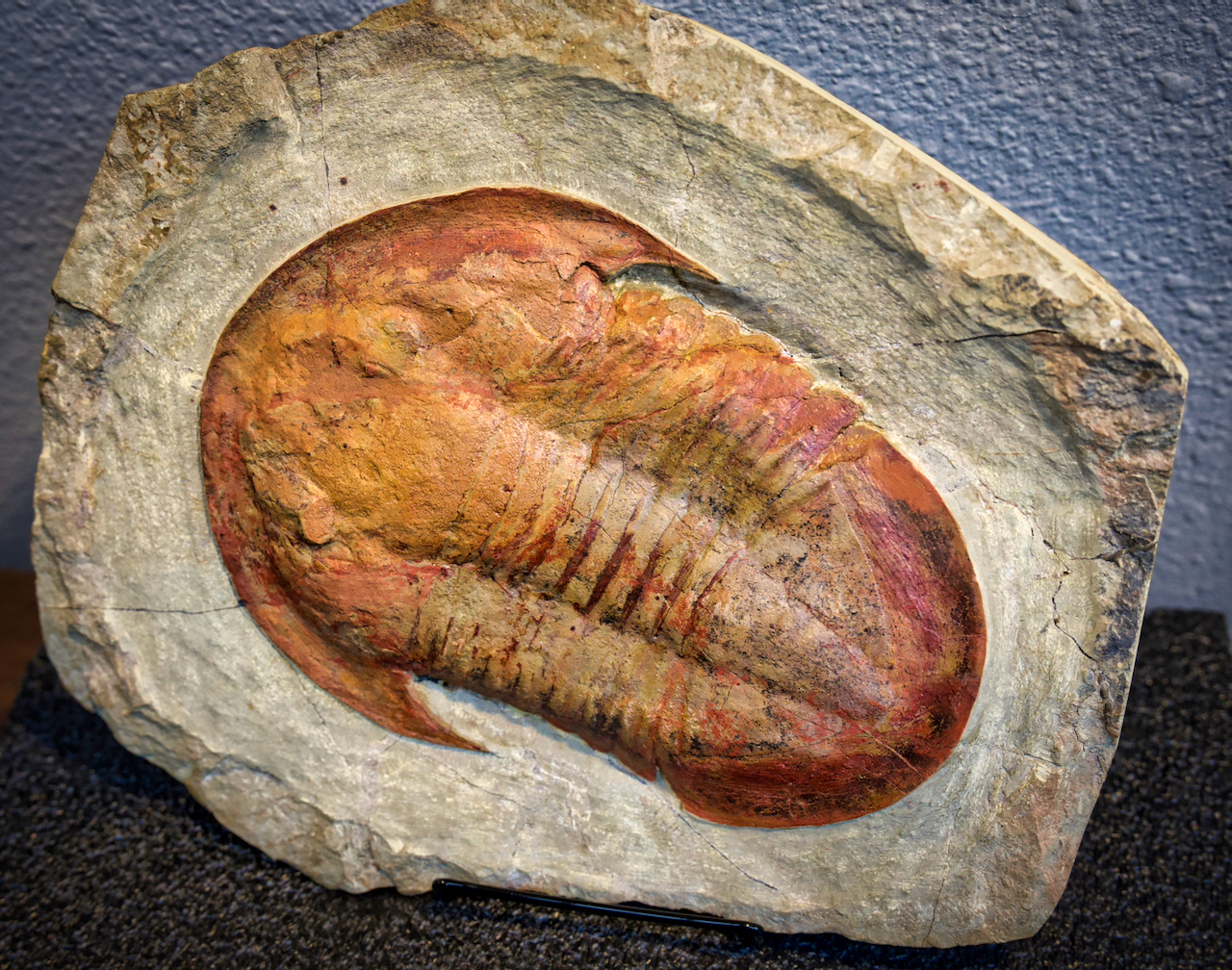
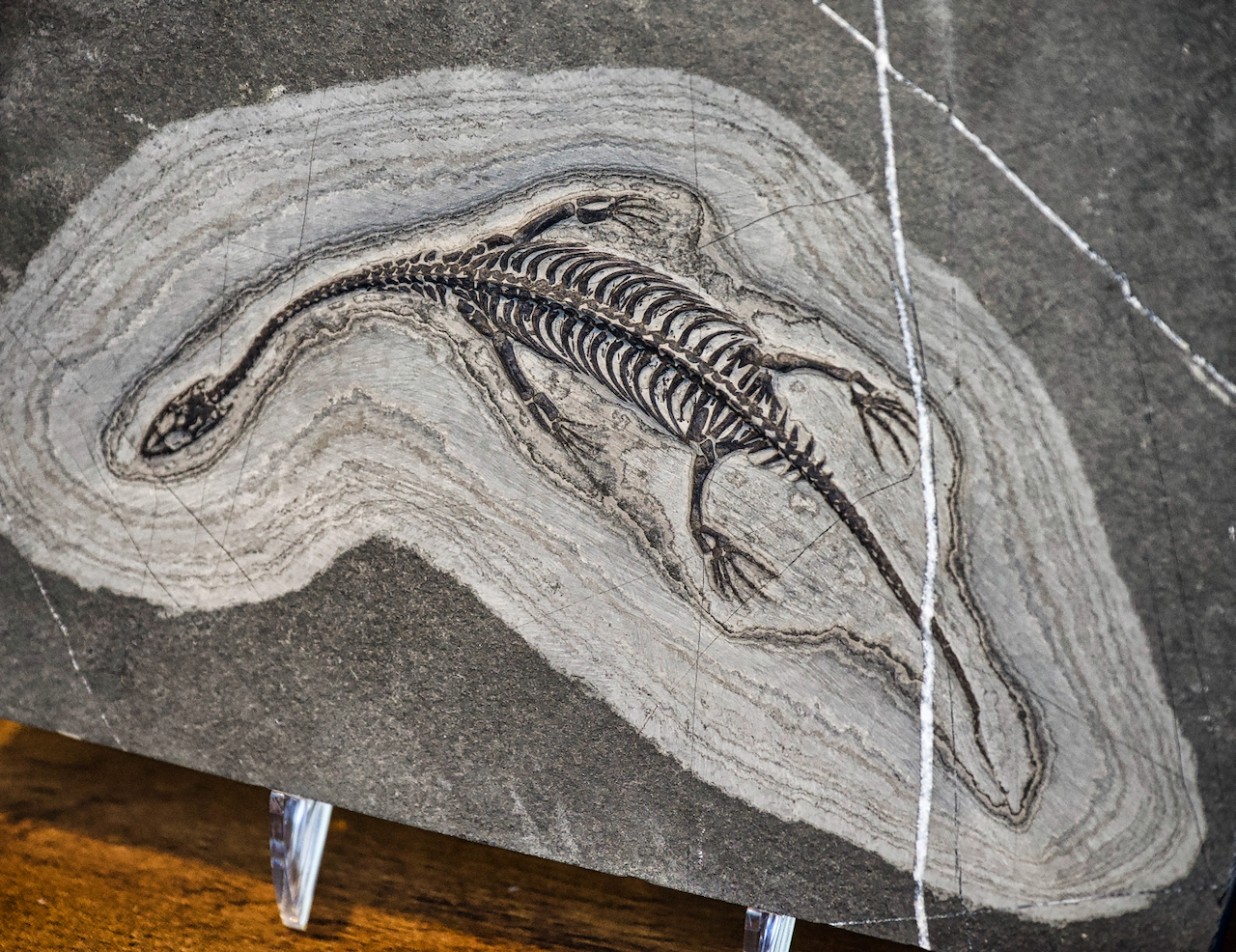
The collection is a mix of authentic specimens and "museum-quality replicas," as some originals are prohibitively expensive or rare. Highlights of the prehistoric gallery include:
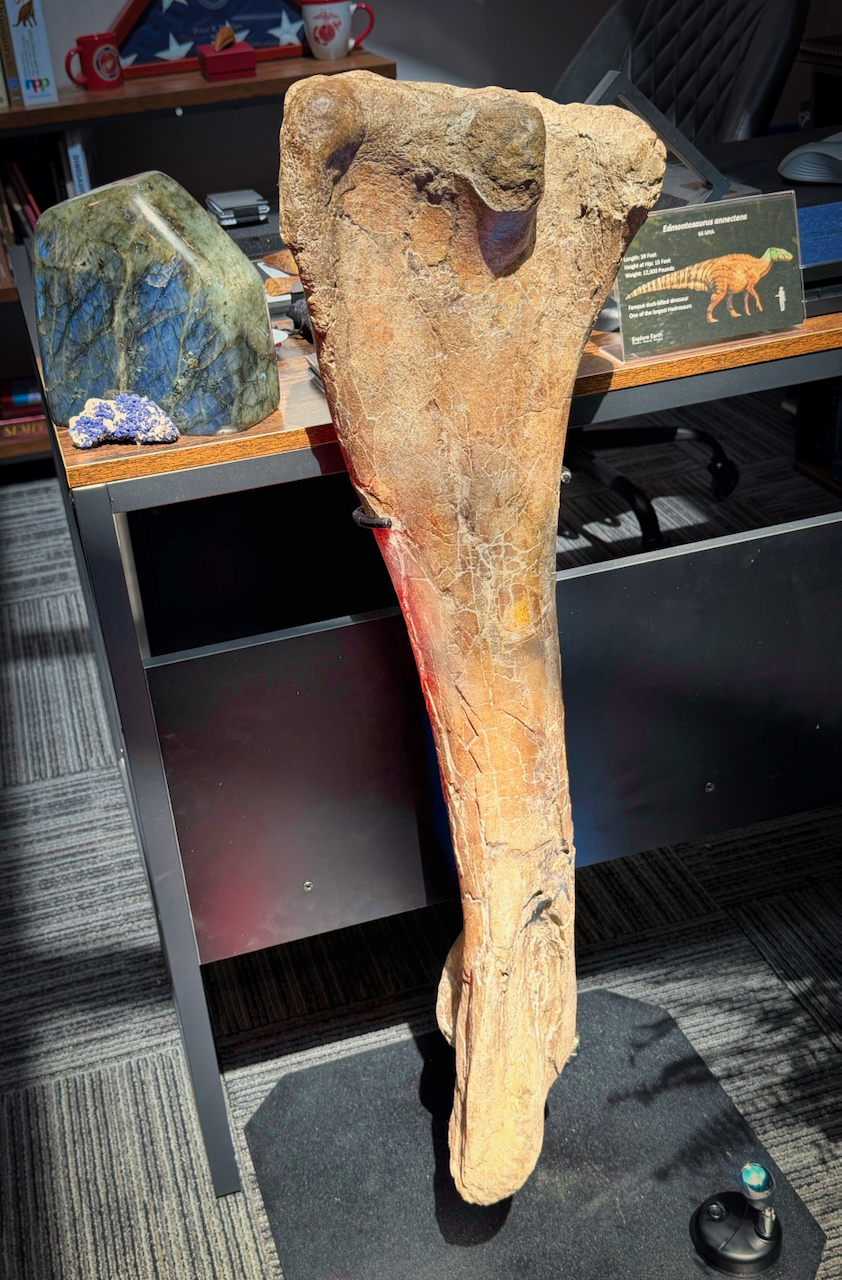
- The "Cow of the Cretaceous": A massive tibia from an Edmontosaurus, a 39-foot-long herbivore that Blevins notes was "probably the favorite food of the T-Rex".
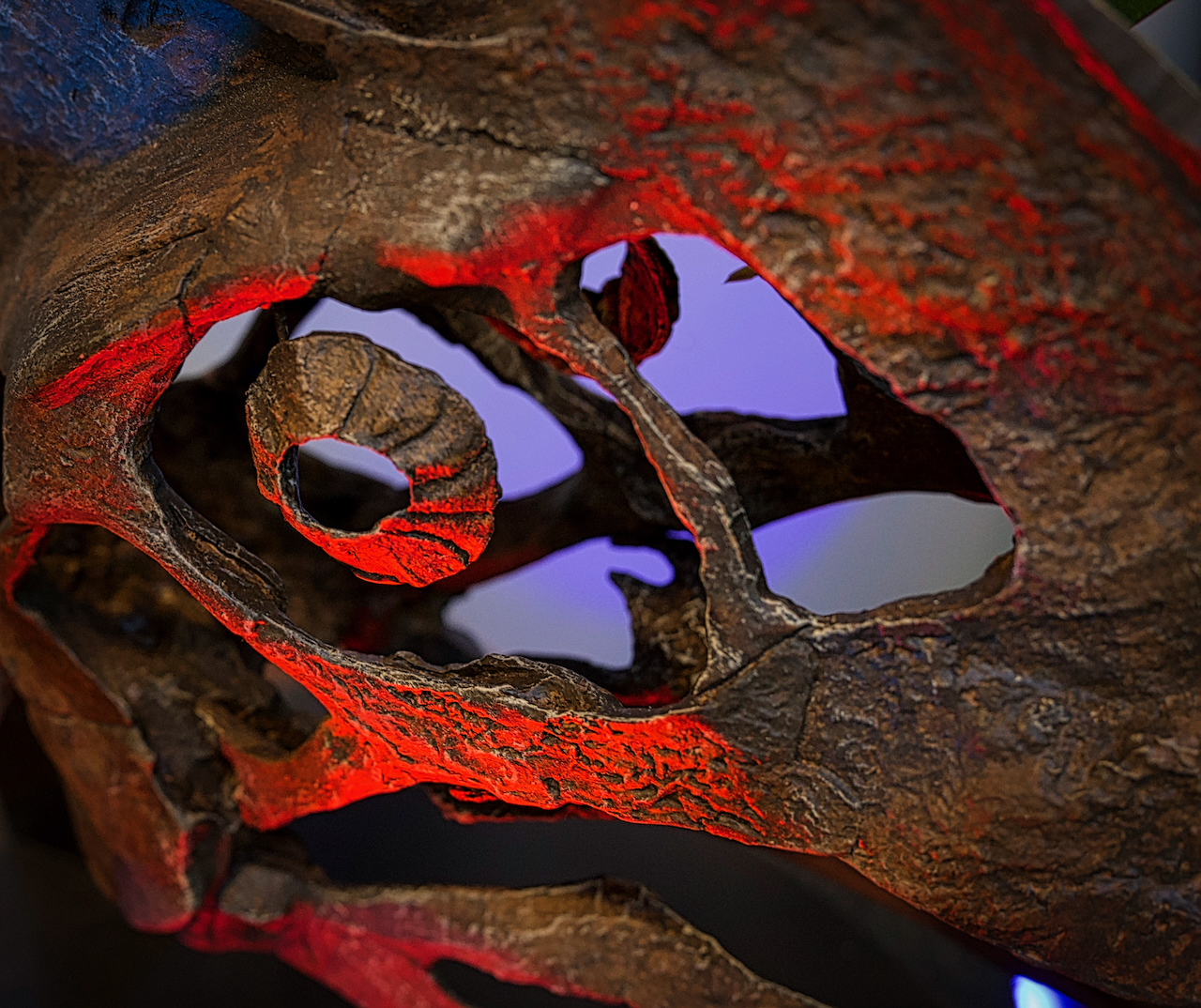
The boney eye of a Anzu Wiliei "Wylie's Feathered Demon" known as the Chicken from Hell. Photo by Patrick Robinson
- The "Chicken from Hell": A replica of Anzu wyliei, an 8-to-9-foot-tall feathered dinosaur with a prominent head crest.
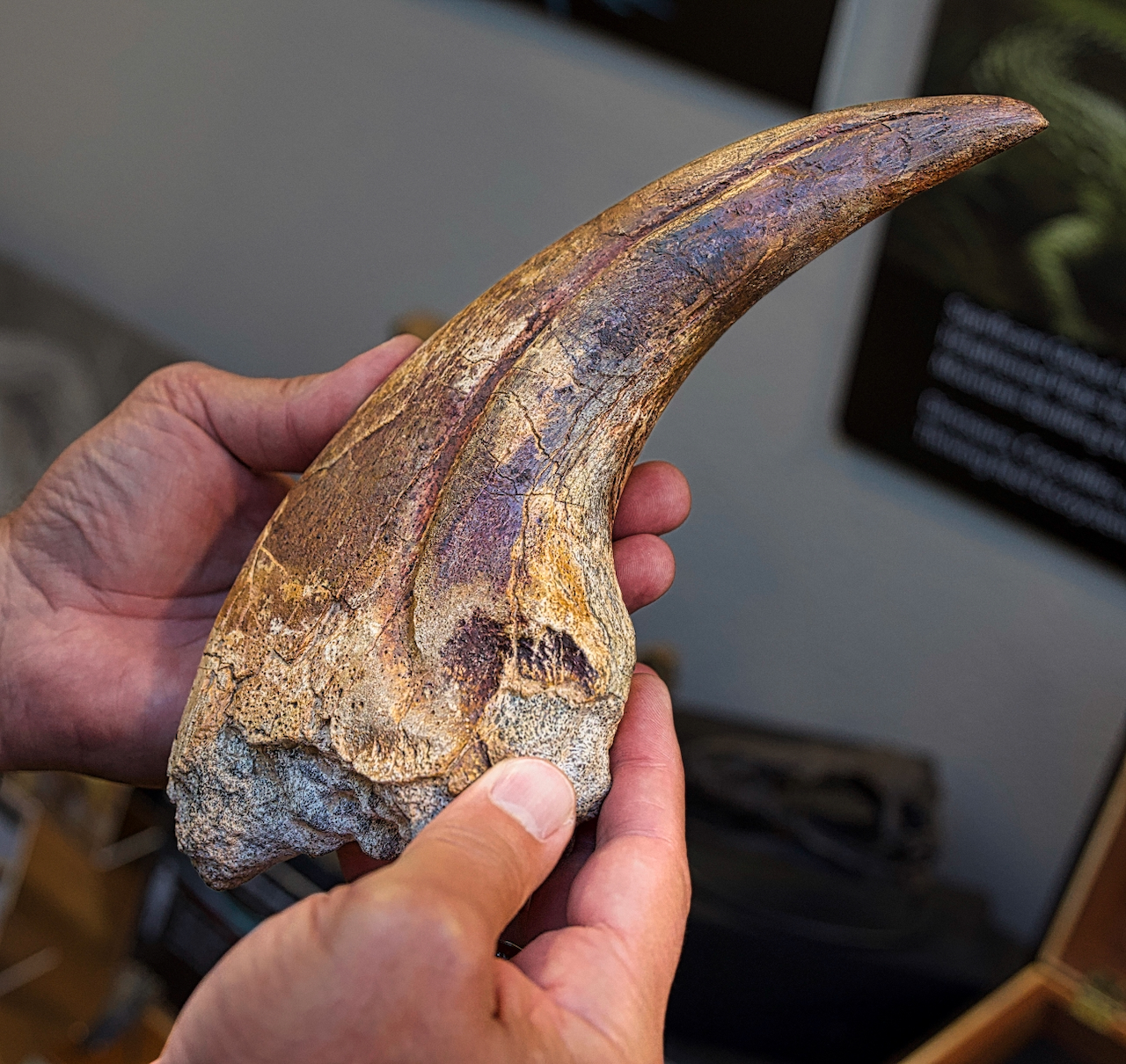
- The Suchomimus Claw: A thumb claw from a Suchomimus that Blevins describes as "what a 12-year-old boy would design if he could design a dinosaur". The internal bone structure alone is massive, though the original keratin claw would have reached 18 inches in length.
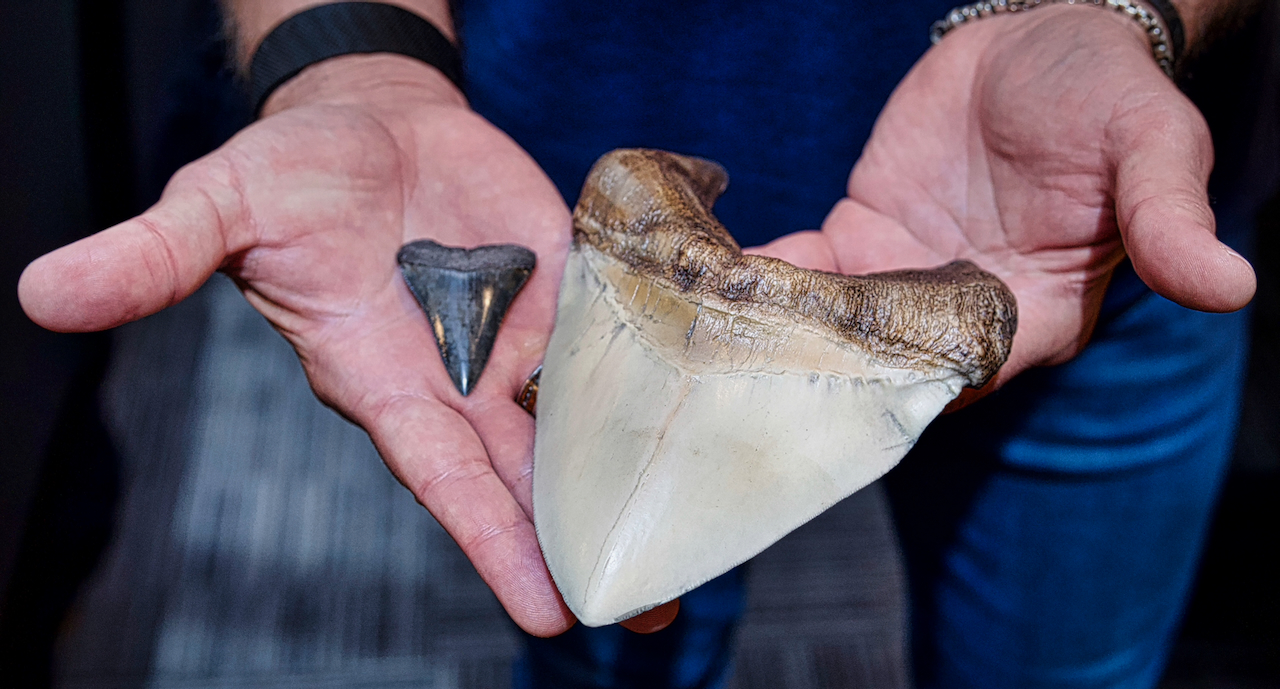
- Marine Giants: Teeth from the Megalodon, the greatest predator of all time, alongside which a Great White shark tooth looks like a mere "snack".
The Legend of Bigfoot and the Grover Krantz Connection
One of the more unique items in the collection is a sculpture of Gigantopithecus, a 10-foot-tall primate from ancient China that many contemporary enthusiasts associate with the Bigfoot legend.
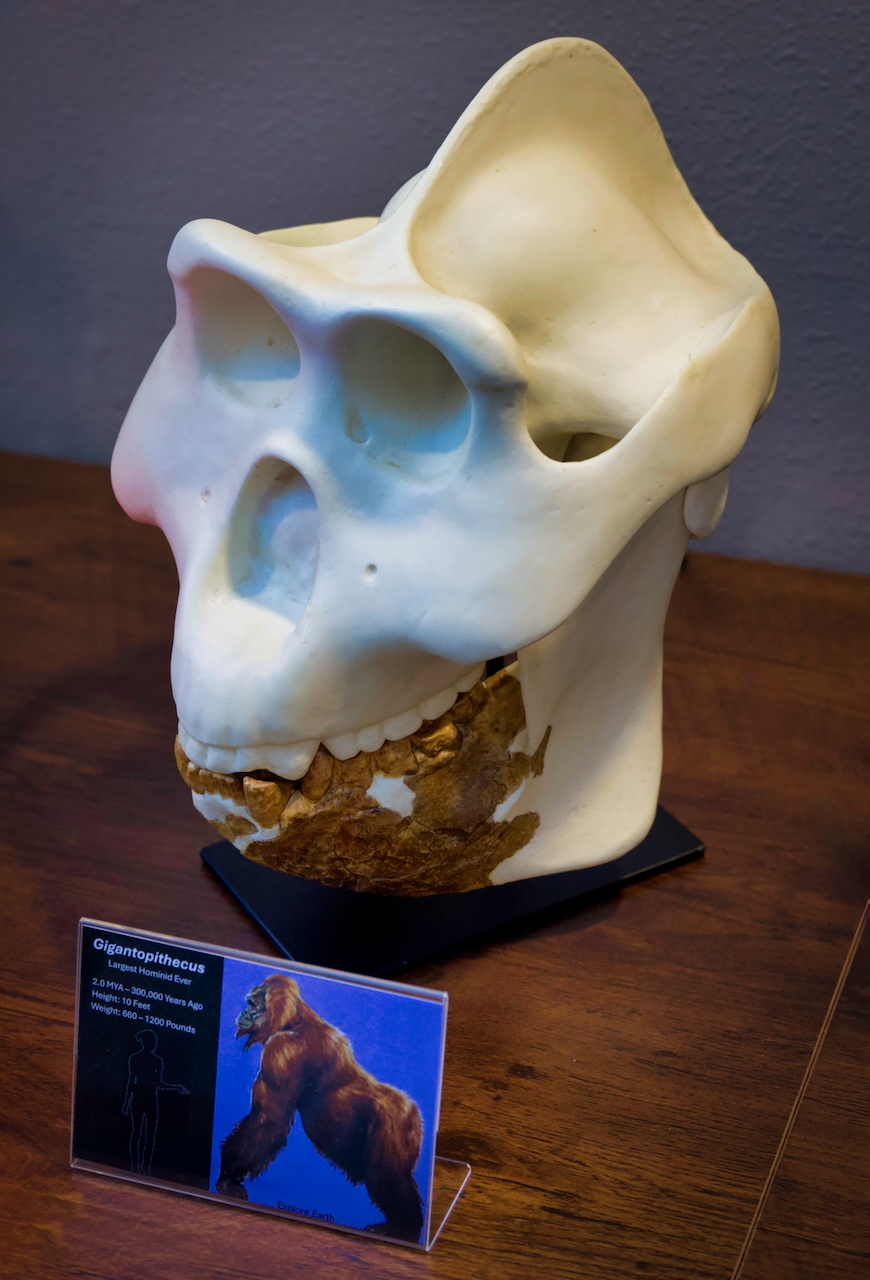
Blevins’ interest in this creature is personal; as a young man, he was "pen pals" with the late Grover Krantz, a Washington State University anthropologist who famously researched the reality of Bigfoot.
"I think it’s possible," Blevins says regarding the creature's existence, noting that while only jaws and teeth have been found in the fossil record, there is "tons of it in China".
A Mission of Accessibility and Conservation
Blevins characterizes himself as an "informal educator" with a "hidden agenda": he wants to foster a connection with the Earth so people will "make better decisions on taking care of the earth".
He recognizes that many people, especially students in Eastern Washington or at Title 1 schools, may not have easy access to major institutions like the Burke Museum. To bridge this gap, Blevins takes his gallery (at least in part) on the road, providing free exhibits for Title 1 schools and traveling as far as Ritzville to share his collection with local libraries.
"We make it accessible and that's my purpose," Blevins says. "How magical it is and how fragile it all really is".
How to Visit
The Blevins Natural History Gallery in West Seattle is open for tours by appointment. While Brian manages the fossils, Pamela continues her 25-year tenure teaching one-on-one sessions at Pilates at Fauntleroy, located in the Fauntleroy Community Center. Together, they represent a unique blend of West Seattle business history and a profound dedication to the history of life on Earth.
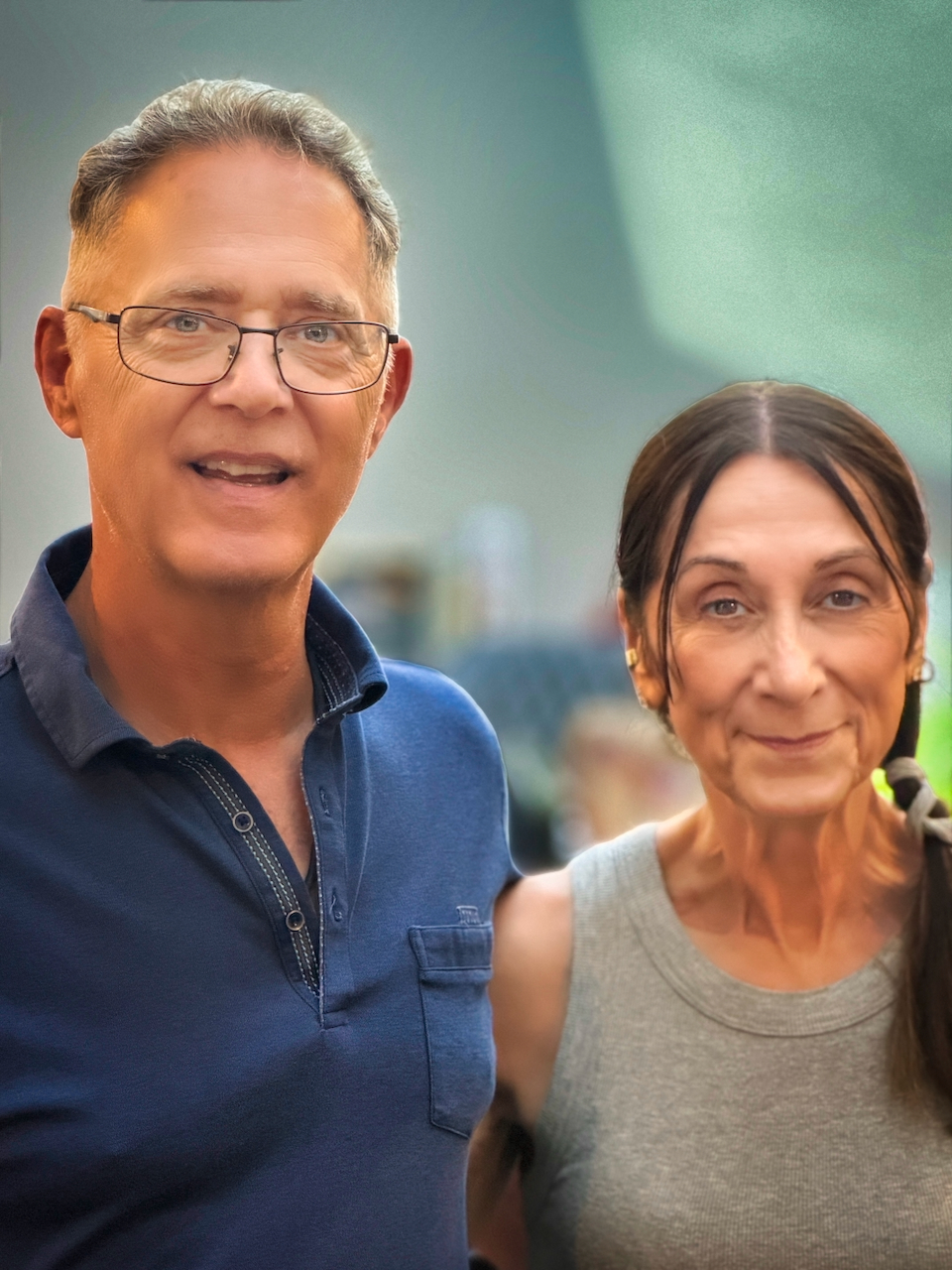
For those looking to "experience 4.6 billion years of Earth’s history," the Blevins family is ready to share the wonder.
Find them online here: Blevins Natural History Gallery
CONTACT
Email info@bnhgallery.com
Location: 4711 44th Ave SW, Suite B Seattle, WA 98116
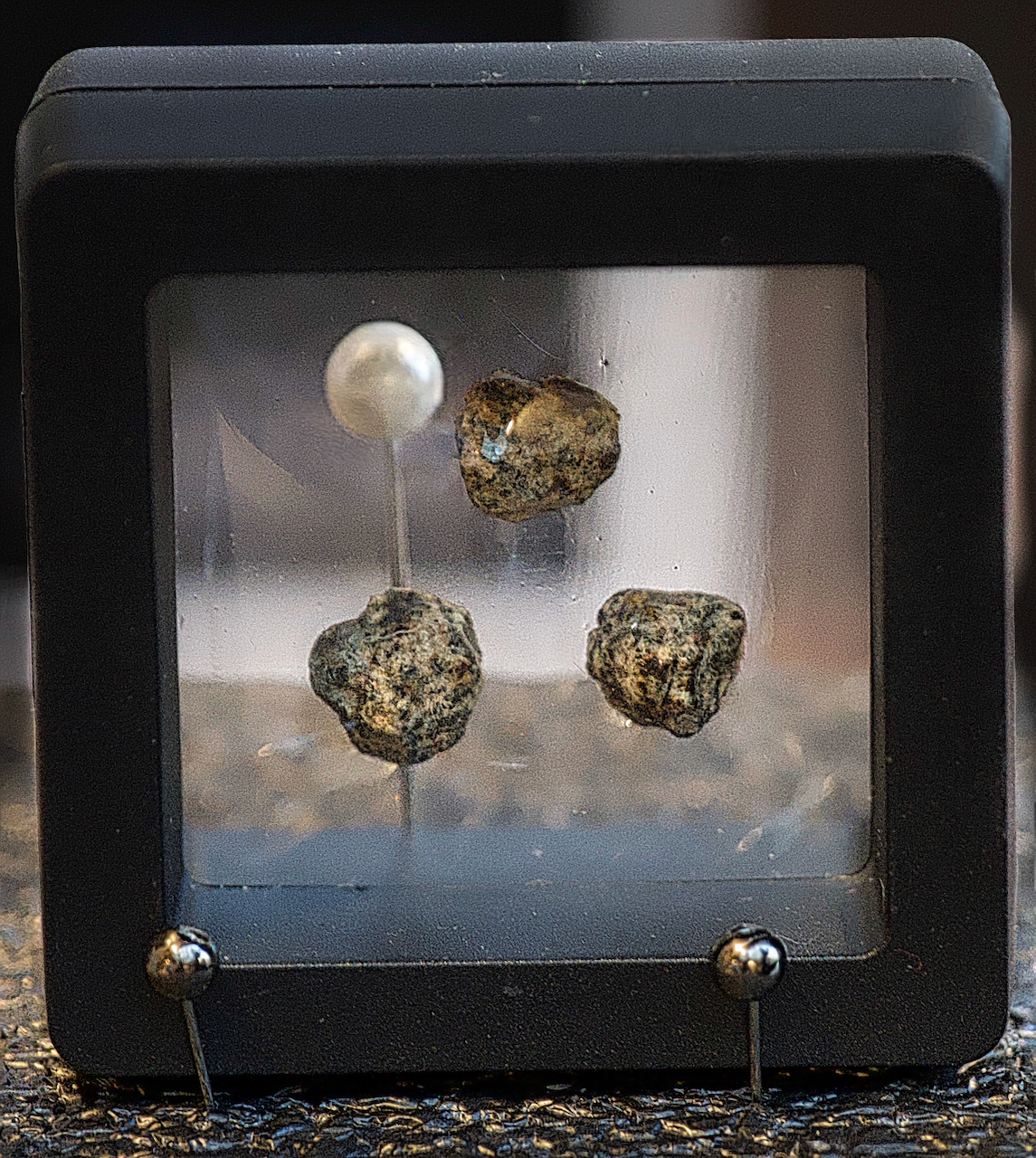
Meteorite fragments classified as Erg Chech 002. These volcanic remnants of a lost protoplanet are dated older than the Earth at 4.6 billion years old. Photo by Patrick Robinson
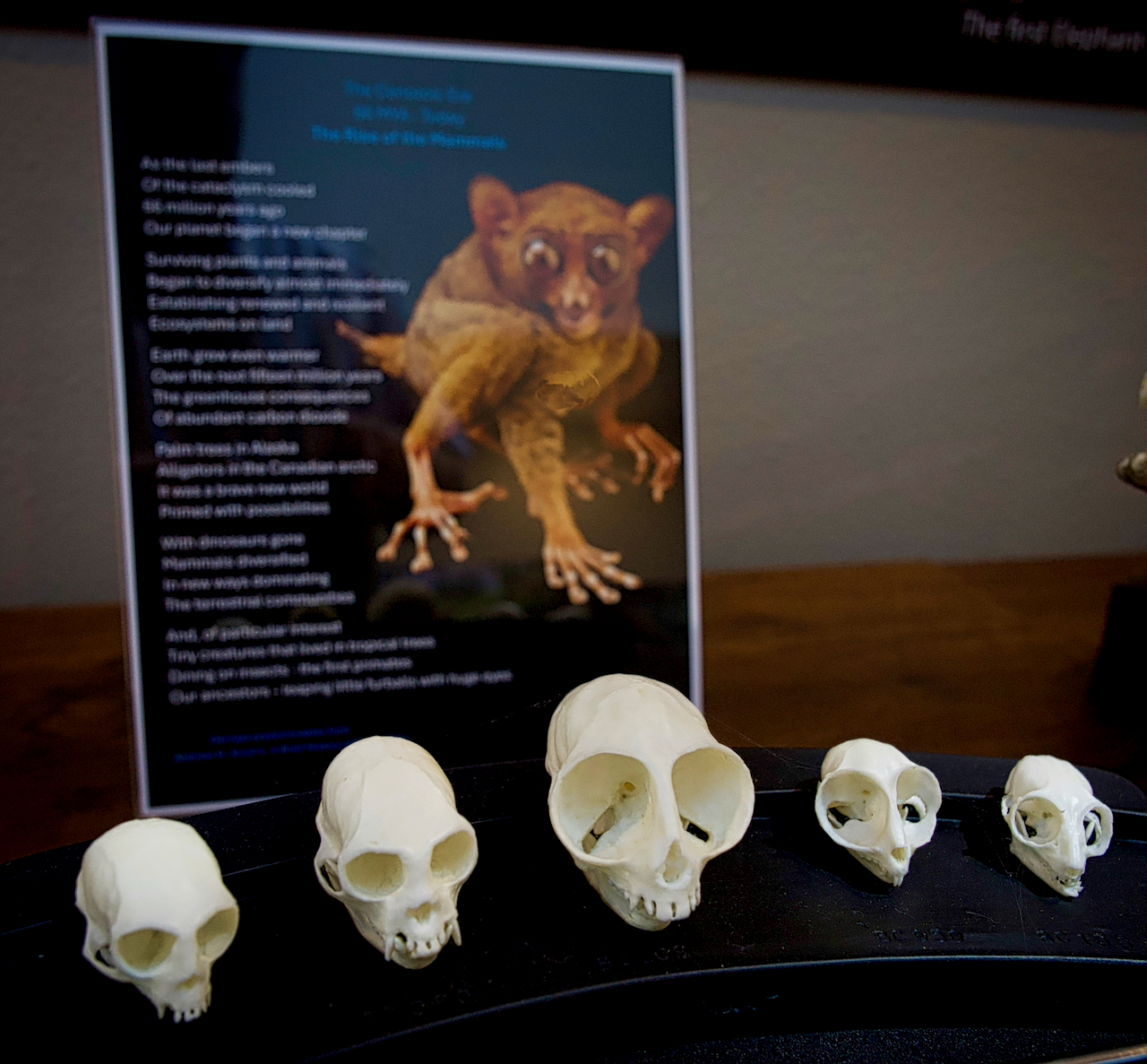
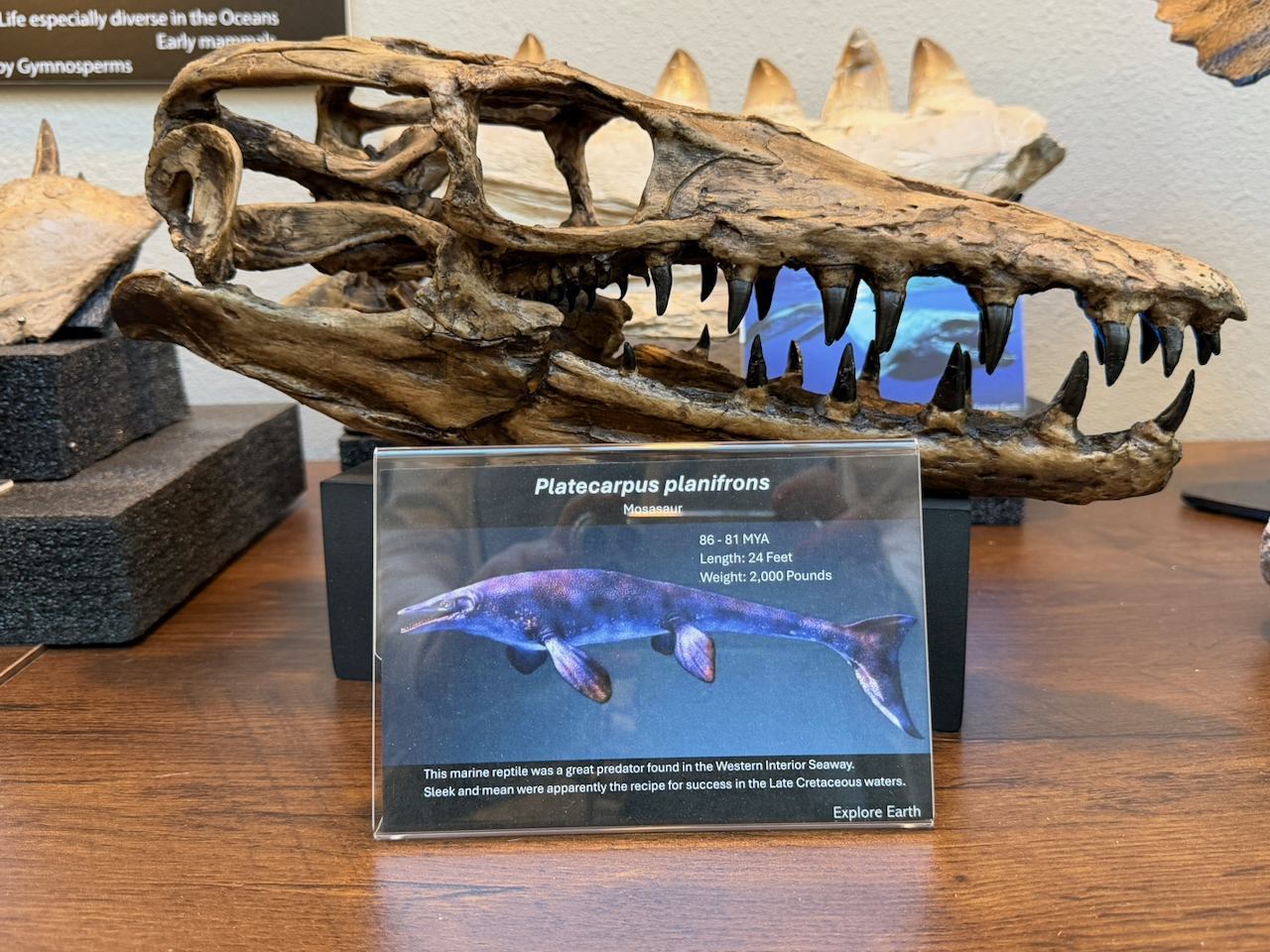
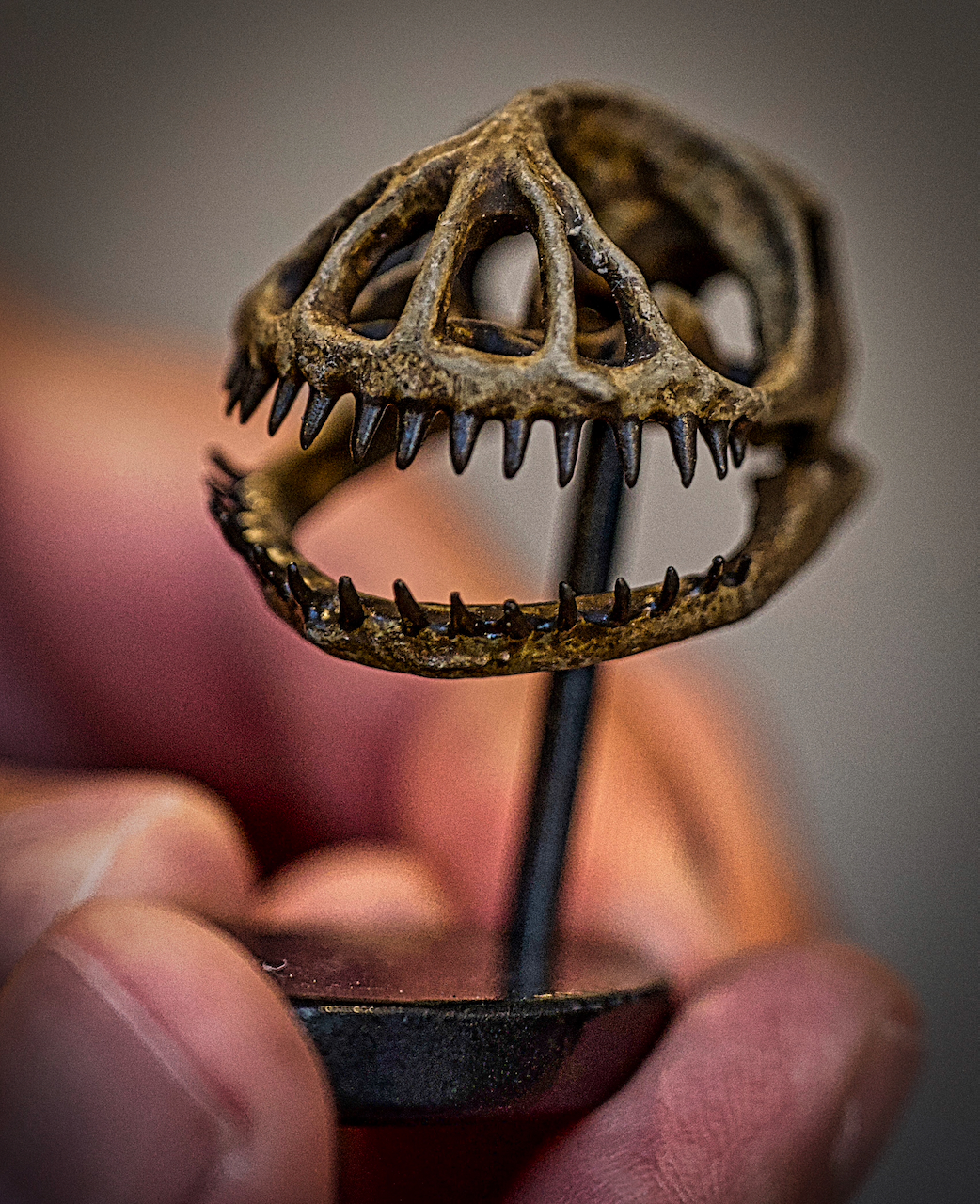
A replica skull of a Platecarpus planifrons, a marine reptile (mosasaur) from over 80 million years ago. Photo by Kimberly Robinson
