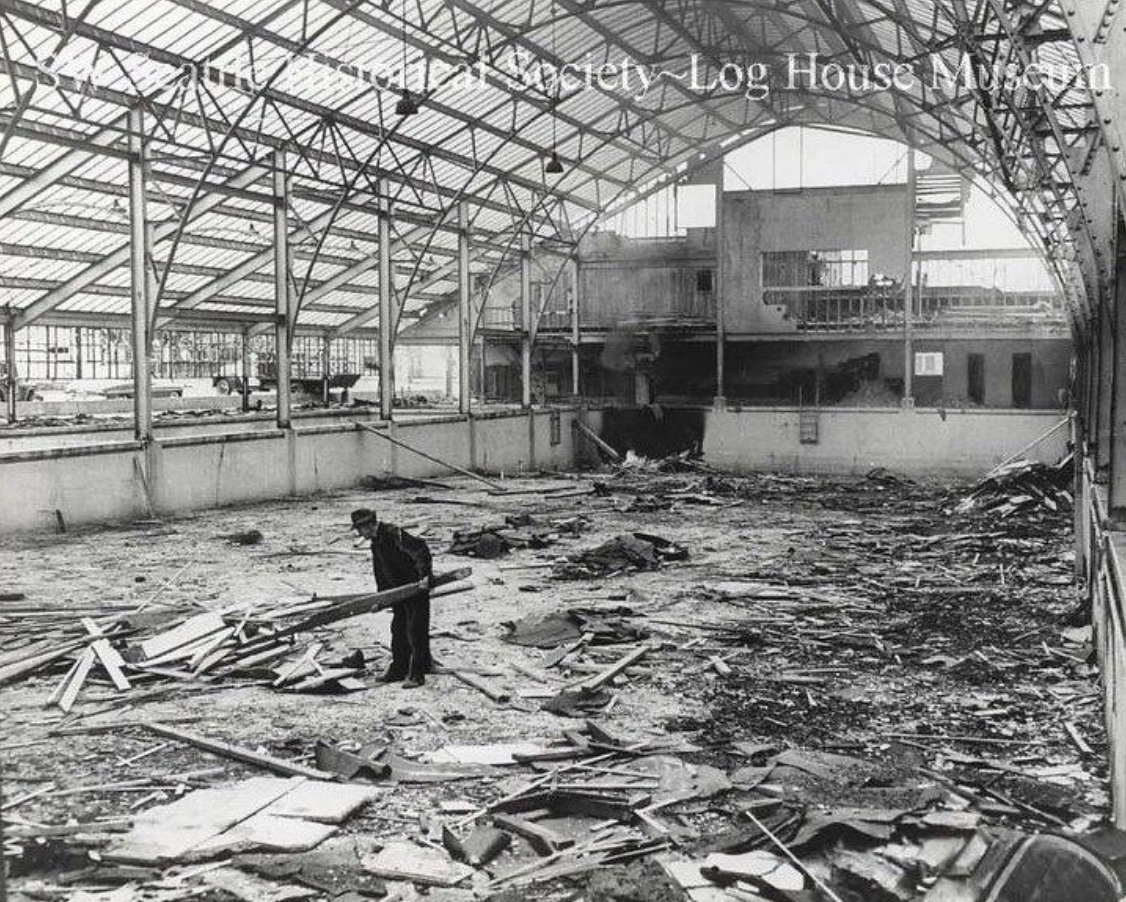
A man holds lumber in the Alki Natatorium. Prior to demolition, which began Mar 1953, nearly every window had been smashed by vandals (including, strangely enough, seagulls dropping clams through the glass skylights). Voters originally planned for a combination fieldhouse and natatorium to take its place, but compromised on "just" a fieldhouse when construction went over-budget.
See photos of the Alki Point Natatorium back in its heyday at the Grand Opening on Sat, August 20th, 5:00-7:30
Join the Southwest Seattle Historical Society for the grand opening of its new interactive exhibit, Beyond Alki: Stories of West Seattle and the Duwamish Peninsula, on Thursday, August 20 from 5-7:30-pm at the Log House Museum.
Alki was first called sbaqʷabqs. It means prairie in Lushootseed, the language of Coast Salish people. It describes how this place looked—grassy plains and scattered stands of fir trees. Settlers who accessed federal land grants arrived in 1851 and called this place “Alki.” Alki translates to “by and by” in Chinook Jargon, a trade language of the era. They envisioned a major city from this shore.
As Seattle grew, so did the Duwamish Peninsula – industry developed, waterways changed, and forests disappeared (almost). Newcomers arrived in waves and built homes, schools, businesses, and neighborhoods.
Beyond Alki highlights the significance of Alki Beach, shares stories from communities across the Duwamish Peninsula, incorporates new interactive experiences – visitors can listen to music from West Seattle’s past from an interactive music listening station – and highlights artifacts, including the recently acquired Rolf Neslund Memorial Shrine bust.
Visitors are invited to visit the museum beginning Saturday, August 8 on Washington Museum Day while installation, including new signage for the exterior of the city landmarked building, continues.
This exhibit is supported by generous sponsors and funders, including 4Culture, Nucor Steel, the Hugh and Jane Ferguson Foundation, Maritime Washington National Heritage Area, City of Seattle Office of Arts and Culture, the Norcliff Foundation, the West Seattle Garden Tour, Mechanics Bank, and the City of Seattle Department of Neighborhoods.