Seattle details Glassyard Commons RV Safe Lot plans and funding amid strong pushback from outreach critics
Seattle details Glassyard Commons RV Safe Lot plans and funding amid strong pushback from outreach critics
Now set to open in November the lot still has issues to resolve
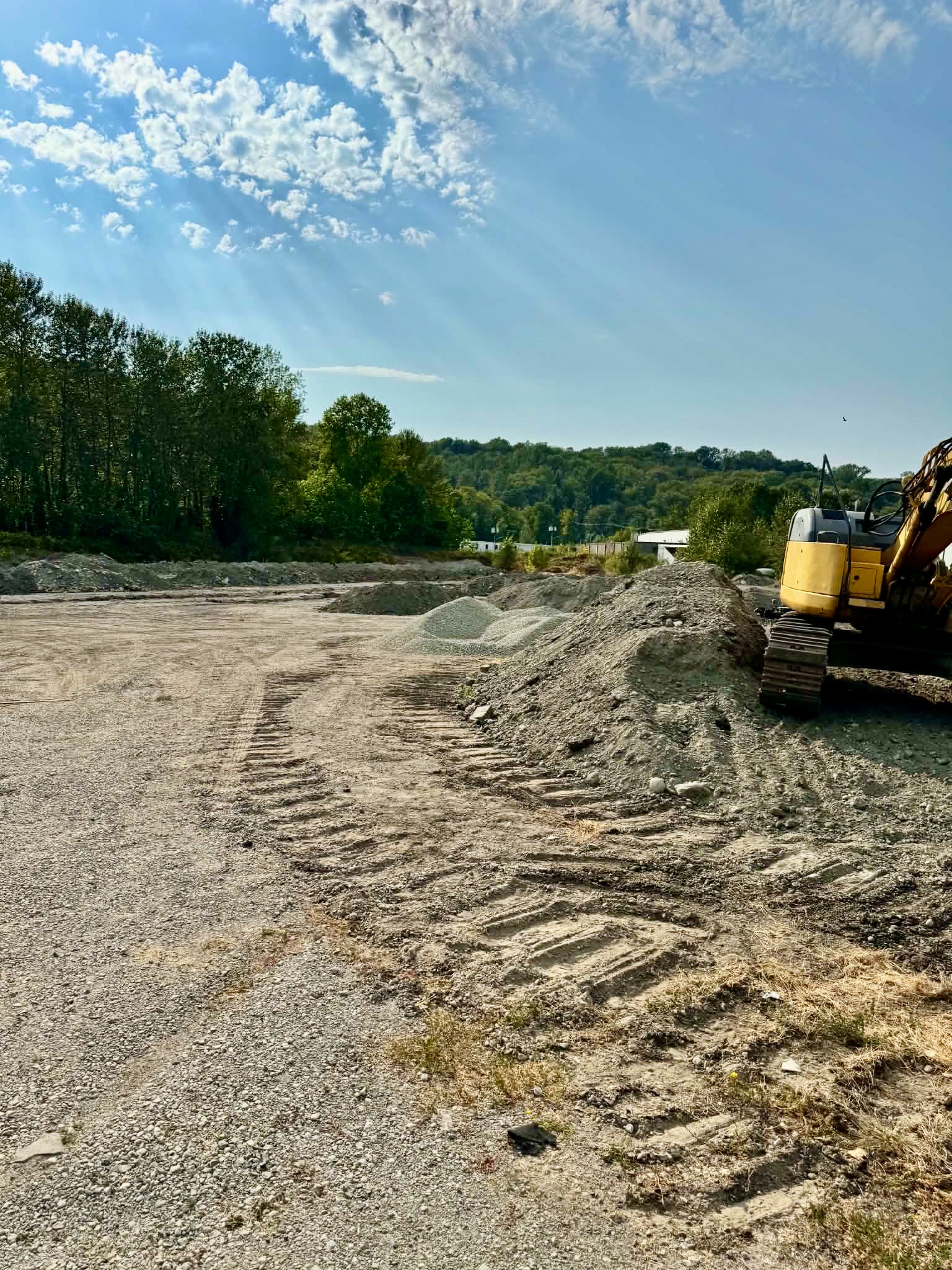
The site for Glassyard Commons RV lot and Tiny home village at 7200 2nd Ave SW. Owned by the Washington State Department of Transportation the site is said to be leased to the City of Seattle. Construction gear is now on site.
Photo by Liz Steen
Fri, 08/14/2026
The City of Seattle and the Mayor’s office have shared new details regarding a planned RV and tiny home safe lot at Glassyard Commons, located at 7200 2nd Ave SW in the Highland Park neighborhood. However, the initiative faces growing scrutiny from outreach groups who argue the city is repeating a "failed playbook."
Developing Glassyard Commons
The site, which is scheduled to open in November 2026, is currently owned by the Washington State Department of Transportation (WSDOT). WSDOT has leased the land to the Low Income Housing Institute (LIHI) to operate the safe lot. Although visitors to the property have noted an immediate lack of sewage infrastructure or restrooms, the Mayor's office stated that hygiene facilities will be installed on-site as development progresses, matching the standards of other authorized encampments.
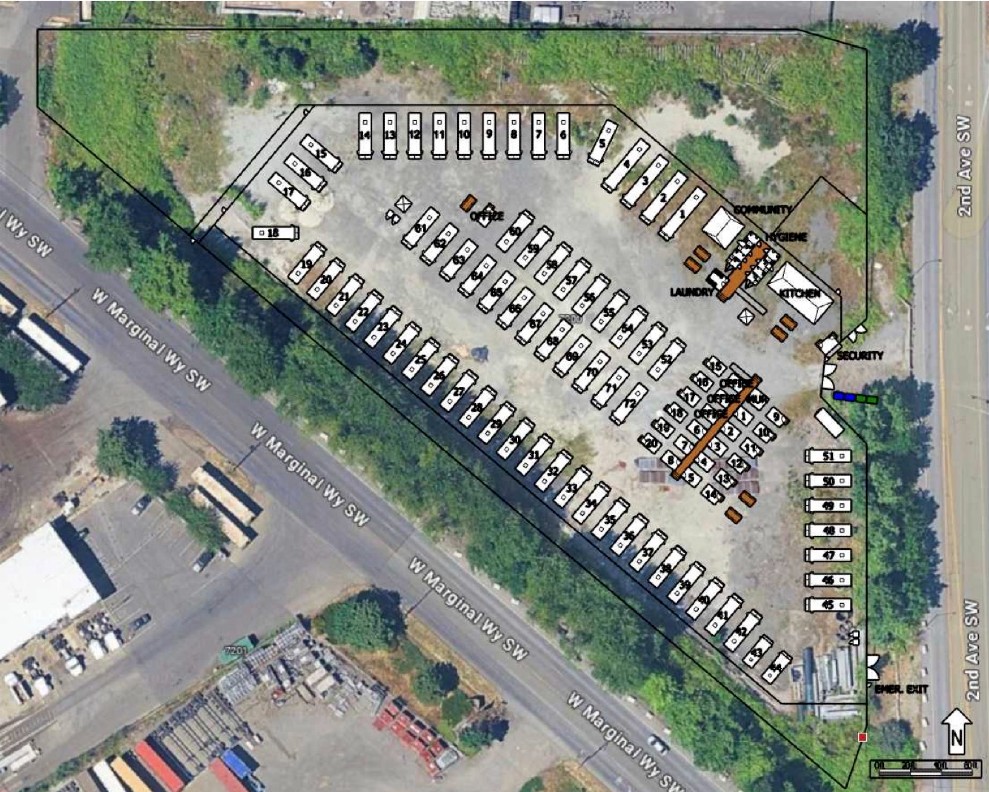
The City of Seattle released this graphic of Glassyard Commons last March. It was slated to be the site of 72 RV stalls and 20 tiny homes.
Funding Outreach and Towing Logistics
Under the proposed legislation, the city's plan would add positions to the Human Services Department and increase funding for contracted outreach services. Currently, the city's vehicle outreach is managed by University Heights and the Salvation Army.
The city is also reviewing how the legislation will impact RV towing and storage costs. While the city currently holds a towing contract with Lincoln Towing, it has not yet been determined if they or another vendor will handle the RV towing services, which would go through the city's standard procurement process if the legislation passes.
Furthermore, the city is reviewing legal complexities stemming from the unanimous Washington Supreme Court ruling in City of Seattle v. Steven Long, which established that the city cannot charge towing or storage fees for a vehicle used as a primary residence.
Sharp Criticism from 'We Heart Seattle'
The city's plans have drawn strong criticism from We Heart Seattle, a local advocacy group. Led by founder and executive director Andrea Suarez, the organization argues that Seattle's homelessness crisis is driven largely by untreated addiction, mental-health disorders, and ineffective "Housing First" policies. Instead of traditional city systems, the group advocates for direct, hands-on intervention, active cleanups, and highly individualized outreach.
Suarez criticized the initiative directly, calling it a continuation of ineffective policies. “Seattle’s response to the RV crisis is the same failed playbook: temporary ‘safe’ lots and more spending without clear outcomes,” Suarez said. “The city cannot say how many people even qualify, what the true costs will be, or how it will handle the court ruling on towing fees. People living in vehicles need recovery pathways and accountability, not another layer of parking that warehouses the problem.”
Unresolved Legislative Questions
The timeline and final scope of the program remain uncertain. The Mayor’s office stated they cannot yet estimate how many RV owners will enroll, noting that participation depends entirely on the final eligibility criteria established by the City Council.
Additionally, questions regarding proposed "flexibility" rules—which would allow the city to lease parking lots without Council approval—remain unanswered. The Mayor’s office stated that no specific sites are currently being considered for lease under these rules. When asked if there is a limit on the number of lots or total dollar amount that could be rented without Council oversight, the Mayor's office redirected inquiries to the legislation’s sponsoring Councilmember Strauss.