
SDOT study reveals high curb space demand in West Seattle Junction as city prepares early fall recommendations
SDOT study reveals high curb space demand in West Seattle Junction as city prepares early fall recommendations
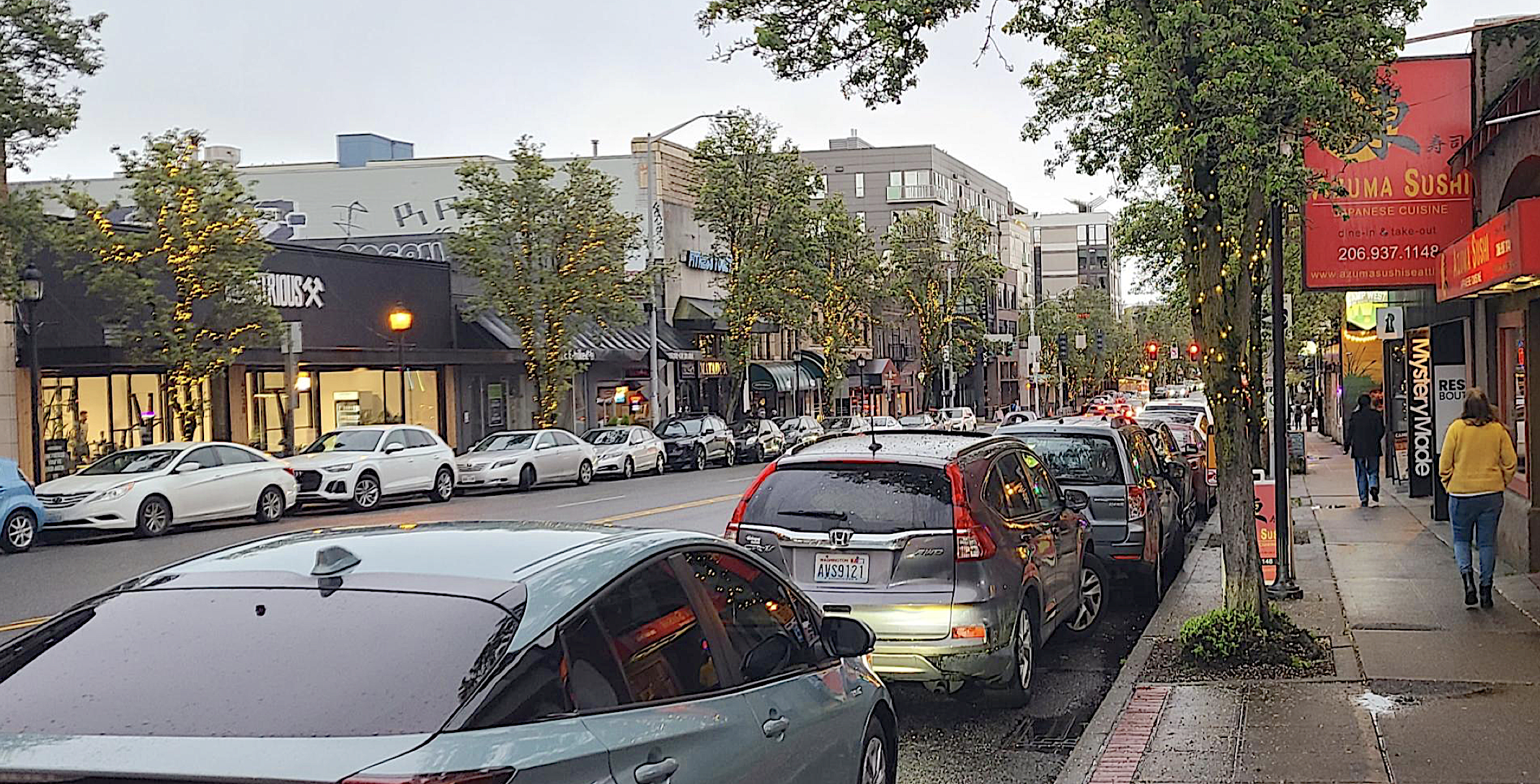
Everybody wants a free spot on the street. The Seattle Department of Transportation will release its final recommendations on parking in the West Seattle Junction this fall but based on last summer's survey and early summary it's clear, people want to park on the street.
SDOT photo
Tue, 09/22/2026
The Seattle Department of Transportation (SDOT) has released initial evaluation findings and community feedback regarding parking, loading, and curbspace access across the West Seattle Junction and Triangle business districts. Conducted through Mayor Harrell's Community Access and Parking Program (CAPP), the ongoing review highlights heavy on-street parking demand alongside commercial delivery challenges in the neighborhood core.
SDOT noted that these preliminary summaries represent the foundation of their technical review, and full draft recommendations with potential policy updates will be released for public feedback in early fall 2026.
Heavy Street Parking Demand Contrasts with Empty Off-Street Lots
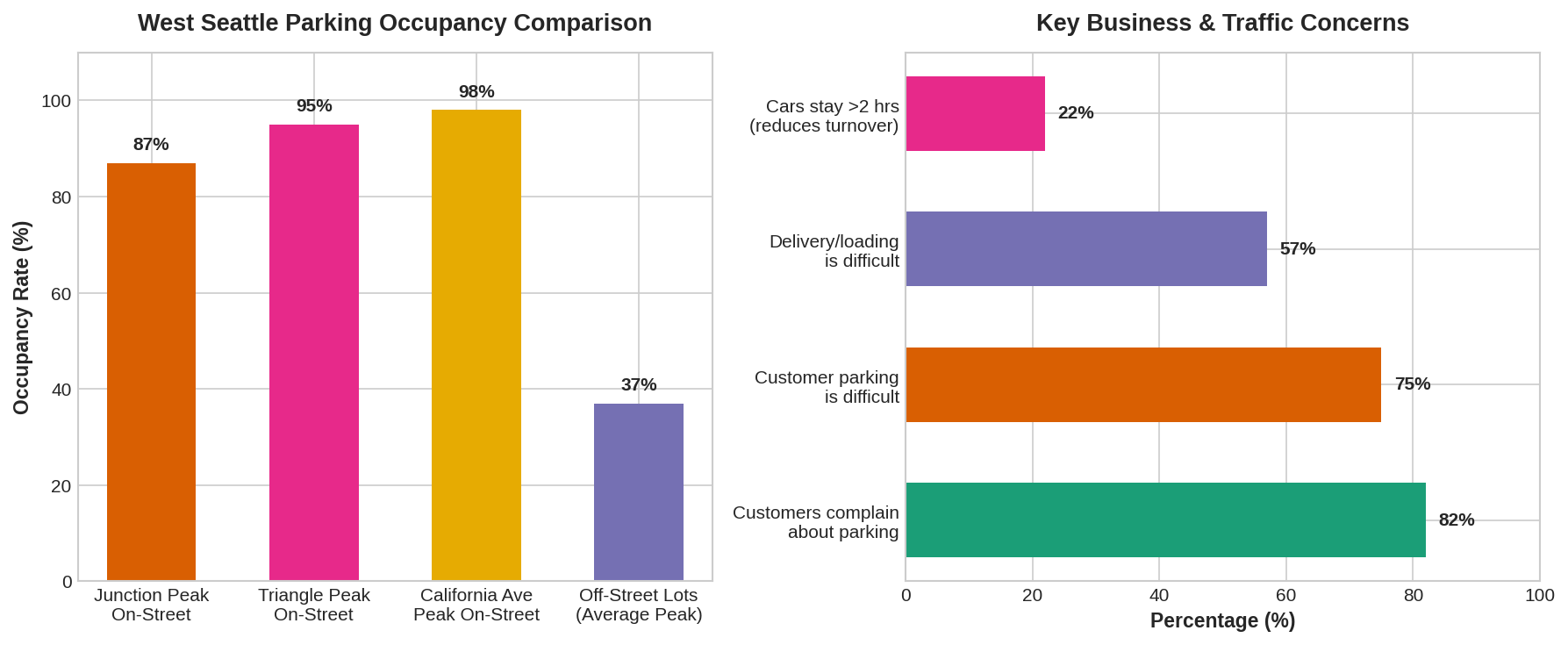
According to data collected during SDOT's April 2026 field study, on-street parking in the busiest portions of the Junction and Triangle reaches 87% to 95% capacity during peak daytime and evening hours. Along California Avenue SW, the main commercial corridor, occupancy reaches up to 98% during peak periods.
In contrast, publicly accessible off-street parking lots and garages remain underutilized, averaging less than 40% occupancy throughout the day. The study also found that nearly one in four parked vehicles (22%) remains at the curb for more than two hours, restricting turnover in spaces intended for short-term shopping and dining visits. In 2025, enforcement officers issued 1,610 parking citations within the study area, with 57% resulting from time limit violations.
Key Parking Occupancy & Usage Metrics
|
Location / Metric |
Peak Occupancy Rate |
Key Finding |
|---|---|---|
|
Junction On-Street Peak |
87% full |
Concentrated during midday and evening hours |
|
Triangle On-Street Peak |
95% full |
Highest demand observed in evening hours. |
|
California Ave SW Core |
88% – 98% full |
On-street spots consistently full near retail storefronts. |
|
Off-Street Garages & Lots |
18% – 37% full |
Substantially empty even when street spots are full. |
|
Long-Stay Parking (>2 Hours) |
22% of vehicles |
Reduces space turnover for incoming shoppers. |
Local Businesses and Residents Outline Access Challenges
SDOT's summer 2026 outreach engaged over 3,000 neighborhood participants through online surveys, mailers, and tabling at local events like Summerfest and the West Seattle Farmers Market. Feedback from community members and merchant owners revealed widespread concerns over curb space management.
Survey data indicates:
- Customer Parking Friction: 75% of local businesses report that finding customer parking is difficult, and 82% report frequently hearing customer complaints about parking availability.
- Loading and Alley Blockages: 57% of businesses report delivery and loading challenges. Double-parked delivery trucks and delivery app drivers blocking travel lanes or alleys were identified as top operational hurdles.
- Travel Habits Differ by Survey Group: While an in-person intercept survey found that 66% of respondents reached the Junction by walking, biking, or transit, 71% of online survey takers reported driving. Additionally, 61% of online visitors noted that parking availability is a key factor in deciding whether to visit the Junction.
Travel Mode Comparison (Intercept vs. Online Survey)
|
Travel Mode |
Intercept Survey (565 Respondents) |
Online Survey (3,180 Respondents) |
|---|---|---|
|
Walking / Rolling |
45% |
21% |
|
Driving (Alone or Shared) |
32% |
71% |
|
Public Transit |
16% |
4% |
|
Biking / Micromobility |
5% |
2% |
Next Steps and Upcoming Project Timeline
SDOT is evaluating several tools to improve neighborhood access, including adjusting time limits and pricing to increase turnover, creating designated commercial and passenger loading zones, adding bike and accessibility parking, and improving pedestrian sightlines at intersections.
Following the publication of full draft recommendations in early fall 2026, SDOT will host additional community feedback sessions. Finalized plans will be completed in winter 2026, with street installations scheduled for 2027.
Residents and business owners can review the complete survey data or sign up for project updates on the SDOT West Seattle Junction Project Page or contact the team directly via email at AlaskaJunctionParking@Seattle.gov.
