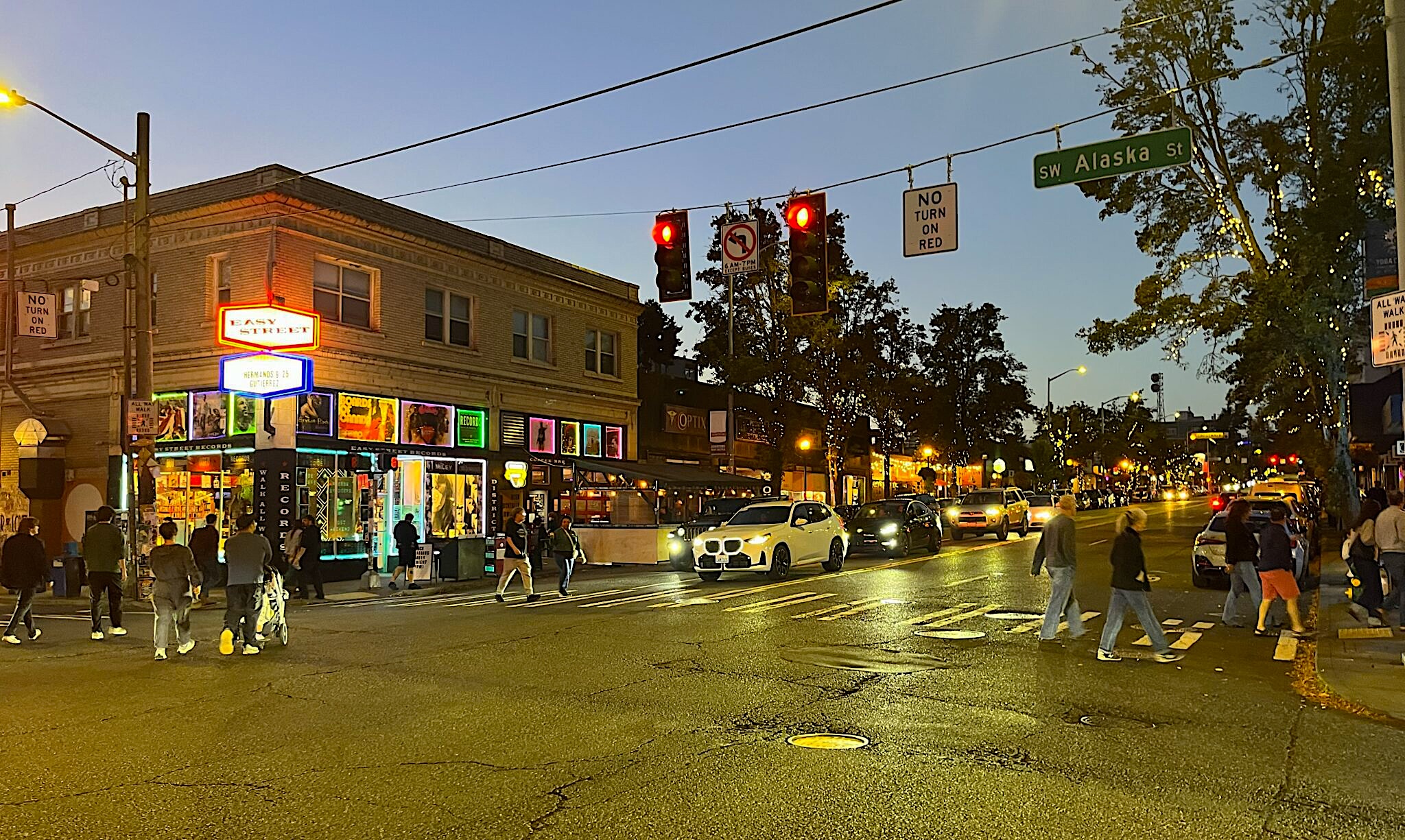
The Seattle Department of Transportation is proposing bringing paid parking to the West Seattle Junction in association with other safety related improvements.
Photo courtesy SDOT
The Seattle Department of Transportation has unveiled a proposal to restructure curb space and improve street safety across the West Seattle Junction.
Intended to cut traffic congestion and make the commercial district more accessible, the plan introduces paid on-street parking, dedicated loading areas, and safety features for pedestrians, cyclists, and transit users. Implementation of the new street management system is scheduled for 2027.
This Isn't The First Time
Parking meters were first introduced to the West Seattle Junction in the late 1940s, following the City of Seattle’s initial 1939 downtown parking meter rollout and subsequent expansion into outer neighborhood commercial hubs.
The presence of street meters, combined with the 1950 opening of Northgate Mall and the rise of suburban shopping centers offering free parking, led local merchants to take collective action.
-
1954 (Formation of the Parking Association): West Seattle business owners formed the West Seattle Junction Parking Association in 1954. To compete with suburban malls, the association bought land behind California Avenue SW and created four dedicated, free customer parking lots.
-
Removal of Street Meters: Following merchant pushback and changing city parking strategies in neighborhood hubs, on-street parking meters along California Ave SW were ultimately removed and replaced with free, time-limited parking (1-hour and 2-hour zones) anchored by the merchant-owned free lots.
-
2009–2011 Pushback: The Seattle Department of Transportation (SDOT) proposed bringing paid parking pay stations back to the Junction as part of a citywide parking management study. After strong opposition from the West Seattle Junction Association, local business owners, and residents, SDOT shelved the plan in 2011, preserving the Junction's long-standing status as a free-parking neighborhood commercial district.
Addressing Curb Space Constraints in the Junction
Home to more than 200 local businesses, including pizzerias, record stores, grocery shops, and a bowling alley, the West Seattle Junction serves as a primary economic and social hub for the neighborhood. However, city officials note that unmanaged curb space has created growing transportation challenges.
According to city data and community feedback, visitors currently face difficulty finding open street parking, leading drivers to circle surrounding blocks. This extra vehicle traffic causes overall congestion, creates driver frustration, and complicates travel for people walking, rolling, or biking. At the same time, delivery drivers frequently struggle to locate adequate space to load and unload, often resulting in illegal double parking. Recent curb space reviews and community surveys conducted by the city confirmed these ongoing issues.
Key Changes Coming to West Seattle Streets
To encourage parking turnover and organize curb usage, the city is proposing several physical and operational changes:
- Paid On-Street Parking: Metered parking will be established in the busiest areas of the West Seattle Junction business district. To align parking availability with real-world demand, city rates will be evaluated and adjusted two to three times each year.
- Dedicated Load Zones: New load zones will be created to accommodate commercial deliveries, takeout pickups, and quick passenger drop-offs.
- Pedestrian Safety Enhancements: Crosswalks near busy intersections, including California Avenue SW and SW Alaska Street, will receive visibility improvements. The plan incorporates "intersection daylighting" features, which clear curb space near corners to give drivers and pedestrians a clearer line of sight.
- Expanded Accessibility and Micro-Mobility Spaces: The department will add designated parking spots for drivers with disabilities, as well as dedicated parking areas for shared bikes and scooters.
Local Support and Community Impact
City planners expect that active parking management will reduce long-term car storage and block-circling, creating a more predictable environment for neighborhood visitors.
Local business leadership has responded favorably to the draft plan. Chris Mackay, Executive Director of the West Seattle Junction Association, expressed support for the city's strategy, stating that better turnover will keep parking spots open throughout the day for shoppers and diners, ultimately benefiting local commerce.
Timeline and Next Steps
The draft proposal was developed following direct outreach with neighborhood merchants, residents, and two public surveys. Transportation officials will continue working with West Seattle business groups and community organizations throughout the fall of 2026 to refine the draft details. Final plans are expected in late 2026, with physical installation and meter rollouts following in 2027.