
Highland Park Action Coalition urges SDOT to expand safety measures on Highland Park Way SW
Highland Park Action Coalition urges SDOT to expand safety measures on Highland Park Way SW
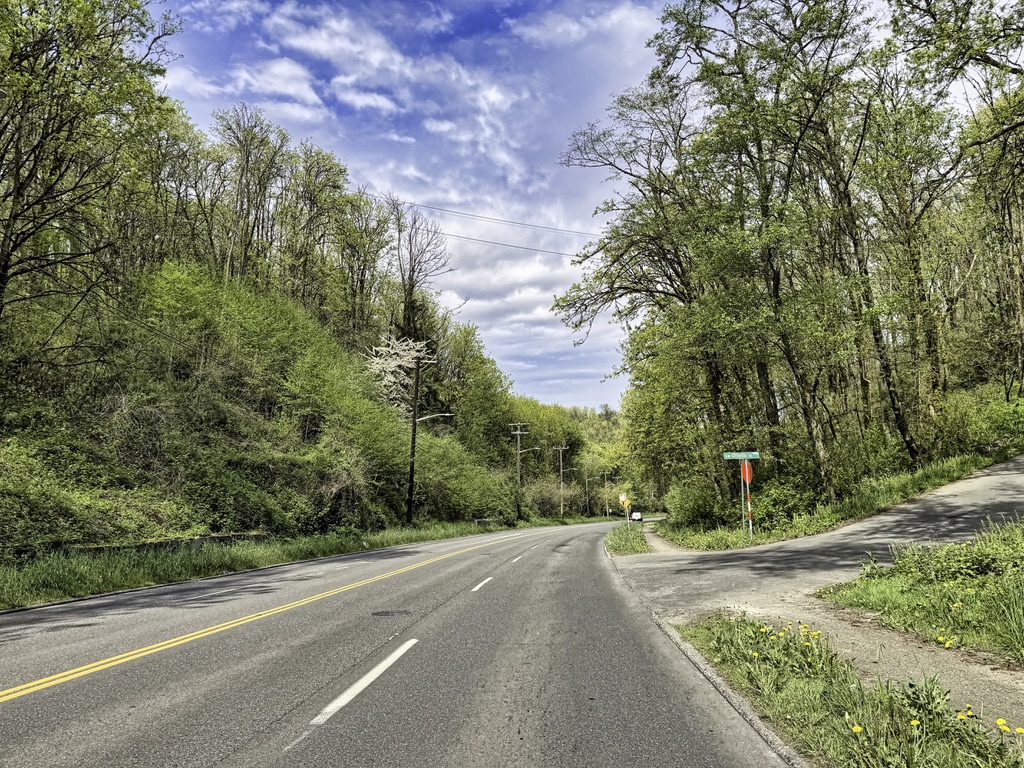
The Highland Park Action Coalition is urging SDOT to make more safety improvements on Highland Park Way SW.
File photo by Patrick Robinson
Fri, 10/23/2026
Leaders from the Highland Park Action Coalition (HPAC) have submitted detailed community requests regarding the latest design for the Highland Park Way SW Connection Project, prompting a formal response from the Seattle Department of Transportation (SDOT).
In a letter addressed to SDOT Acting Director Angela Brady, HPAC Co-Chairs Kay Kirkpatrick and Barb Biondo acknowledged design improvements presented during a July 26 workgroup meeting but stated the plan still falls short of safety expectations for local residents. The co-chairs outlined three urgent priorities to protect pedestrians, transit riders, cyclists, and drivers along the steep corridor.
First, HPAC requested an on-demand, signalized traffic and pedestrian crossing at the intersection of Highland Park Way SW and SW Othello. Community leaders pointed to the corridor's steep grade, blind curves, and high vehicle speeds, noting that single-lane peak traffic could tempt drivers to make dangerous turns into uninterrupted downhill traffic.
Second, the coalition called for stronger traffic calming measures beyond proposed centerline posts, emphasizing that speeding remains common in both directions. To address uphill speeding, HPAC urged SDOT to test "Rest in Red" signal technology to help alter driver behavior.
Third, HPAC asked SDOT to partner with Seattle Parks and Recreation and King County Metro Transit to construct pedestrian infrastructure on the north side of the road. This request aims to provide safe access to three active bus stops and the Duwamish Greenbelt trailhead, while helping deter unauthorized camping and illegal dumping in the restored forest area.
Acting Director Brady directed SDOT's Communications and Outreach team to evaluate the community's requests and provide a detailed response.
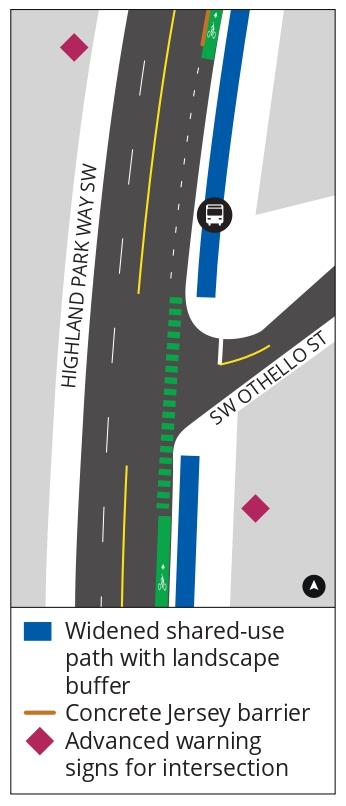
Addressing the requested crossing at SW Othello, SDOT explained that traffic volumes in the area east of SW Othello St. do not meet city thresholds for a signalized crossing. SDOT noted that drivers and pedestrians can utilize the nearby signalized intersection at SW Austin St, but promised to monitor traffic conditions after project installation to evaluate whether future adjustments are warranted.
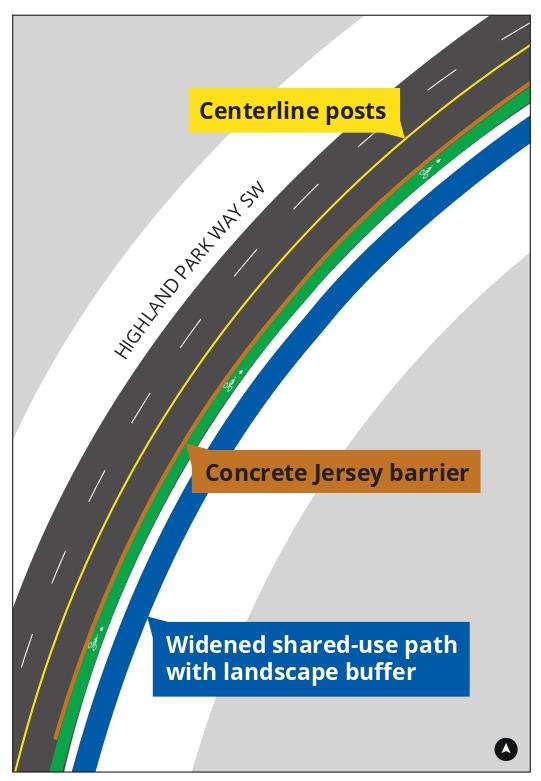
Regarding traffic calming, SDOT defended the choice of centerline posts over concrete jersey barriers, explaining that the posts create a visible, flexible barrier that reduces head-on collision risks and remains visible in poor weather without taking up extensive road space.
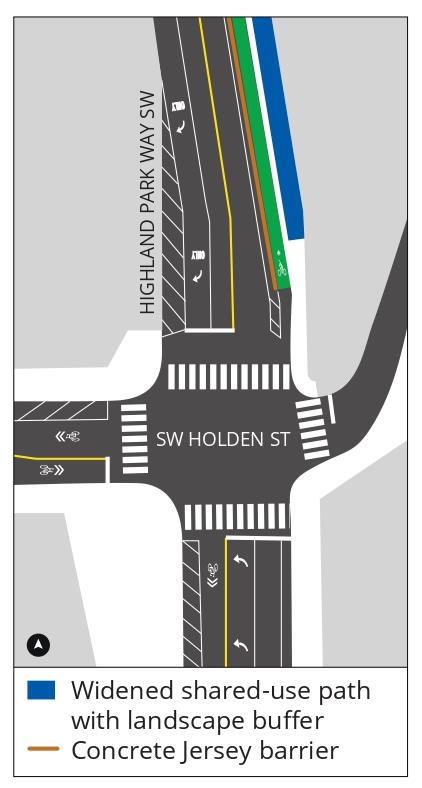
SDOT added that a dedicated right-turn phase at S Holden St will reduce unrestricted turning movements, and confirmed that tools such as "Rest in Red" technology could be evaluated if post-installation monitoring indicates additional speed management is needed.
On the topic of north-side pedestrian access, SDOT highlighted existing trailhead access from W Marginal Way SW. The department explained that expanding walking infrastructure farther west is limited by environmental and landslide constraints, as well as budget boundaries for the current project scope. However, SDOT committed to ongoing coordination with King County Metro and Seattle Parks and Recreation to explore long-term infrastructure opportunities.
In closing, SDOT emphasized that the redesign will fill a critical gap in Seattle's walking and biking network while slowing vehicle speeds and protecting vulnerable road users. The agency pledged to continue working with Highland Park residents as the project moves forward toward construction.
