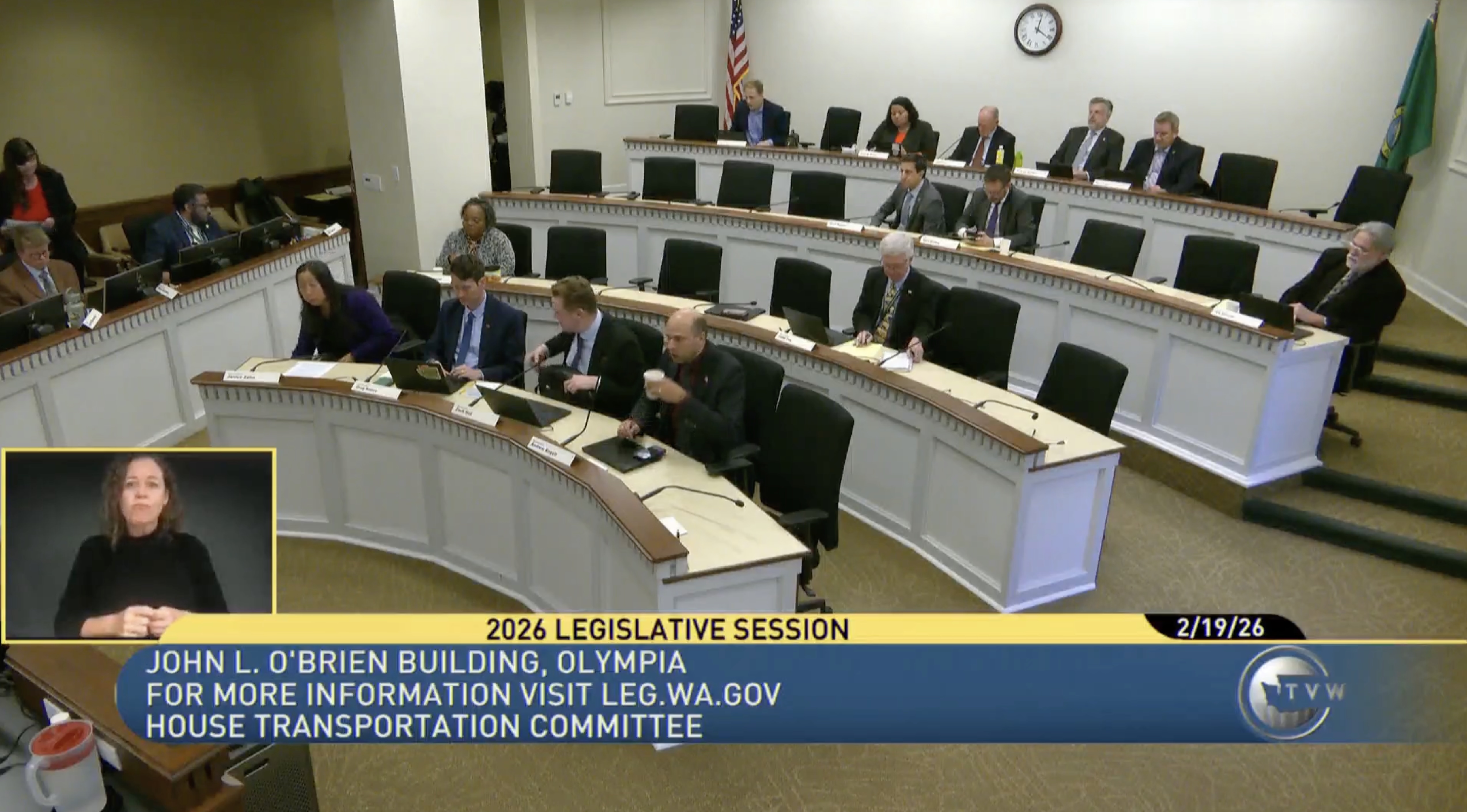
The Transportation Committee met February 19 to discuss Senate Bill 6148 that would allow Sound Transit to issue bonds up to 75 years to raise much needed capital.
Washington state legislators are considering a significant shift in infrastructure financing that would allow regional transit authorities to issue bonds with terms of up to 75 years. The proposal, Senate Bill 6148, aims to help agencies like Sound Transit manage rising construction costs and align state law with recent changes in federal lending programs.
Addressing the "2030s Pinch"
The bill, which has already cleared the Senate Transportation Committee and is currently on its Second Reading, seeks to provide financial flexibility as major light rail expansions to Everett and Tacoma face inflationary pressures. Under current law, the maximum term for these bonds is 40 years.
Prime sponsor Senator Mark Liias argued that the extension would allow Sound Transit to utilize the federal TIFIA (Transportation Infrastructure Finance and Innovation Act) loan program, which Congress updated in 2022 to allow 75-year terms. Supporters, including local executives and labor representatives, testified that this tool is essential to keep projects on schedule and avoid "financial pinch points" projected for the 2030s.
"This is about letting them utilize the federal program that was created for this purpose and to get maximum benefit out of it to build infrastructure," Liias told the committee.
Financial Trade-offs and Opposition
However, the proposal faces sharp criticism over the long-term costs of debt. Staff analysis provided to the committee illustrated that with a 75 year bond compared to 25 years, the total interest and principal paid would nearly double.
Critics, including Tim Eyman and representatives from Washington Citizens Against Unfair Taxes, argued the bill "saddles multiple generations with debt" for an organization they described as over budget. Opponents also noted that higher interest rates are often demanded by bondholders for longer terms, further increasing the ultimate cost to taxpayers.
Safeguards and Parity
Sound Transit officials emphasized that the 75-year term would likely be used "limitedly" and that the agency’s AAA bond rating provides a layer of market scrutiny. They noted that TIFIA loans offer a unique advantage: the ability to refinance or call in the loan at any time if interest rates drop. As a trade-off for this new authority, the bill would remove Sound Transit’s eligibility for regional mobility grant program funds to ensure other agencies are not disadvantaged.
Streamlining Fish Barrier Projects
In the same session, the committee also discussed Senate Bill 5690, which targets coordination between the Washington State Department of Transportation (WSDOT) and local utilities during fish barrier removal projects.
Triggered by a federal injunction requiring the state to replace culverts blocking fish passage by 2030, the bill mandates that WSDOT provide utilities with at least one year of advanced notice for relocation work. Proponents, including local Public Utility Districts, stated that better coordination could prevent the waste of millions in taxpayer and ratepayer funds caused by abandoned or uncoordinated projects.
Next Steps
As SB 6148 sits on the Senate floor, it must still pass a full Senate vote before moving to the House Transportation Committee for a similar cycle of public hearings and executive sessions. If passed by both chambers and signed by the Governor, the bill would take effect 90 days after the end of the legislative session.