Highland Park residents confront rising crime and contentious safety project at community meeting
Highland Park residents confront rising crime and contentious safety project at community meeting
Gunshots, Glassyard Commons RV and tiny home village and Highland Park Way Safety project were on the agenda
Kay Kirkpatrick moderated the meeting for the Highland Park Action Coalition, listing neighbors concerns about the proposed Higland Park Way Safety Project currently in design phase with Seattle Department of Transportation.
Photo by Patrick Robinson
Wed, 04/22/2026
On the evening of April 22, the Highland Park Action Coalition (HPAC) gathered at the Delridge Branch of the Seattle Public Library for a community meeting focused on local safety, a new transitional housing project, and the future of the Highland Park Way roadway. The session, moderated by Kay Kirkpatrick, provided a platform for residents to question local officials and representatives regarding a series of pressing neighborhood concerns.
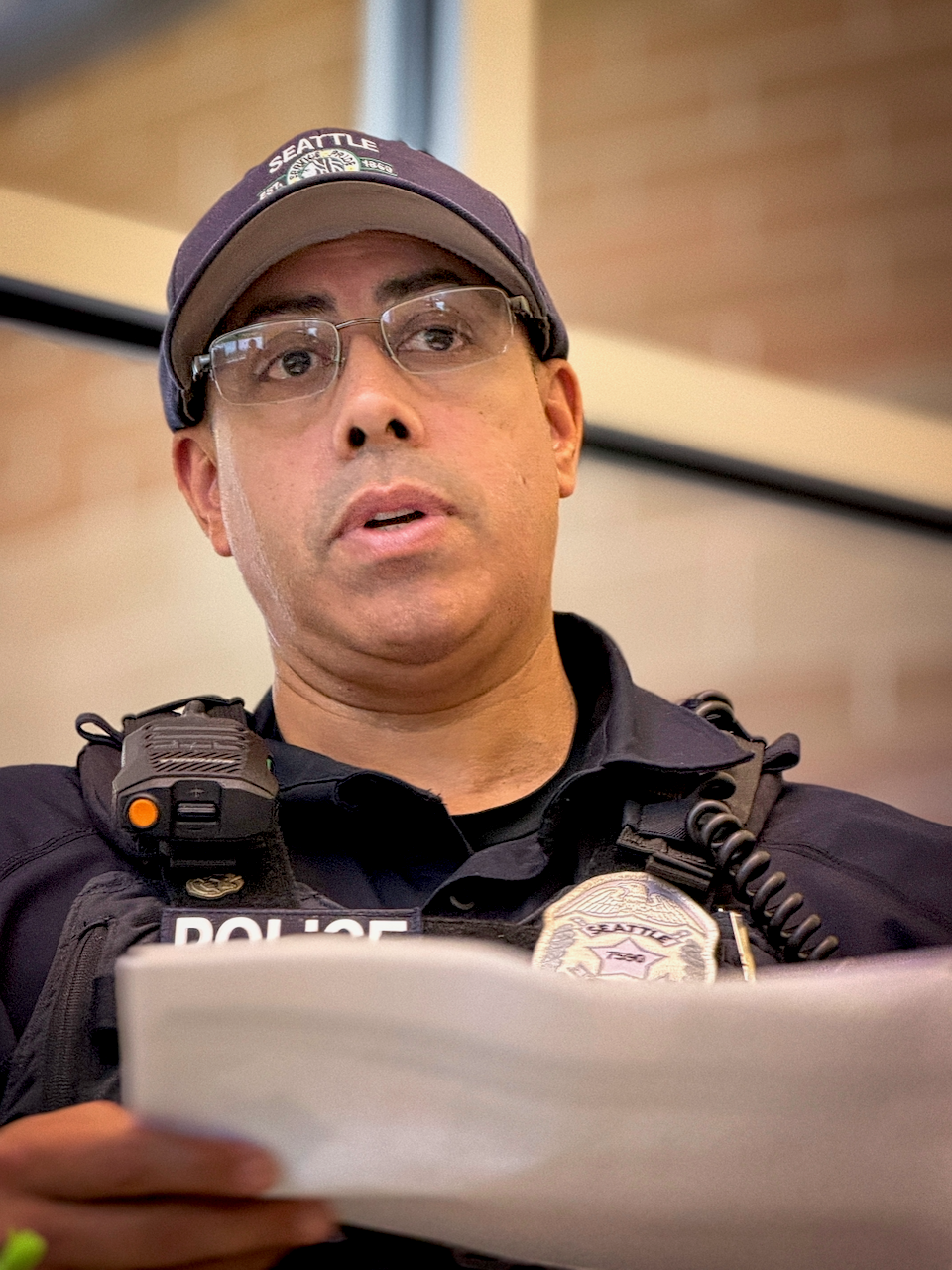
Seattle Police Officer Barreto. Photo by Patrick Robinson
Crime and Public Safety: SPD Reports Rising Incident Rates
The meeting began with a public safety report from Officer Barreto of the Seattle Police Department’s Southwest Precinct. Barreto shared sobering statistics, noting that while many crime categories remained stable, burglaries and shots fired incidents have increased in the Highland Park area. Specifically, burglaries rose by ten incidents over the previous year, and the neighborhood has seen eight "shots fired" calls year-to-date compared to six during the same period last year. Barreto also highlighted a recent shooting that occurred on April 12.
Barreto emphasized the importance of community reporting to help the department allocate resources. "The department's all about stats and if you don't call, we're not going to be able to find out," Barreto told the attendees.
Regarding the rise in violence, he stated, "I hate to be the bearer of bad news and it's really bad, but I mean, it's gone up". He urged residents to use 911 or the department's online reporting tools to ensure all incidents are tracked. Additionally, Barreto discussed the ongoing challenges with unauthorized encampments in greenbelts, mentioning that the Unified Care Team is aware of sites near Detroit Avenue SW but faces difficulties reaching them due to muddy terrain. He noted they plan more proactive outreach as the weather improves.
Marta Kidane, Community Engagement Manager for the Low-Income Housing Institute (LIHI). Photo by Patrick Robinson
Glassyard Commons: Tiny Homes and RV Safety on W Marginal Way
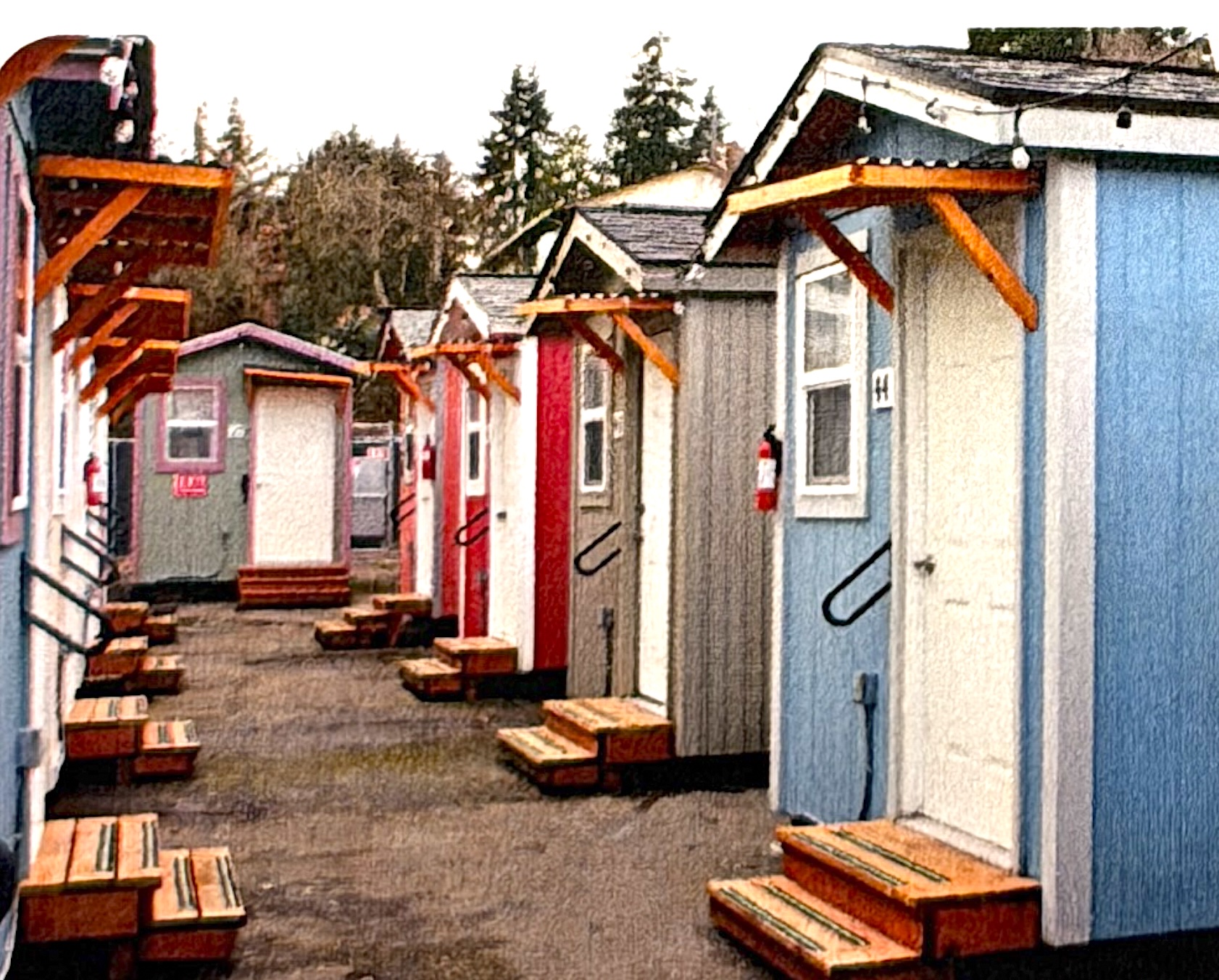
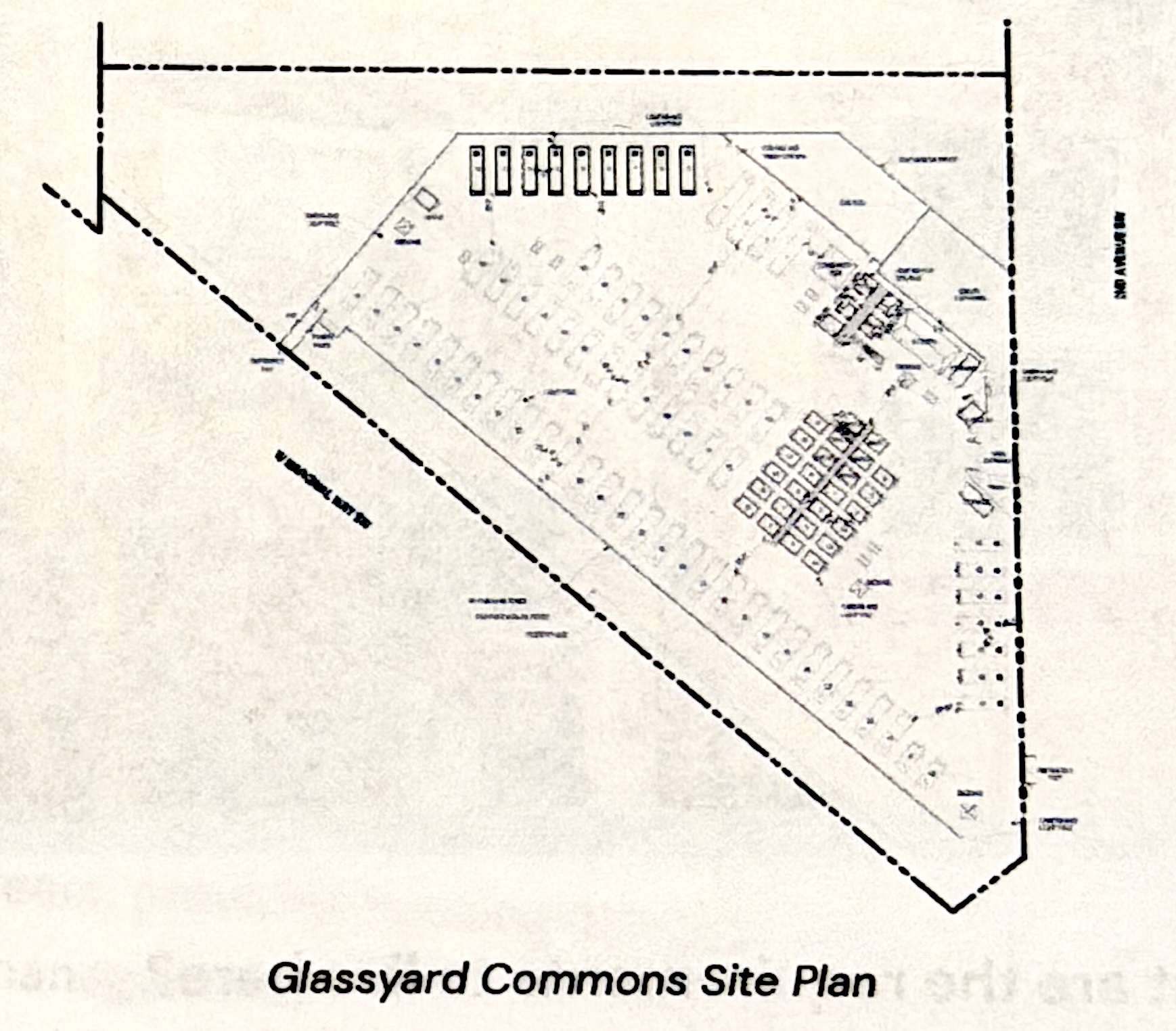
The second portion of the meeting featured Marta Kidane, Community Engagement Manager for the Low-Income Housing Institute (LIHI), who presented details on the upcoming Glassyard Commons RV Safe Lot and Tiny House Village at 7200 W Marginal Way SW.
The project is designed to accommodate 72 RV parking spaces and 20 tiny houses, providing a transitional space for people experiencing homelessness to receive services and move into permanent housing.
Kidane explained that the site will feature 24/7 staffing, case management, and shared hygiene and kitchen facilities. Regarding the tiny homes, she noted, "Tiny home shelters are generally 8 by 12 tiny homes... a space where someone can get some sleep, right? Get the privacy and the dignity of having a closed door". She clarified that while alcohol and illegal drugs are prohibited in public areas, LIHI cannot strictly mandate sobriety within the private units. "We cannot force anyone to maintain their sobriety. That is not a rule that we can maintain that would literally hinder someone's human rights," Kidane stated, adding that case managers focus on building relationships to encourage recovery when clients are ready. She assured the crowd that the goal is safety and stability: "Our goal is always to just get people housed safe and you know in a space where they can find a little bit of dignity and rest".
She explained that the goal is to find permanent housing for the residents of the villages with 90 days as the maximum goal but realistically it can take six months. "When people have lost everything they don't have their license or birth certifcate so it can take time to get those documents."
She was asked about those people who might have something other than an RV, such as a car and she noted there were no parking spaces for other vehicles in the site plan.
Several questions came up about the RV's. The toilets in them will be decommissioned meaning residents wiil need to use the common hygiene facilties on site. This is to prevent the accumulation of so called "black water" on site. Some RV's are in such poor condition that residents upon agreeing to the residency terms will surrender them to LIHI and those vehicles will be dismantled by an outside agency.
Others asked about the areas just adjacent to the village noting that near Camp Second Chance on Myers Way SW RV's and campers have shown up within 500 feet. Kidane did not have a clear answer for this question since it's more the responsibility of the city of Seattle.
One resident asked about a homeless man and his dog who live in a shack off the road near the top of the hill on Highland Park Way SW. Kidane said she would make note of it and emphasized that District 1 people experiencing homelessness would be prioritized for Glassyard Commons residency.
Mayor Katie Wilson's goal is to get 1000 tiny homes built over the next three years. No other specific sites around the city have yet been announced.
The question of site security came up and Kidane said that no one outside the residents are allowed to enter. Security cameras and more will be in place.
Kirkpatrick confirmed that HPAC has advocated for resolutions at the city level, including a request for proactive cleaning around the RV Park tiny home village in a one-mile radius around the area, though the city has currently only committed to 500 feet.
The Highland Park Way Project: Debate Over "Vision Zero" and Lane Reductions
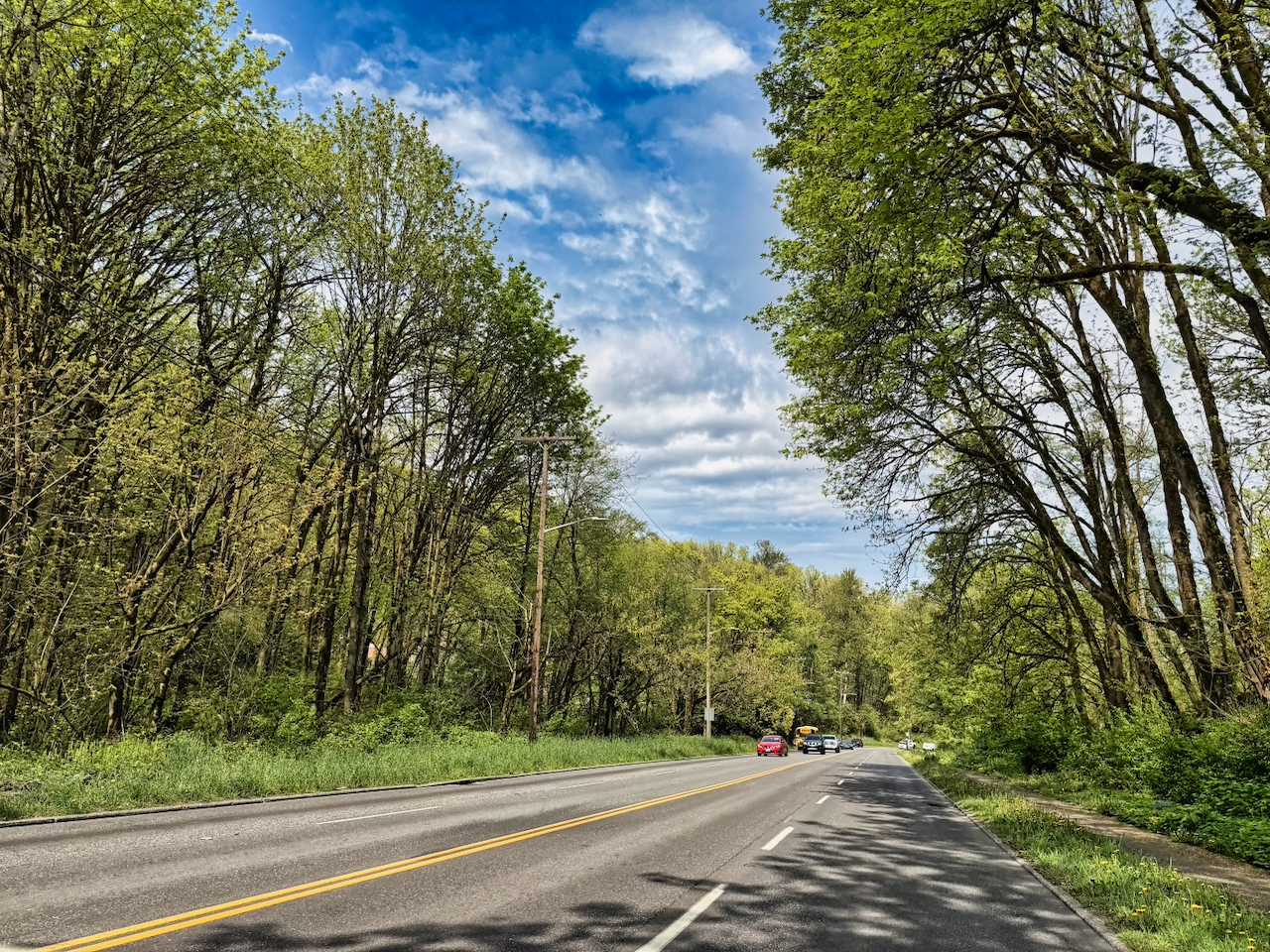
The final segment of the meeting, led by Moderator Kay Kirkpatrick, focused on the Highland Park Way SW Connection Project. This SDOT initiative aims to modernize the corridor to improve safety for pedestrians and cyclists, but it has faced significant local resistance. Kirkpatrick noted that the project is "troubling a lot of folks... from a lot of angles," particularly regarding proposed lane reductions on the steep hill.
Highland Park Way SW. Photo by Patrick Robinson
Residents expressed deep skepticism about SDOT's "Vision Zero" plans, which include removing one northbound downhill traffic lane to slow vehicle speeds and installing concrete "Jersey" barriers to protect a new bike lane. One resident voiced a common fear that the lane reduction would lead to massive congestion: "I don't have trust that they are truly are going to commit... moving all those lanes over to the left". Others questioned the necessity of the project based on current usage stats, with one neighbor remarking, "I saw five bikes the entire time... my personal experience is not a statistic," while calling for more accurate data from multiple points on the hill.