
High demand, low turnover: SDOT study reveals parking crunch in West Seattle Junction
High demand, low turnover: SDOT study reveals parking crunch in West Seattle Junction
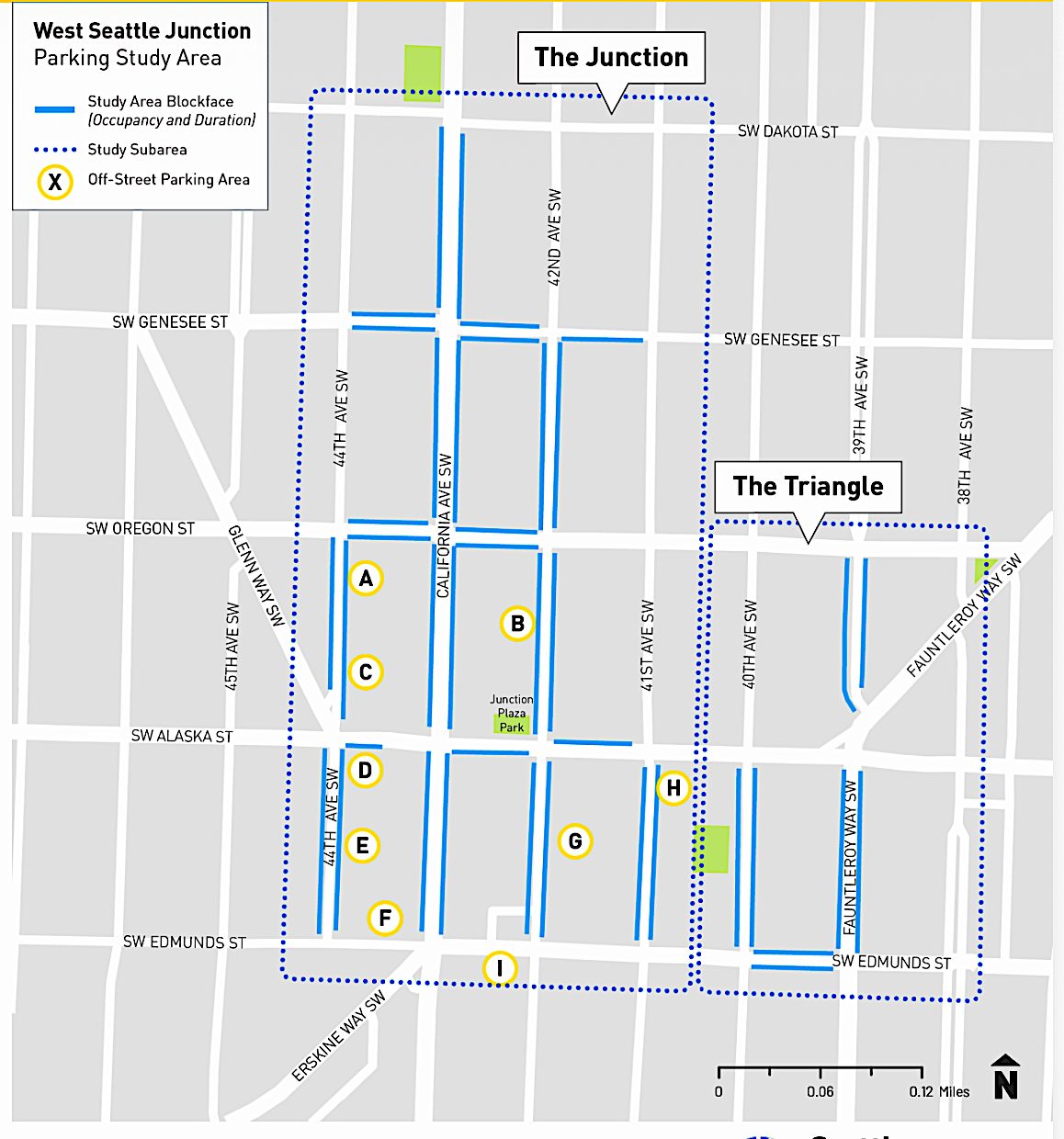
SDOT is working in the West Seattle Junction and Triangle to collect new parking data and gather community input about curbspace needs, challenges, and potential improvements.
SDOT Graphic
Mon, 07/06/2026
The Seattle Department of Transportation (SDOT) has released a comprehensive review of the West Seattle Junction and Triangle, revealing that while the neighborhood is a thriving hub for pedestrians and transit users, on-street parking has reached a breaking point.
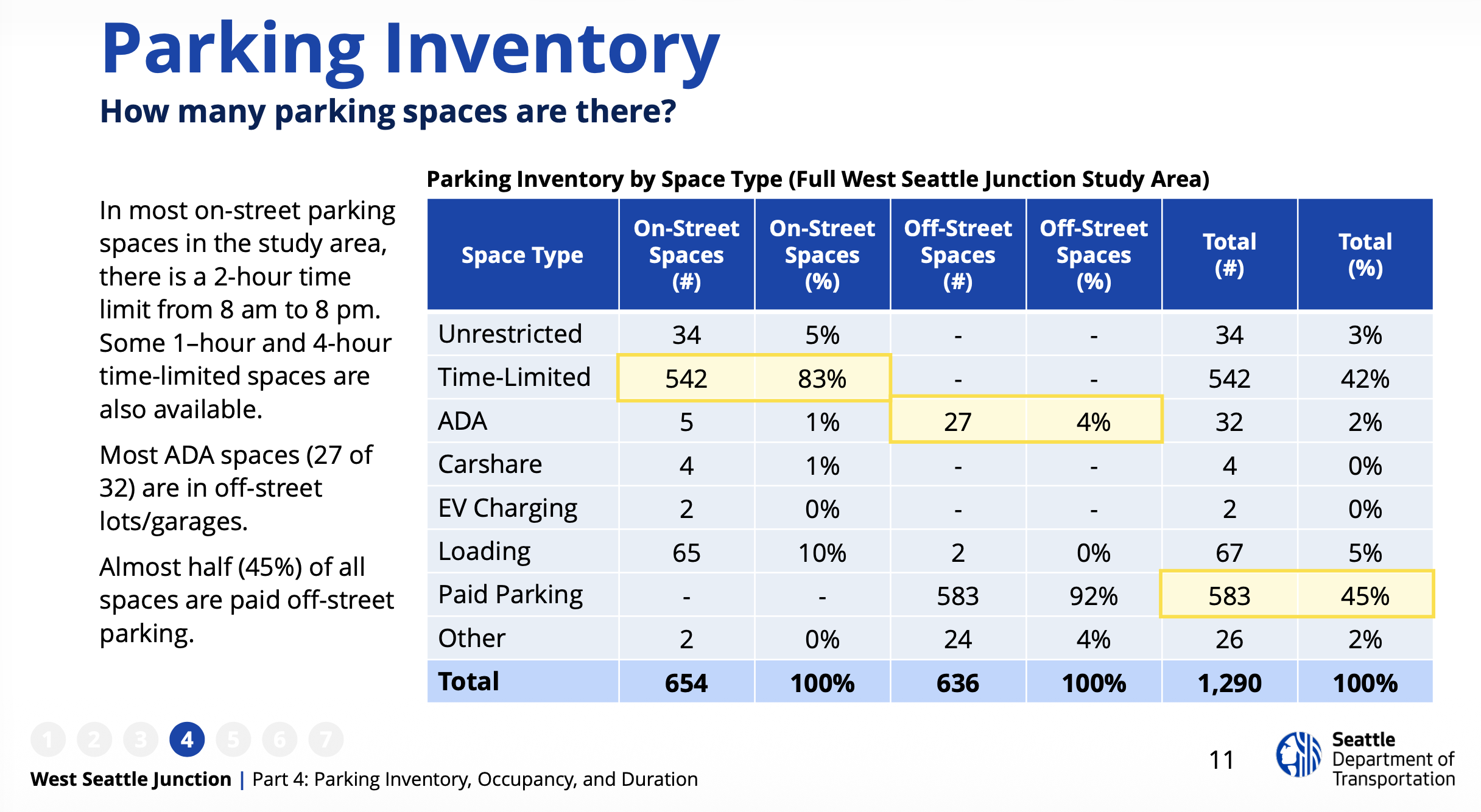
The study was initiated to understand how the curb space—last reviewed in 2017—is functioning following years of growth in housing, outdoor dining, and delivery activity. The findings suggest that as the neighborhood prepares for future light rail development, demand for the limited 1,290 parking and loading spaces is higher than ever.
See the full study here
The On-Street vs. Off-Street Paradox
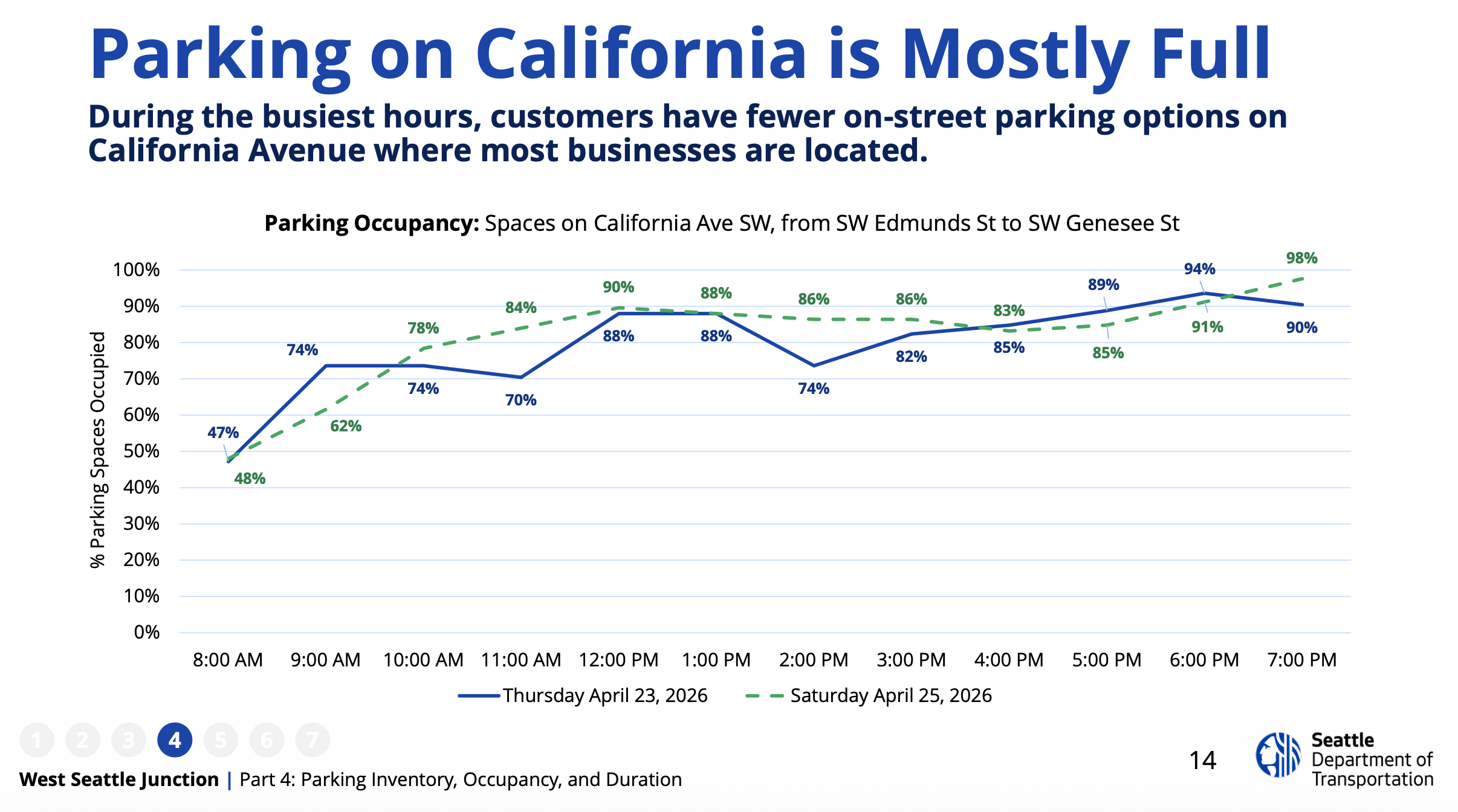
The most striking data point from the study is the disparity between where people want to park and where space is actually available. On-street parking in the busiest parts of the Junction and Triangle is consistently 87% to 95% full throughout the day. On California Avenue SW, the neighborhood’s main commercial artery, occupancy rates often hit 98% during peak hours.
In contrast, off-street lots and garages remain largely underutilized, staying less than 40% full at all times, even when street parking is impossible to find.
A Neighborhood of Walkers
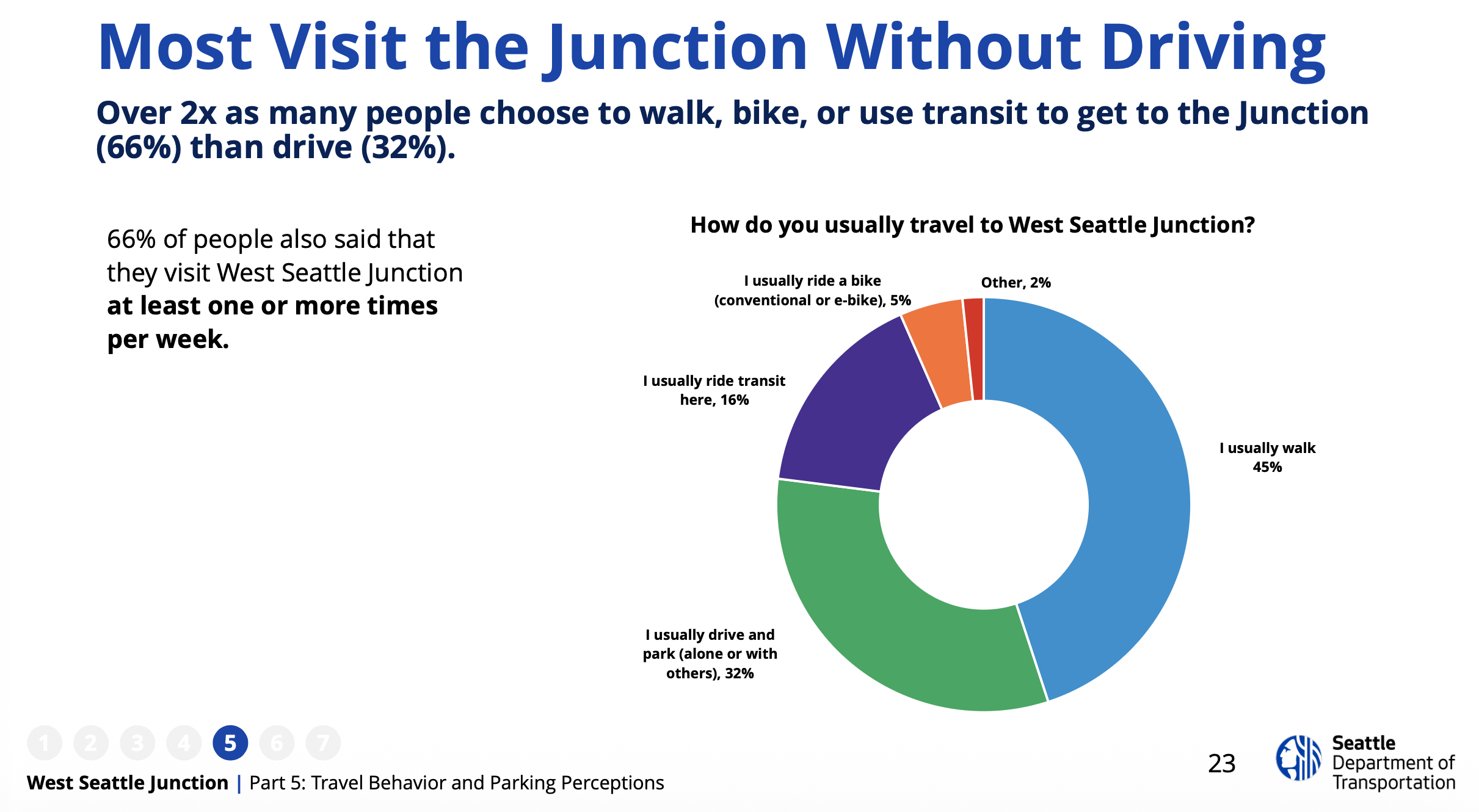
Despite the parking crunch, the sources indicate that the Junction is primarily a "car-lite" destination for locals. An intercept survey of over 550 visitors found that 66% of people arrived by walking, biking, or taking transit, while only 32% drove.
However, for those who do drive, the experience is frustrating. Only 39% of survey respondents agreed that it is easy to find a convenient parking space. Local businesses are feeling the impact as well, with 56% of employees reporting that they frequently hear customers complain about the lack of parking.
Issues with Turnover and Citations
A significant factor contributing to the shortage is a lack of turnover. The sources report that nearly one in four vehicles (22%) stay parked for more than two hours, with 10% remaining for over four hours. This behavior directly conflicts with the area's regulations, as most on-street spaces have a 2-hour limit.
This lack of compliance is reflected in enforcement data; in 2025, there were 1,610 citations issued in the area, with 57% of those being for "Overtime" violations.
What's Next?
SDOT is currently in the "Community Outreach" phase of the project. According to the project timeline, the department will use the collected data and public feedback to develop draft recommendations in Fall 2026, with the goal of implementing curbside changes in 2027., Potential strategies mentioned in the sources' policy support include curb pricing and dynamic management to prioritize access for customers and deliveries.
