
UPDATE: Echoing their ancestors, tribes stopped at Alki during their 2026 intertribal canoe journey
UPDATE: Echoing their ancestors, tribes stopped at Alki during their 2026 intertribal canoe journey

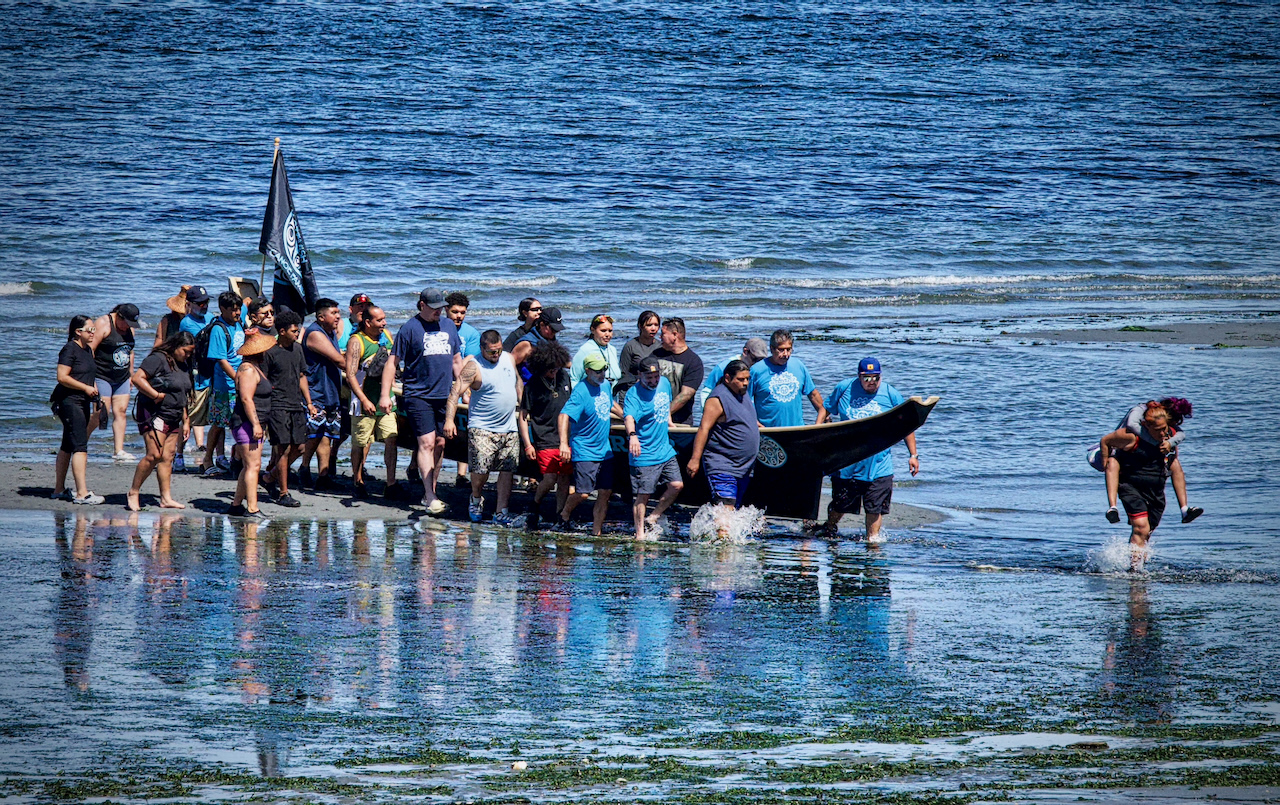
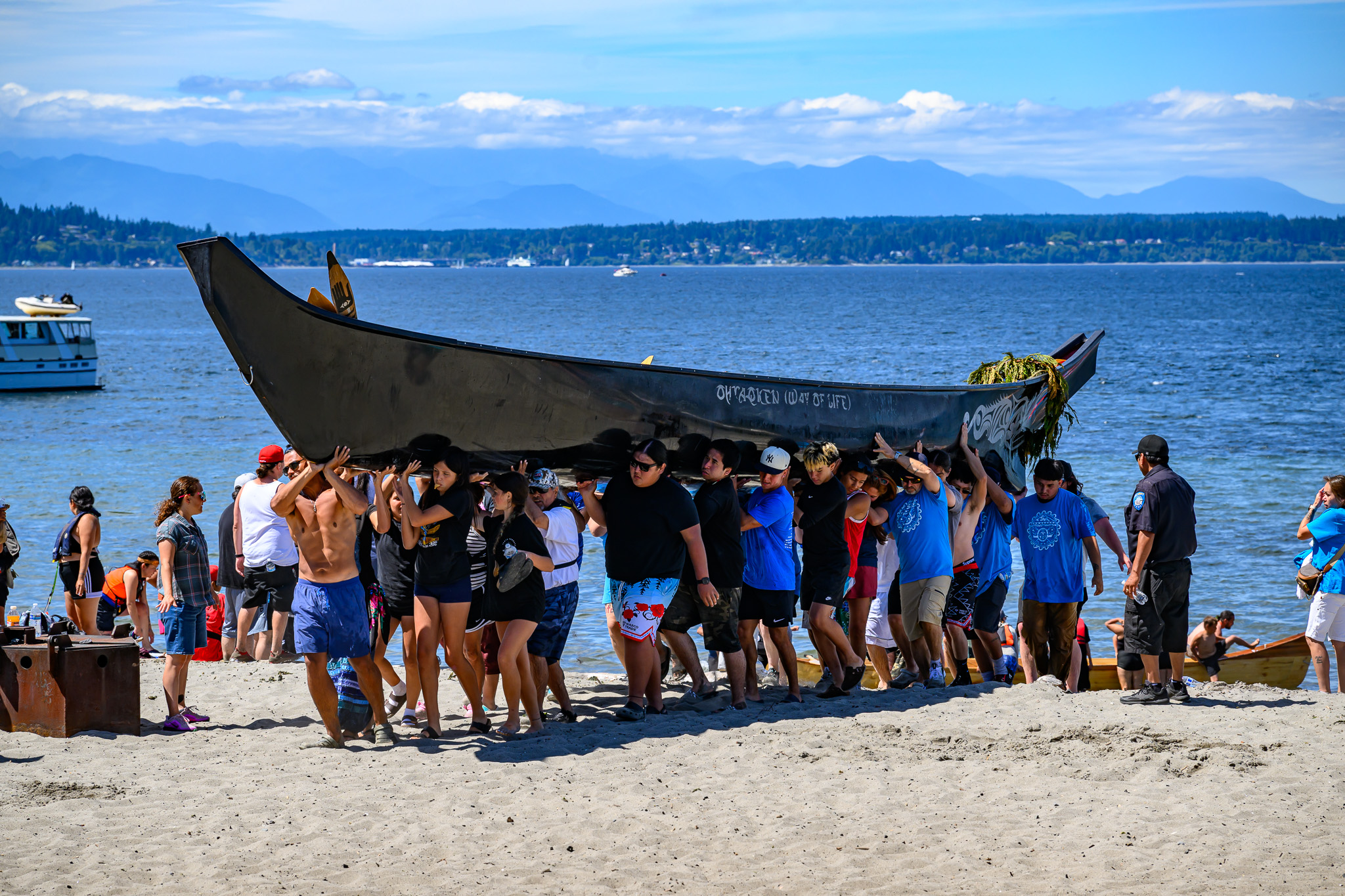
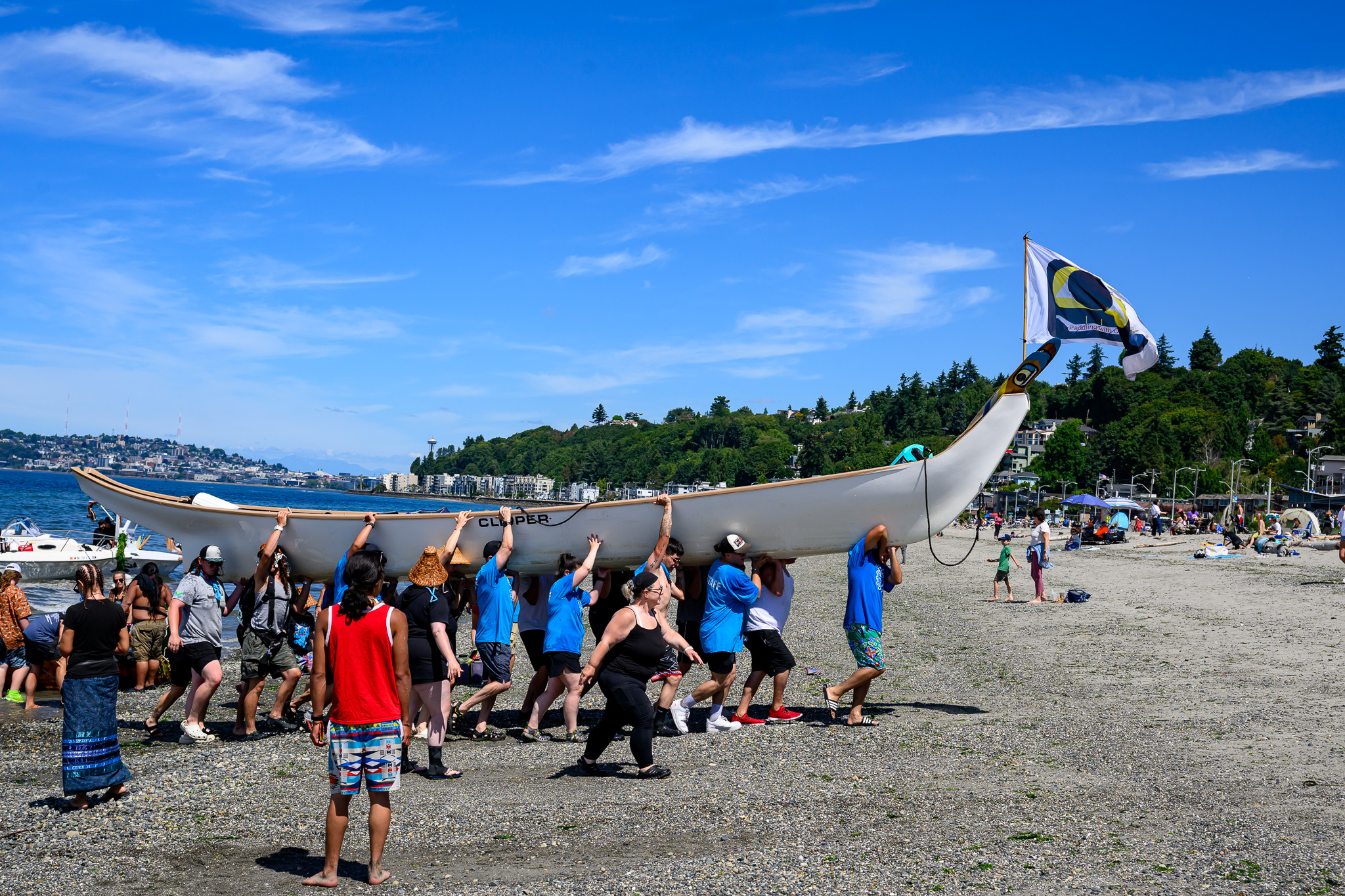
Tribal members carry a canoe ashore during an Alki Beach stop over on their annual "tribal canoe journey".
Photo by Patrick Robinson
Wed, 07/29/2026
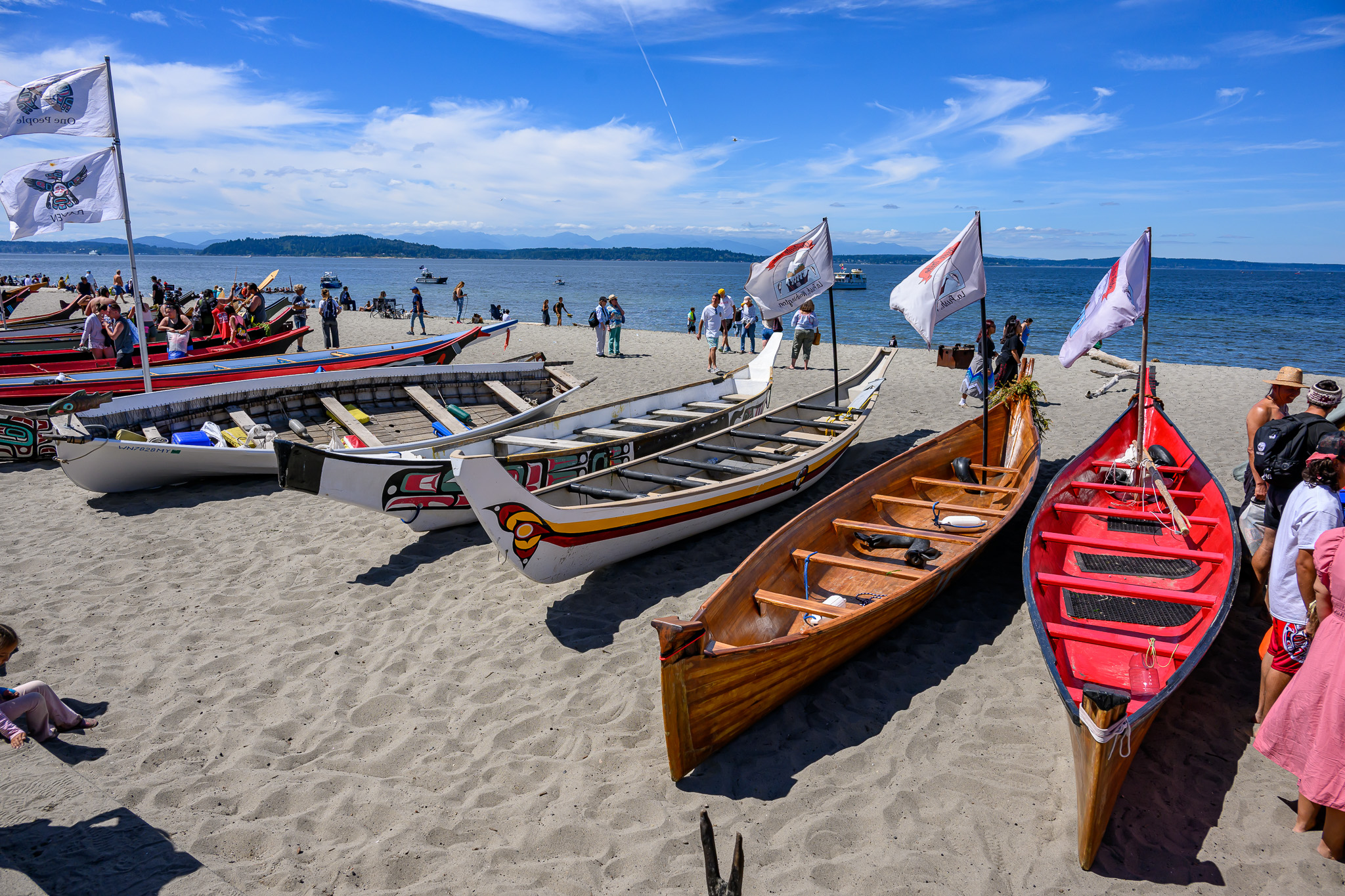
Today, Wednesday, July 29, 2026, Alki Beach in West Seattle served as a vital stopover for the 2026 Intertribal Canoe Journey: "Paddle to Nisqually Medicine Creek Potlatch". Hosted by the Muckleshoot Indian Tribe, the event saw 80 to over 100 ocean-going cedar canoes arriving from across the Pacific Northwest, including Alaska, British Columbia, and the Olympic Peninsula.
The journey is a sacred living ceremony and a powerful act of cultural revitalization and sovereignty. Under the 2026 theme, "Healing Through Our Waters By Honoring Our Ancestors," participants, known as "pullers", navigate ancestral marine highways to strengthen community wellness and spiritual resilience. This annual tradition, which was sparked by the 1989 "Paddle to Seattle," has helped tribes rediscover and share historical practices such as carving techniques, cedar weaving, regalia making, and traditional songs.
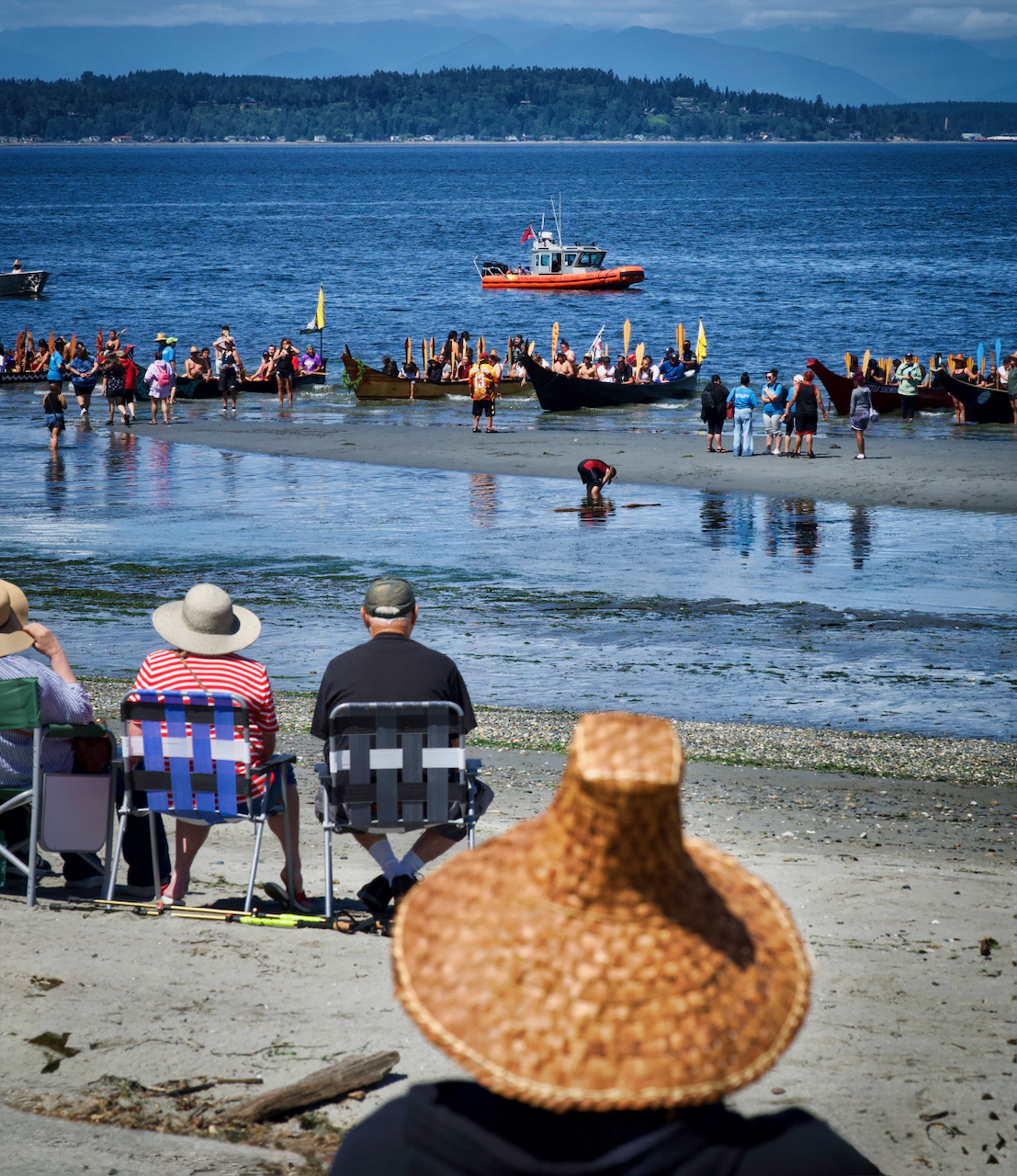
As the canoes approached the shore today, witnessess saw "pullers" raise their paddles straight up in the "Paddles Up" gesture, a traditional sign of peace indicating they come with empty hands and good hearts. A speaker from each canoe then addressed the Muckleshoot host elders in their native language to formally ask permission to come ashore, rest, and share meals before the fleet continues south toward the final destination in Olympia on July 31.
Members of the public were invited to witness this protocol but were asked to strictly adhere to traditional Coast Salish etiquette and safety rules:
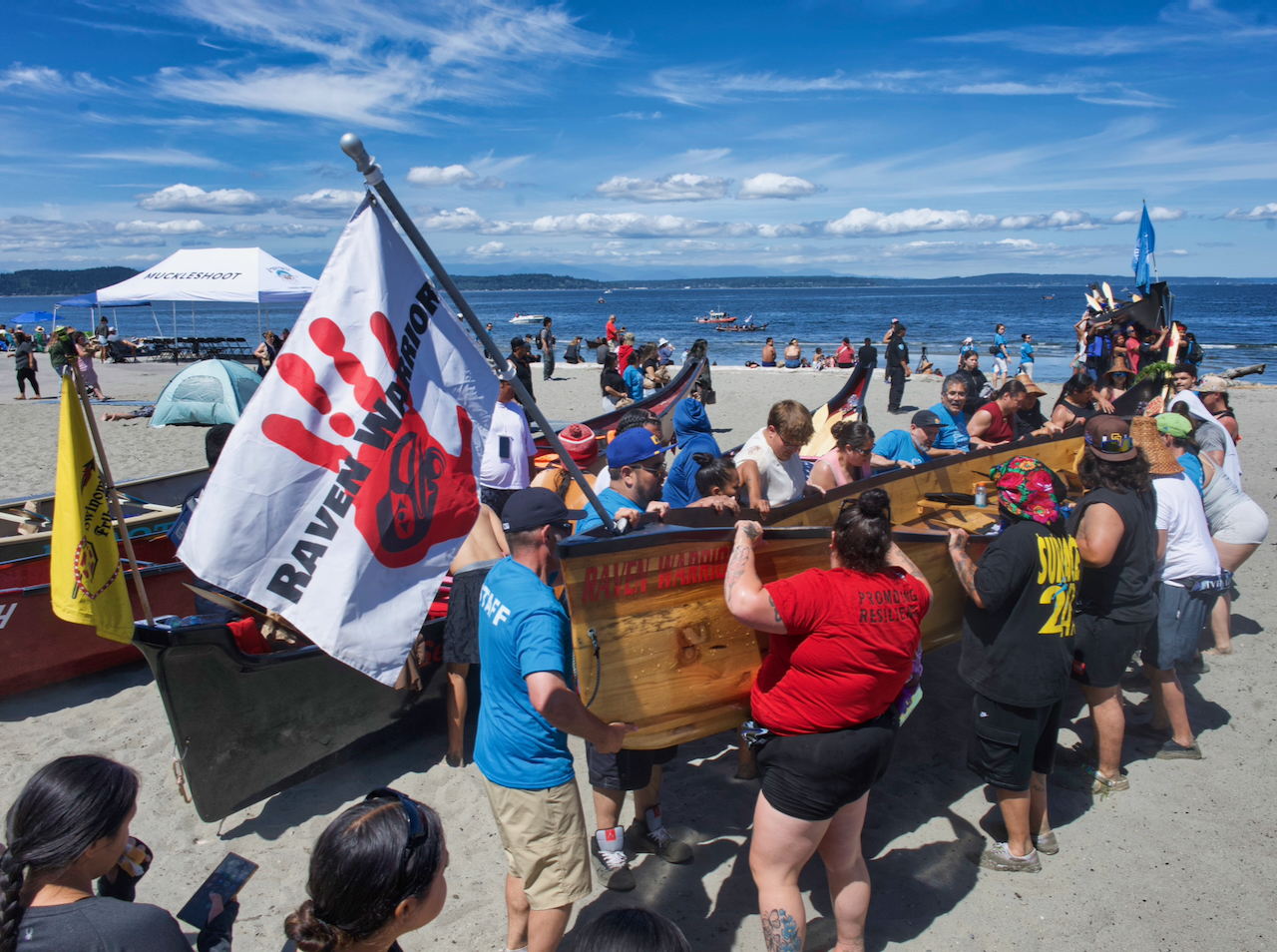
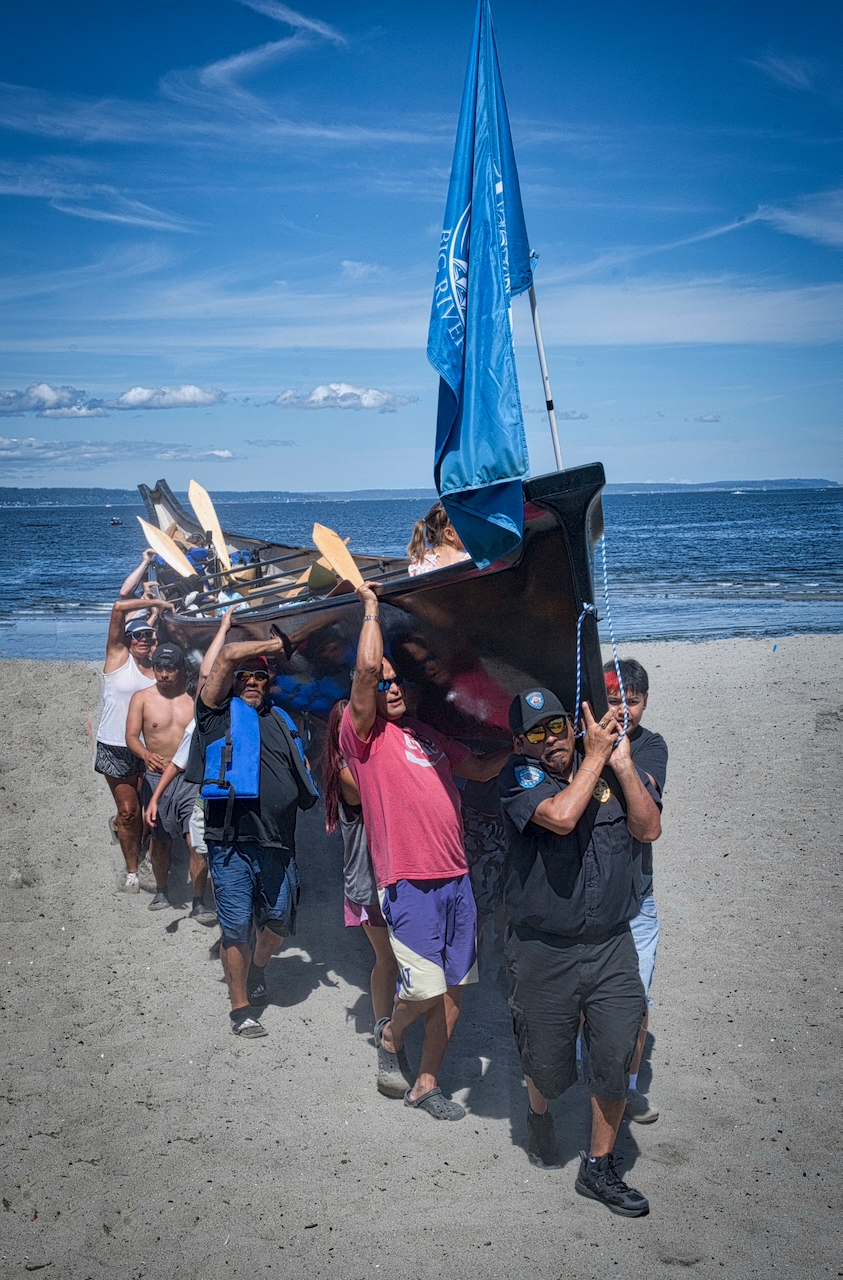
- Give Canoes the Right-of-Way: Ocean-going cedar canoes weigh hundreds of pounds and require 10 to 20 pullers to carry them above the tide line; spectators must maintain a wide perimeter and stay clear of active landing lanes.
- Strict Sobriety: The Canoe Journey is a drug-, alcohol-, and smoke-free cultural gathering focused on community healing.
- Respect Sacred Items: A canoe is considered a living entity, and regalia carries deep family heritage; never touch a canoe, paddle, drum, or an individual's regalia without explicit permission.
- Elders and Veterans First: In Indigenous culture, Elders are treated with the highest honor. Please yield all seating, shade, and food lines to Elders and veterans.
- Photography Protocol: While general photos from public areas are typically allowed, they asked you ask permission before taking close-up portraits, and stop immediately if a leader announces that a song or prayer is private.
Afte the landing, the visiting families participated in evening protocol ceremonies before departing for the final leg of their journey on Thursday. The week-long Medicine Creek Potlatch hosted by the Nisqually Indian Tribe will follow from July 31 through August 5.
___________________________
VIDEO: 2026 Tribal Canoe Journey visited Alki Beach
Video by Patrick Robinson
