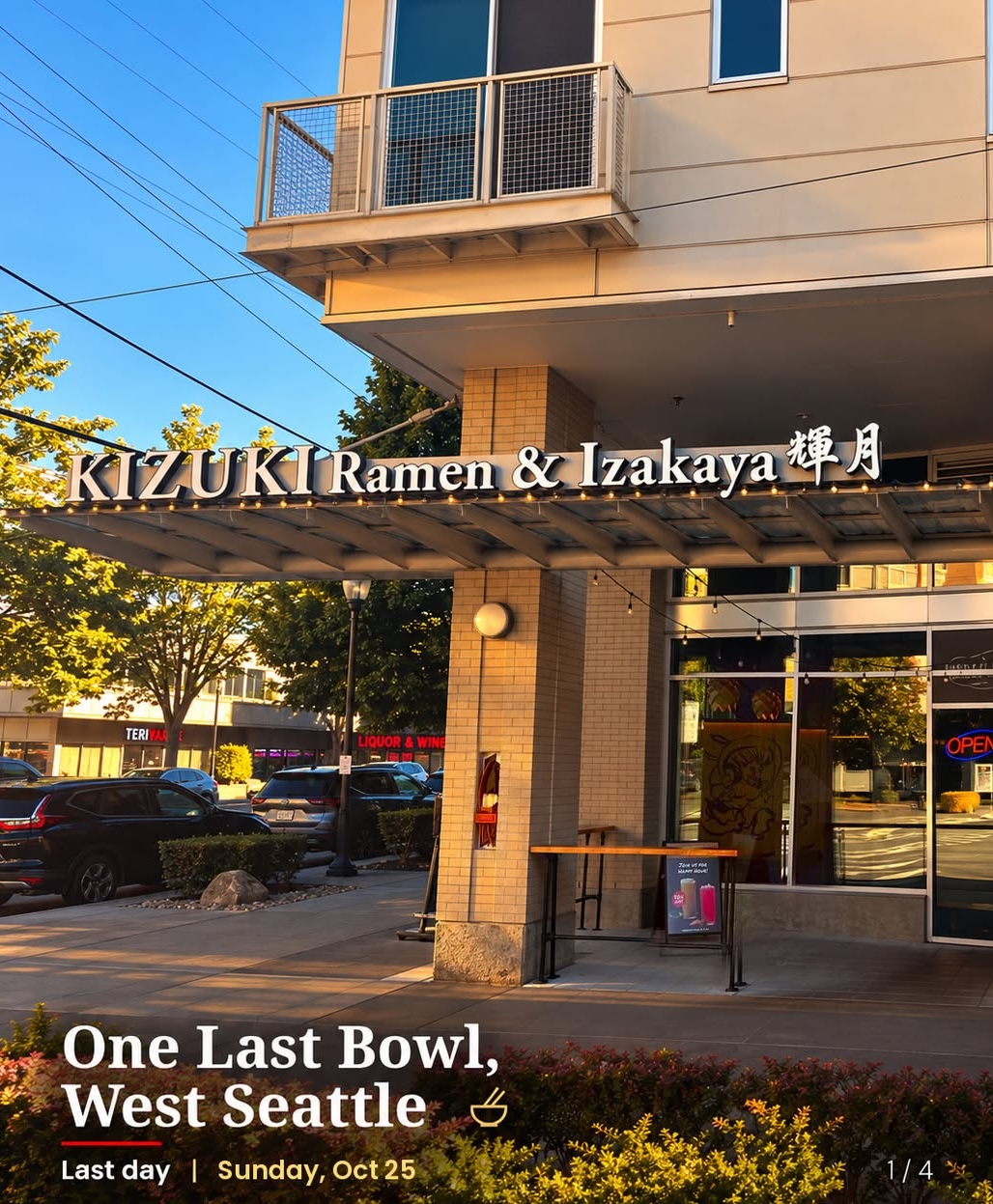
Kizuki Ramen at the corner of 42nd and Alaska Street SW is closing as of Oct. 25.
Photo courtesy Kizuki Ramen
Kizuki Ramen & Izakaya is closing its West Seattle location (42nd and Alaska Street SW) after ten years of operation, marking the latest departure in a wave of closures reshaping the regional dining scene. The restaurant announced that its final day of service in West Seattle will be Sunday, October 25.
In a social media statement announcing the decision, the Kizuki team expressed gratitude to the community while pointing patrons toward their remaining open locations:
“Not Goodbye, Just See You Somewhere Else After 10 wonderful years, our West Seattle location will serve its final bowl on Sunday, October 25. I Thank you for every visit, every slurp, and every familiar face along the way. Your favorite KIZUKI ramen is still waiting for you at: Capitol Hill • Southcenter Mall Same ramen. Same love. Just a different address. Come have one last bowl with us in West Seattle. See you at KIZUKI!”
Although Kizuki Ramen will maintain its presence at Southcenter Mall and in Capitol Hill, the West Seattle closure reflects a wider structural shift taking place across Seattle's restaurant landscape. They cited a slow business environment.
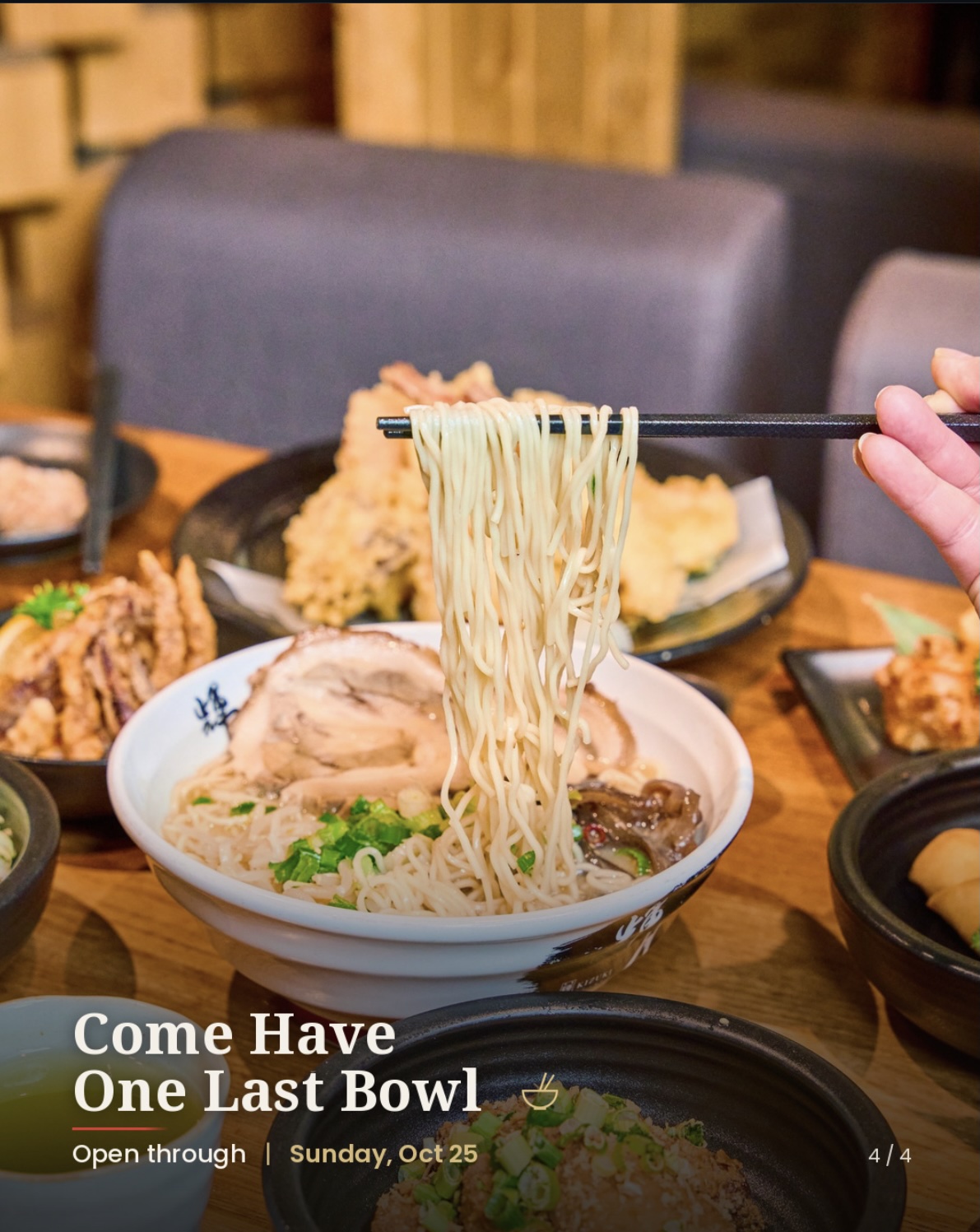
Economic Factors Affecting Local Restaurants and Kizuki Ramen
The shuttering of Kizuki Ramen's West Seattle spot and the Portage Bay Cafe just up the street are part of a broader trend of full-service dining contractions across King County, which ranks near the top nationally and statewide for regional dining turnover.
Regional tracking in 2026 shows a restaurant opening-to-closing ratio hovering between 1:1 and 1.2:1, with over 200 food businesses and restaurants recording closures across the greater Seattle area.
Several primary economic and operational pressures are driving these shifts:
- Escalating Labor Overhead: Seattle’s statutory minimum wage is indexed to inflation and resets every January, maintaining baseline labor costs that are among the highest in the nation. For full-service, sit-down establishments requiring complete front- and back-of-house teams, labor alone frequently swallows 35% to 40% of gross revenue. When statutory wage steps occur at the start of the year without a matching, sustainable surge in customer ticket averages, operating margins evaporate almost immediately.
- Commercial Lease Expirations and Triple-Net (NNN) Hikes: Landlords face compounding cost increases from property tax valuations, rising insurance premiums, and elevated financing costs. Under triple-net (NNN) leases—where tenants directly absorb building taxes, insurance, and maintenance costs—renewals frequently feature sharp rent hikes. When a multi-year lease expires for an established neighborhood spot like Kizuki Ramen & Izakaya, committing to a new multi-year term often ceases to make financial sense for ownership.
- Full-Service Margin Compression: Full-service dining faces intense combined pressure from rising minimum wages, mandatory benefits, inflated food supply costs, and commercial lease renewals. As a result, full-service sit-down restaurants represent the largest percentage of independent closures.
- Industry Shift Toward Lower-Overhead Models: While sit-down spots close, new restaurant openings are heavily skewed toward counter-service fast-casual spots, pop-up consolidations in shared kitchen spaces, and concepts like bakeries, delis, and slice shops that operate with higher throughput and lower labor-to-revenue ratios.
- Hyper-Local Footprint Realignment: New restaurant investments are increasingly concentrating in dense, walkable pockets such as Capitol Hill, Pioneer Square, and specific areas of the Chinatown-International District (C-I-D), while locations with high rents or lower foot traffic struggle to keep traditional full-service models profitable.