
Highland Park community examines Westcrest Bike Park proposal and Glassyard Commons opening at October meeting
Highland Park community examines Westcrest Bike Park proposal and Glassyard Commons opening at October meeting
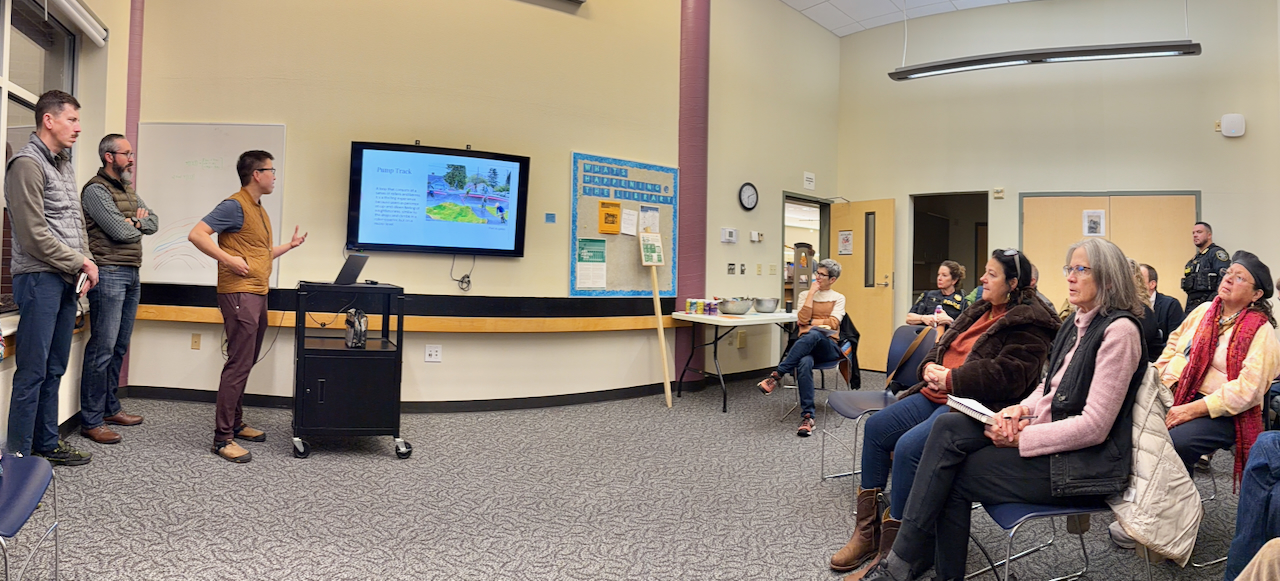
The Friends of West Seattle Bike Park presented their concepts for a proposed bike park they want to see built at Westcrest Park.
Photo by Patrick Robinson
Wed, 10/28/2026
Community members gathered at the Delridge Branch Library on Wednesday, October 28, for the monthly Highland Park Action Coalition (HPAC) meeting led by co-chairs Kay and Barb Bondo. The two-part agenda focused on major developments affecting public space and social services in West Seattle, beginning with a community-led proposal for a mountain bike park in Westcrest Park and concluding with a detailed discussion on the upcoming opening of Glassyard Commons, an RV safe lot and tiny home village located at 7200 2nd Ave SW.
Community Group Proposes Mountain Bike Park at Westcrest Park
The meeting opened with a presentation from Tony Palmieri and Grant Nguyen, steering committee members of the grassroots group Friends of West Seattle Bike Park. The committee, which also includes Lee Anne Hughes, Seamus Dolan, Dylan Marcus, and Andy Carlton, is partnering with the Evergreen Mountain Bike Alliance and Bike Works to bring dedicated off-road cycling infrastructure to West Seattle.
Palmieri and Nguyen explained that Seattle currently offers very limited mountain biking facilities, pointing to the I-5 Colonnade and Cheasty Greenspace as the city's only existing sites. As a result, local families and enthusiasts must often drive 30 minutes or more to specialized facilities outside the city, such as Duthie Hill in Issaquah or Summit Ridge in Black Diamond.
"We're a group of West Seattle residents and we love everything bike related," Palmieri told attendees. "We want to open up this kind of unique recreation opportunity to more of our community here in West Seattle, especially kids who may not have had access to this type of bike riding".
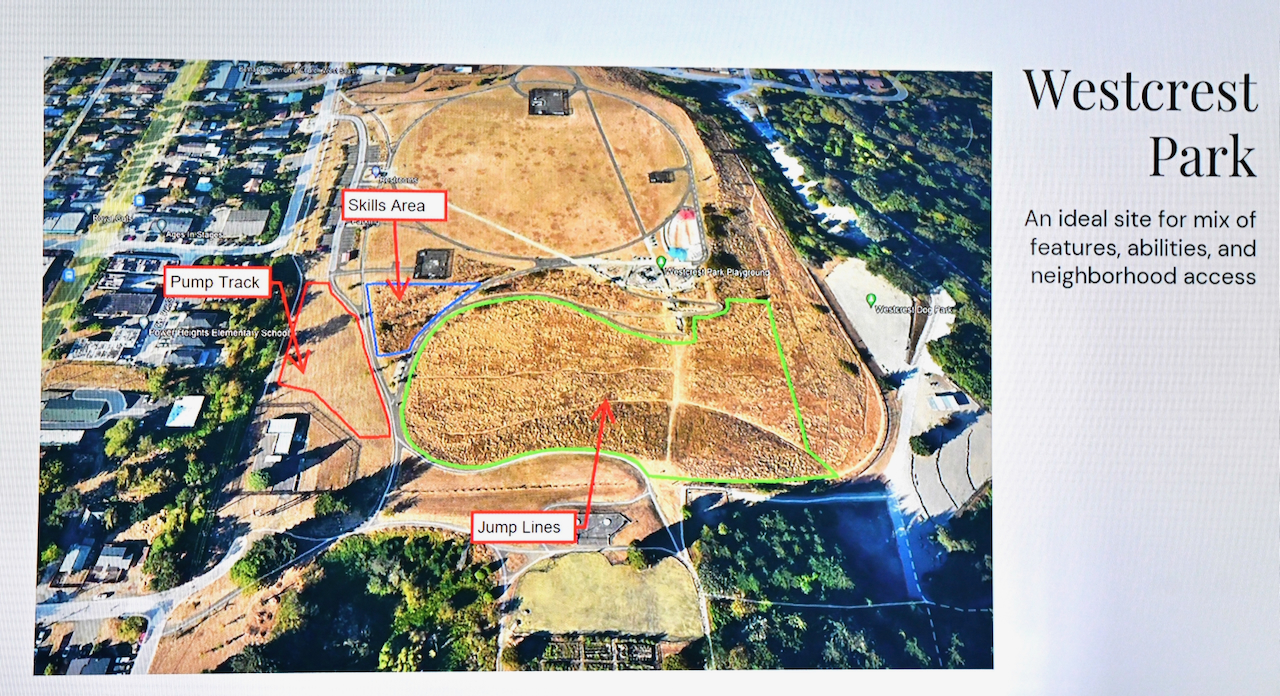
The group proposed a modest, functional bike park covering approximately 180,000 square feet within Westcrest Park on land owned by Seattle Public Utilities (SPU). Key components envisioned for the park include:
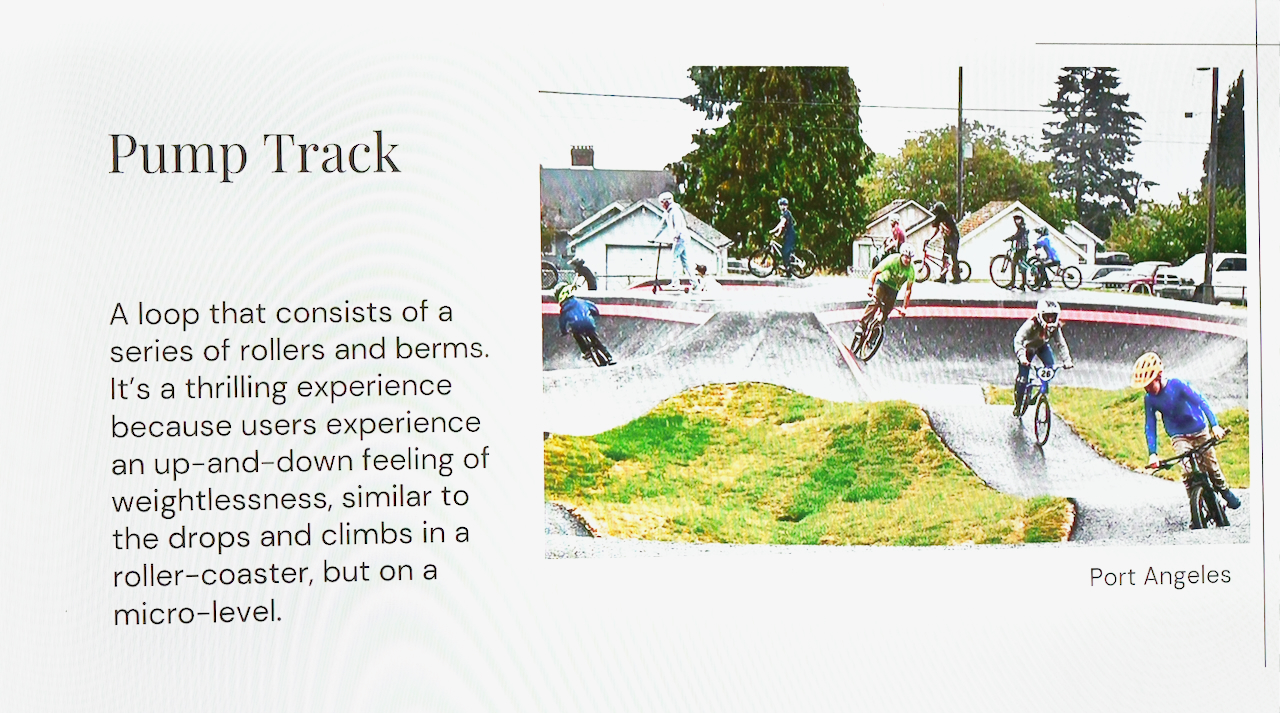
- A Pump Track: A paved or dirt continuous loop featuring undulating rollers and banked turns (berms) where riders generate speed through body movement rather than pedaling. Nguyen noted that the feature is inclusive beyond mountain bikes: "It doesn't just have to be bikes. It can be for mobility scooters, rollerblades, skateboards, or wheelchairs. In Port Angeles, they have an ADA accessible pump track that helps provide safe access for a lot of different users".
- Jump Lines: A network of three to five trails catering to beginner, intermediate, and advanced riders, ranging from gently sloping rollable table-tops to larger steep-faced jumps.
- Skills Progression Areas: Features such as rock gardens, wooden "skinnies," and teeter-totters designed to help riders practice balance and bike handling in a controlled setting.
- Park Amenities and Safety: Envisioned features include a tool stand for bike repairs, a drinking fountain, picnic tables, and design measures prioritizing rider safety.
Nguyen and Palmieri detailed the multi-year site selection process conducted in coordination with Seattle Parks and Recreation and SPU. The group evaluated potential sites based on public transit access, parking, restrooms, gentle terrain slopes (ideally between 1% and 4%), and minimal environmental disruption.
Earlier candidates were set aside due to physical constraints. Riverview Viewpoint was ruled out because its 8% to 10% steep slope only supports fast, technical trails unsuitable for beginners. Riverview Playfield presented severe geotechnical and landslide scarp hazards along Highland Parkway. Westcrest Park emerged as the ideal location due to its gentle 4% grade, existing restroom facilities, and low environmental critical area risks.
During a Q&A segment, residents raised questions regarding tree preservation, e-bike access, and maintaining open park space.
Emphasizing the social benefits of the project, Palmieri highlighted youth involvement in maintaining dirt jump lines. "Having kids out there with shovels having input on how these things are built was one of the best experiences of my childhood," Palmieri said. "It kept me out of trouble because I would go dig dirt all day with my friends, and it gives kids a real sense of ownership".
The project is currently in its community exploration phase. While a project website is under development, organizers are collecting community feedback via email at FriendsofWestSeattleBikePark@gmail.com.
Glassyard Commons RV Safe Lot and Tiny Home Village Set for Late November Opening
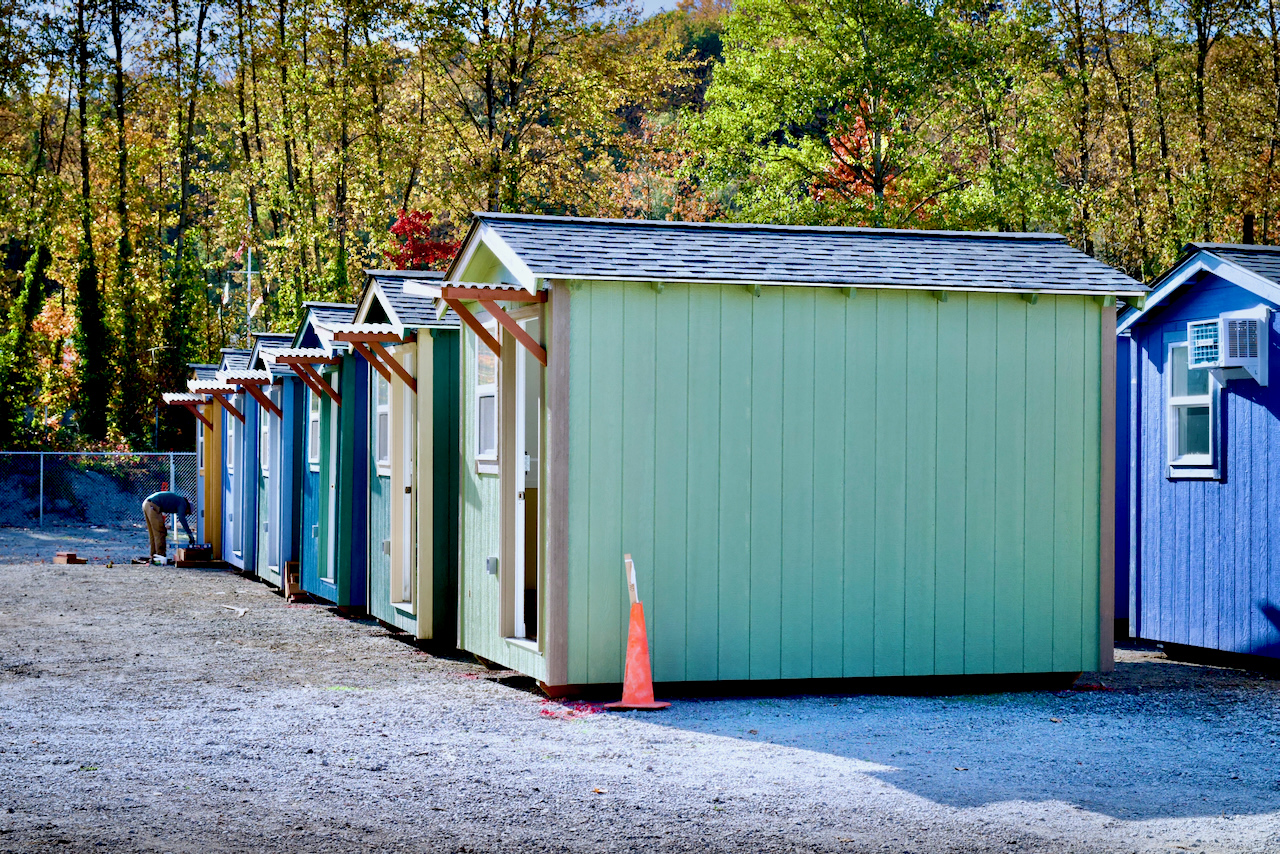
The second half of the meeting shifted to the imminent opening of Glassyard Commons, located at 7200 2nd Ave SW on Washington State Department of Transportation land leased by the City. Operated by the Low Income Housing Institute (LIHI), the facility will feature 92 total spaces, combining a 70-space RV safe lot with 20 tiny houses.
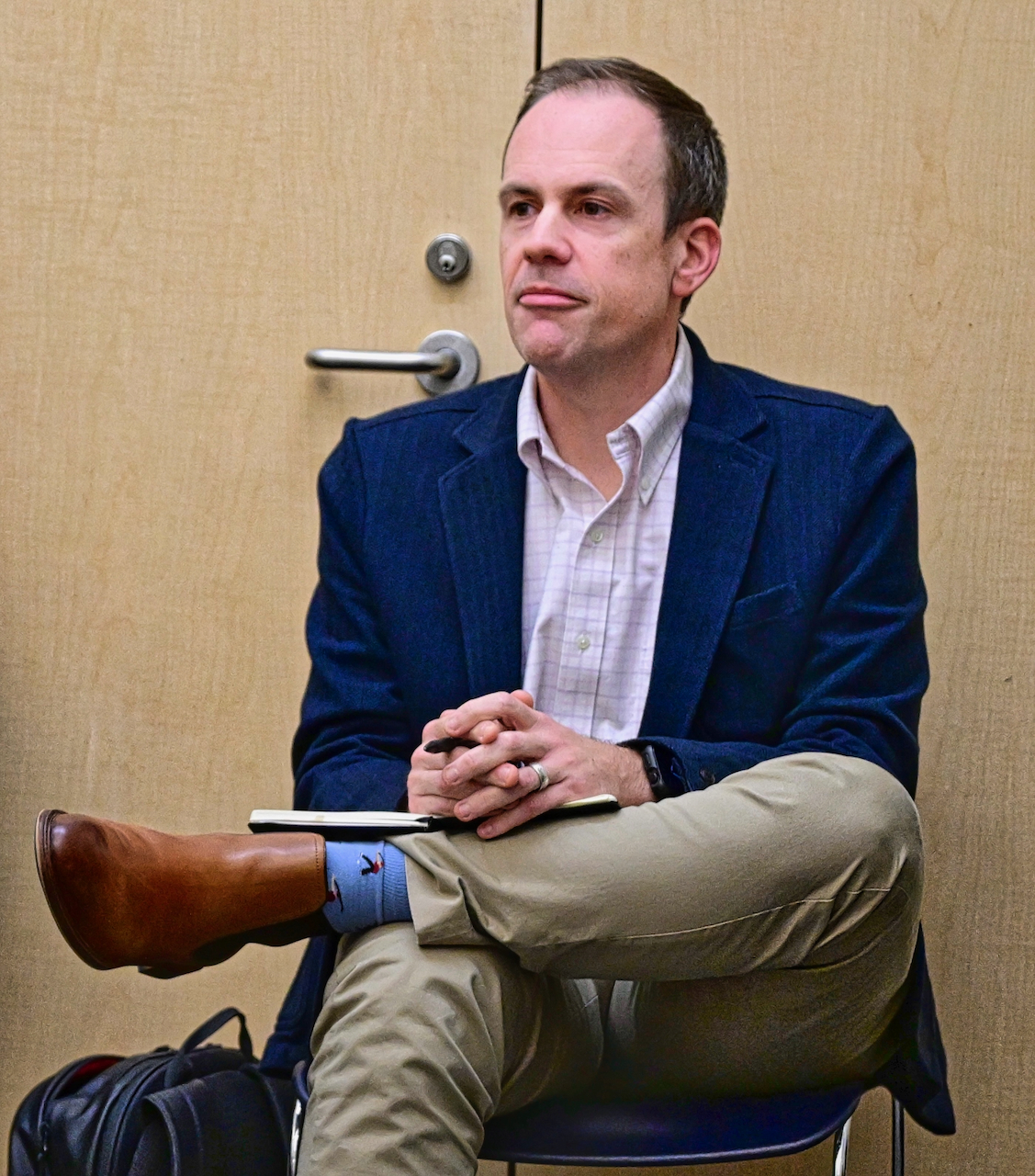
Chris Gibson, representing the Homelessness Division of the Seattle Human Services Department (HSD), announced the expected timeline for the site. "The last I had heard, Glassyard is set to open late November," Gibson told the room. "We are getting close to that, and right around Thanksgiving is the expectation".
Gibson explained that the RV safe lot aims to bring unhoused residents' vehicles off neighborhood streets. For individuals living in severely dilapidated or non-functional vehicles, LIHI will provide a tiny house while decommissioning and demolishing the unusable RV.
Community Demands Public Safety Plan and Greenbelt Protection
While expressing support for the facility's mission, community leaders voiced strong concerns about the surrounding environment, peripheral encampments, and illegal dumping in the adjacent West Duwamish Greenbelt.
HPAC Co-Chair Barb Bondo requested that the City execute a proactive "Shelter Public Safety Plan" and Crime Prevention Through Environmental Design (CPTED) assessment for the area surrounding Glassyard Commons, similar to assessments recently conducted for Bayside Shelter in Interbay and Cloverleaf Village in South Park.
"Our main intent is we want this to be a successful site," Bondo said. "We want people to get all the needs that they could get met there. But we really want the environment around there to be safe and not to have the kinds of things we've seen, such as significant encampments inside the green belt".
Bondo highlighted past public safety incidents, including stolen vehicles set on fire in the greenbelt during the summer, as well as ongoing trash and tire dumping.
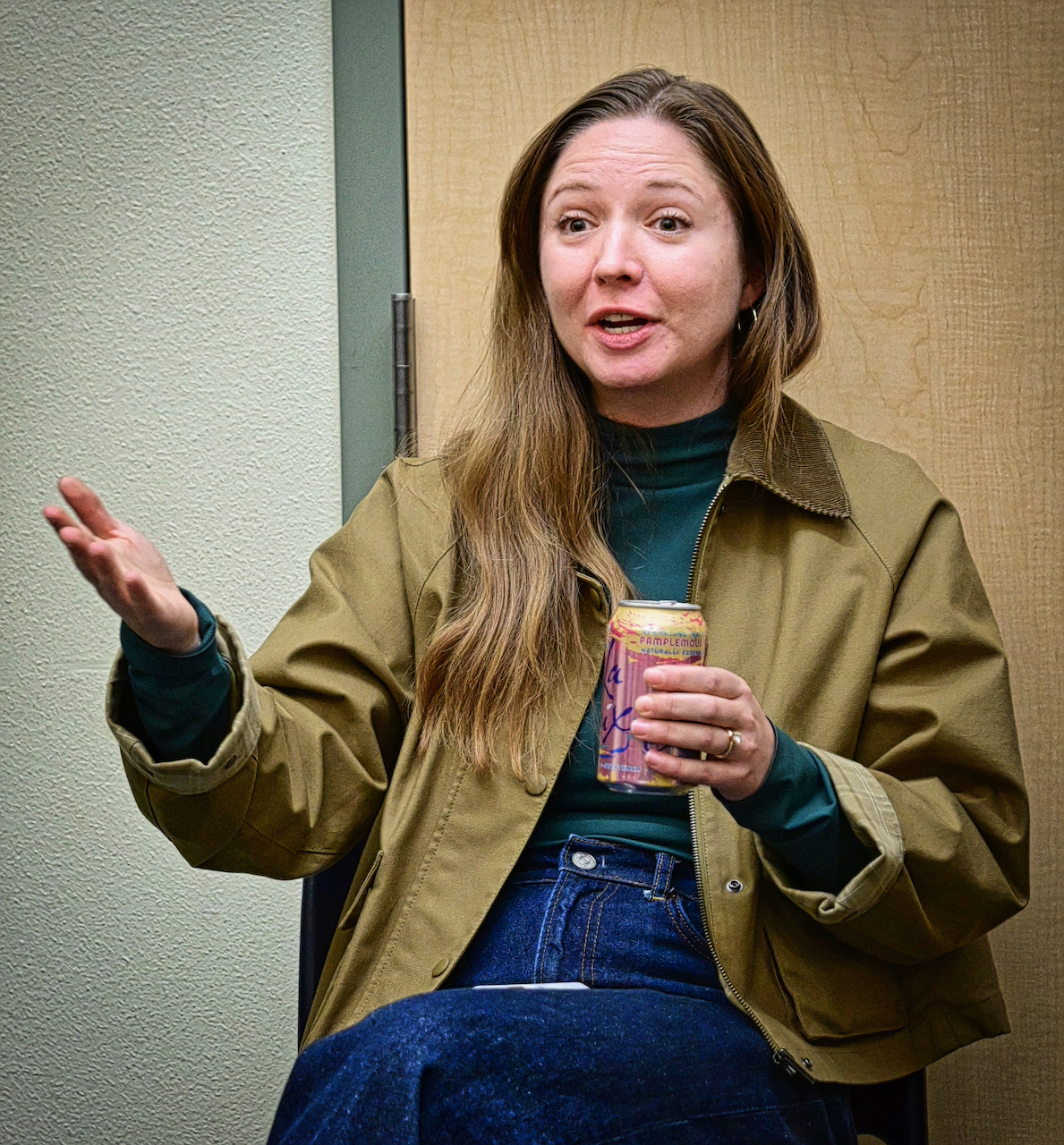
Responding to Bondo's request, Gibson and Nicole Stafford, HSD Planning Manager, confirmed that HSD, the Seattle Police Department (SPD), the Seattle Department of Transportation (SDOT), and the Unified Care Team (UCT) will initiate a surrounding area assessment. "We can definitely go back now and accomplish that," Gibson assured attendees. Stafford added that the assessment will compile multi-agency data to identify hotspots, improve sightlines, and implement environmental design principles prior to and following site launch.
Addressing local residency priorities, Gibson clarified that a minimum floor of 30% of initial shelter referrals will be prioritized for local West Seattle and District 1 unsheltered individuals.
Michael Taylor-Judd, District Affairs Manager for Councilmember Rob Saka's office, explained that balancing local preference with citywide access is essential to prevent creating an informal "magnet" effect on surrounding streets while still serving neighborhood residents.
City Officials Address Encampment Response and Reporting Fatigue
Community members expressed frustration with reporting delays via the city's Find It, Fix It application, citing persistent encampments at major neighborhood entry points.
HPAC Co-Chair Kay Kirkpatrick emphasized the urgency of addressing specific hot spots before Glassyard Commons opens. "We need that corner addressed at Highland Parkway and Marginal," Kay urged. "That is a big camp. It's the entry point to our neighborhood, it sets the tone for the whole area, and it needs to be held clean".
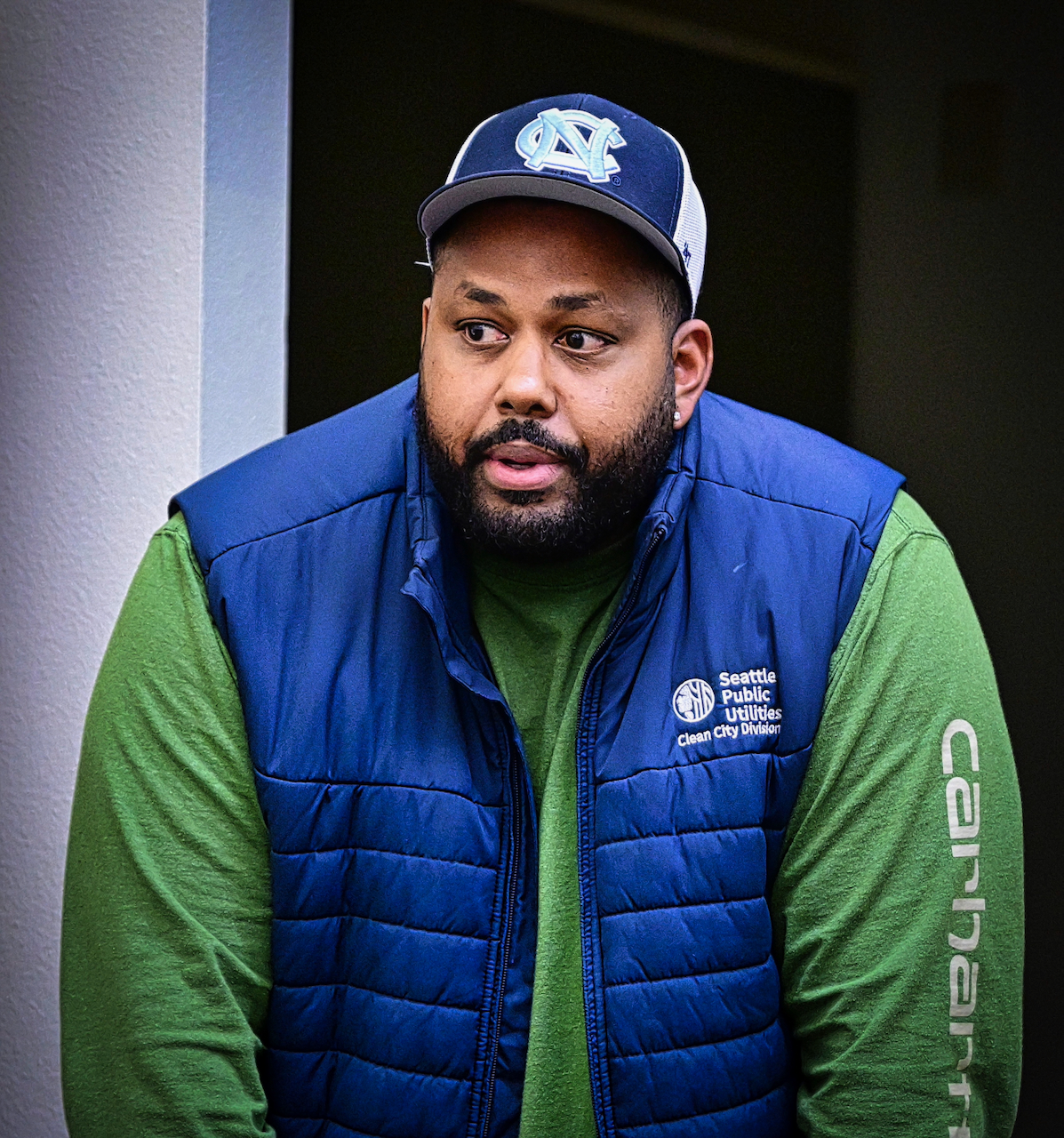
Darius Foster of the Unified Care Team detailed the operational process behind encampment resolution, outlining UCT's three-day acknowledgment window and ten-day field inspection timeframe. Foster acknowledged neighborhood frustration but emphasized the complex legal and human considerations involved.
"Find It, Fix It is definitely the best method," Foster told the audience. "There is a lot happening in the background and we can do a better job of being transparent. We have to lead with compassion regardless of what the perception is. We have to meet folks with empathy and compassion, ensure that we have proper protocols in place to offer support, and align that with available shelter space citywide".
To address community oversight going forward, HSD officials noted that LIHI will establish a Community Advisory Committee (CAC) for Glassyard Commons, offering local residents and business owners a structured monthly forum to interface directly with facility managers and city representatives.
