
The future of Westside Neighbors Shelter: Keith Hughes addresses rumors, outlines operational changes and key challenges
Neighbors have been demanding change for years and now some are in the works
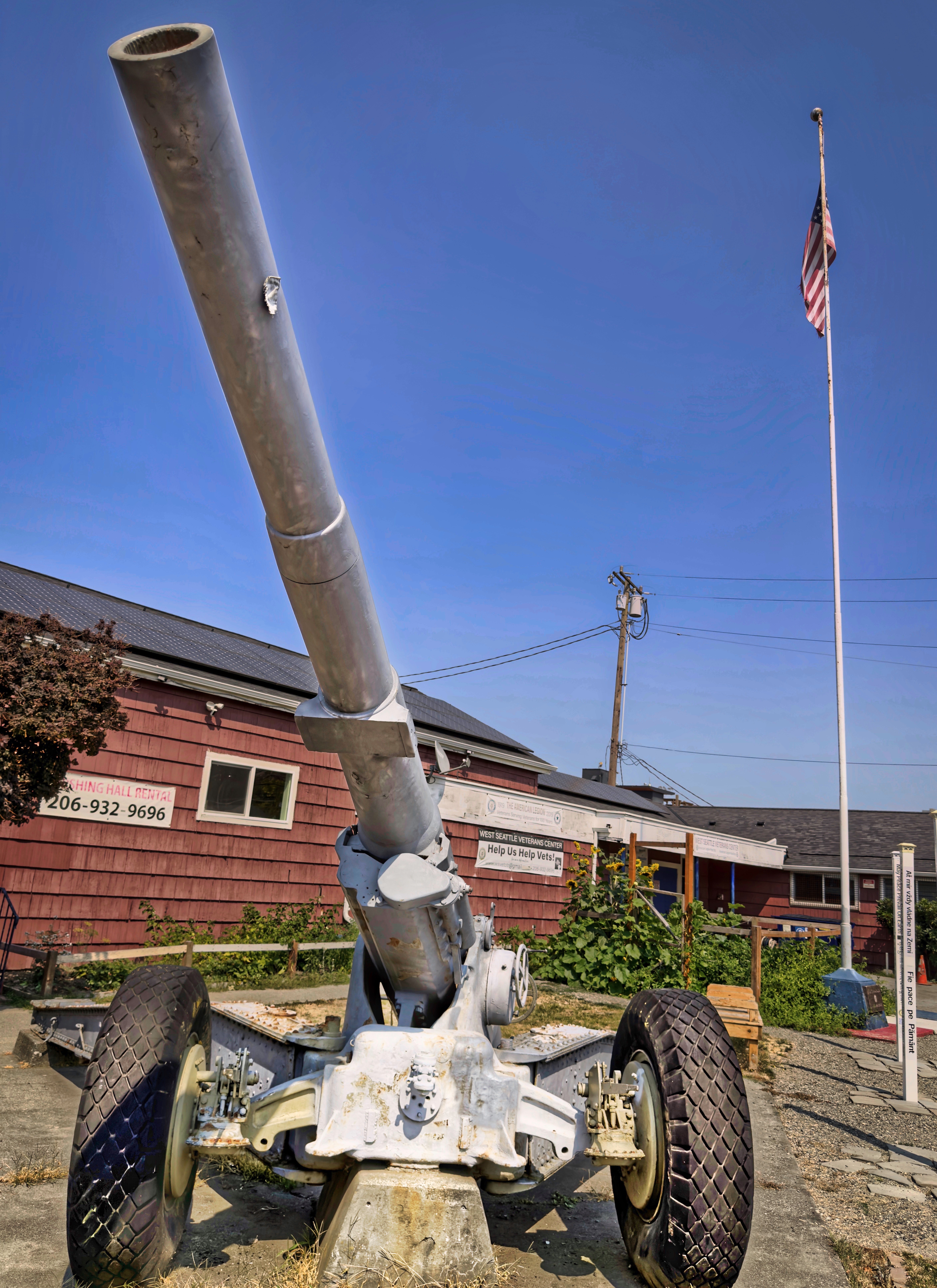
A 37 mm M3 Anti tank gun stands outside the Westside Neighbors Shelter at 3618 SW Alaska Street. The shelter (a former American Legion Post) has been the subject of controversy for years due criminal activity nearby.
Photo by Patrick Robinson
Sat, 08/15/2026
Questions and rumors have been swirling around the future of the Westside Neighbors Shelter in West Seattle for the last few weeks. With some community members speculating that its director, Keith Hughes, would be leaving and operations likely curtailed, local residents have expressed growing concern over what will happen to the area's vulnerable unhoused population when the cold weather returns.
In an in-depth interview, Hughes offered to clarify the facts, debunk local rumors, and outline the extensive operational and legal strategies being prepared to address community concerns regarding crime and disorder.
One of the primary sources of confusion in the community has been the shelter’s current status. Hughes clarified that the facility is not permanently closed, nor did he abruptly step down; rather, it operates as a seasonal cold-weather shelter, something he shared previously in mid July.
"The shelter at the Legion Hall that I operate is a cold weather shelter," Hughes explained. "It's open from November through the end of March. So, it's not open right now".
Hughes also addressed several "fanciful" rumors that have circulated regarding the ownership of the shelter’s physical site. Chief among them was the speculation that the American Legion Hall had been sold to him personally for a single dollar.
"No," Hughes stated flatly . "The West Seattle Veterans Center owns the building". Hughes added that the Veterans Center is governed by a local board consisting of four West Seattle military veterans.
That being said, Hughes is the registered Agent for the group which includes:
Current Officers / Governors
That effectively means he's the one in charge.
While the physical doors are currently closed for the summer off-season, Hughes emphasized that the board of directors is actively working behind the scenes to prepare for the upcoming winter. "We're working on several different options... and seeing what we can do to do it better," he said.
Operating a seasonal shelter is an immense administrative and financial challenge. Hughes revealed that running the Westside Neighbors Shelter last winter, which was open for a six-month stretch from the last weekend of October through the first weekend of April, cost a staggering $330,000.
A major portion of these expenses stemmed from mandated safety regulations. According to Hughes, when the overnight shelter capacity was capped at 36 guests, the facility was required to employ a dedicated staff of three: one administrator and two security personnel.
"At $50 an hour per person, that's a lot of money," Hughes noted. At $150 an hour for three staff members, a full week of round-the-clock operations would cost $25,200 in staffing alone. At $50 per staff-hour, Hughe's $330,000 budget could cover 6,600 hours—roughly eight full-time employees for a five-month shelter season but clearly other expenses are being incurred.
To date, the shelter has been financed almost entirely through private donations. Operating as an official 501(c)(3) nonprofit corporation, the shelter relies on online donations through its website, westsideneighborsshelter.org, which features a QR code for tax-deductible contributions.
However, funding remains a constant battle, particularly during the summer. "It's as with any nonprofit in this day and age, it is a constant struggle," Hughes said, noting that while a special fundraising campaign in December kept them afloat through the end of last winter, average off-season donations drop to just $3,500 to $4,000 a month. "People don't think about needing to help a cold weather shelter when it's summertime".
The shelter also relies heavily on food donations, receiving weekly deliveries from the West Seattle food bank, individual community members, and a local group that salvages surplus food from the Costco cafe. "We serve a lot of leftover pizza," Hughes joked.
Despite the shelter's humanitarian mission, the surrounding neighborhood has struggled with significant spillover effects. While official records show no pattern of violent crime originating inside the shelter itself, the immediate vicinity has repeatedly been described by neighbors and business leaders as a hotspot for open-air drug use, theft, and chronic loitering.
At an October 2025 Southwest Precinct Advisory Council meeting, residents described the area around the shelter as a "magnet area for drug dealing," noting that narcotics dealers backed their vehicles into nearby spaces "every single night" to conduct transactions. Local business owners and residents reported seeing shelter guests in severe "fentanyl slump" states in Junction Plaza Park.
This is all in full view of young children at Bright Horizons which has a fenced, outdoor playground across the street.
Furthermore, community members highlighted serious safety incidents, including two gunpoint robberies in the vicinity during 2025, one occurring near the shelter in May and another on a local transit bus. The executive director of the West Seattle Junction Association described the resulting economic and community impact on local businesses as "extreme," leading to widespread frustration that shelter operators were under-resourced and "in over their heads".
One neighbor says he has compiled “gigabytes of visuals” documenting incidents of, "businesses being harassed, drug deals, sexual favors, you name it." Neighbors say the city has told them intervention is unlikely unless an incident involves a gun or homicide. The former Alki Lumber location just around the corner which was vacated following the sale of the business has had to hire security to patrol the property. The Rotary Totem Pole park one block away was the scene of a violent attack and death, leading to a sweep of a large encampment in the nearby greenbelt last spring.
One of those most severely impacted has been Mountain to Sound Outfitters whose recreational business is next door. Owner Greg Whittaker reports that the shelter's operations and his personal conflict with Keith Hughes have severely impacted his business in several ways:
Neighbors want the city to act decisively before the conditions and violence get worse not after.
Hughes acknowledged these challenges openly. "I fully understand the impact on the neighborhood, and we're trying very, very hard to make improvements and changes to reduce that impact," he stated.
SIDEBAR: A Statistical Breakdown of SPD calls to the area of the Shelter
The Westside Neighbors Shelter at 3618 SW Alaska Street in West Seattle is located directly within Beat W2 of the Southwest Precinct. Because of this geographic alignment, the dispatch calls recorded for Beat W2 represent the data most likely to have occurred at or in the immediate vicinity of this shelter. All data in these records was pulled on May 22, 2026, meaning that the figures for 2026 represent a partial year.
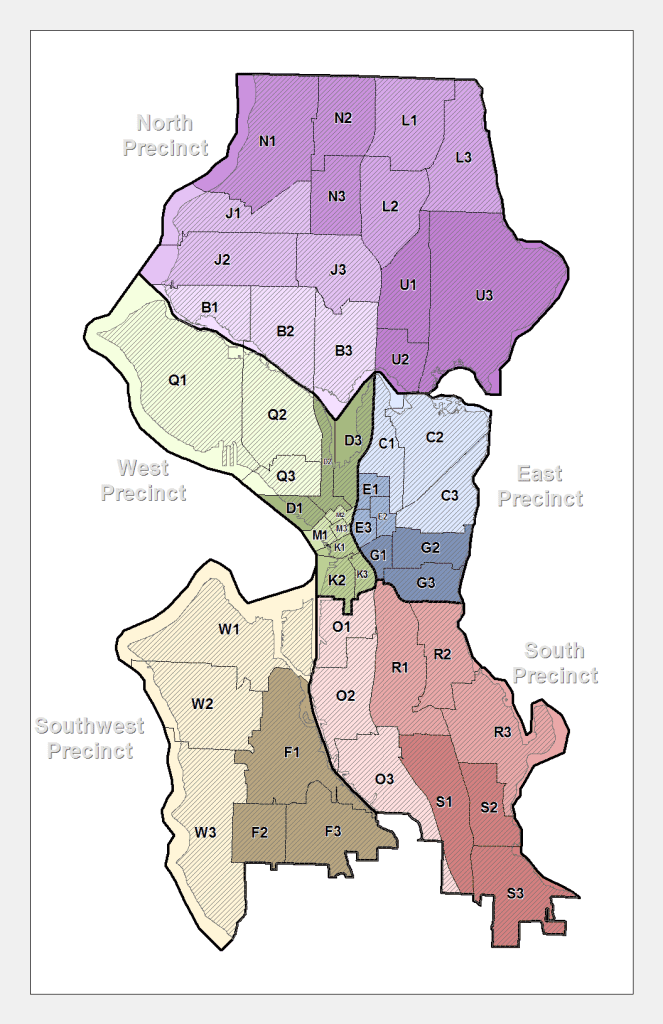
Total Dispatch Calls in Beat W2
Looking at the total dispatch call volume within Beat W2—which includes Premise Checks, Mischief and Nuisance, and Narcotics—there is a dramatic upward trend. Total dispatch calls rose steadily from 160 in 2022 to 229 in 2023, dipped slightly to 188 in 2024, and then surged to 649 in 2025. For the partial year of 2026, the beat has already recorded 255 dispatch calls. This spike was heavily influenced by proactive police "Premise Checks," which jumped from 101 in 2024 to 390 in 2025, and stand at 137 for the partial year of 2026.
Community-Generated Calls and Precinct Comparison
When filtering out officer-initiated premise checks to look only at community-generated dispatch calls—which represent direct complaints and reports from the public—the upward trend remains prominent. In Beat W2, community-generated calls grew from 57 in 2022, 84 in 2023, and 93 in 2024, before more than doubling to 240 in 2025. In the partial year of 2026, there are already 107 community-generated calls.
Comparing Beat W2 to other beats in the Southwest Precinct reveals that the activity in the shelter's beat is disproportionately high. In 2025, Beat W2's 240 community-generated calls far outpaced all other beats; the next closest beat was F2 with 157 calls, while neighboring West Seattle beats W1 and W3 recorded only 65 and 24 calls, respectively.
Narcotics Dispatch Spikes
Narcotics-related dispatch calls (excluding public marijuana use) are particularly concentrated in Beat W2. Total narcotics calls in W2 rose from 21 in 2022 to 28 in 2023, 41 in 2024, and reached a high of 99 in 2025. In the partial year of 2026, Beat W2 has already logged 76 narcotics calls. These figures are the highest in the entire precinct by a wide margin. For context, during the 2025 peak, the second-highest beat for narcotics was F2 with 46 calls, whereas adjacent beats W1 and W3 had just 18 and 11 calls, respectively.
In response to intense community feedback, shelter operators, local businesses, the Seattle Police Department (SPD), and city leaders are utilizing a comprehensive suite of legal and operational mechanisms to enforce safety, manage perimeter behavior, and drastically reduce neighborhood impacts.
Some apply here and some don't.
Late in 2025, the shelter signed a formal Memorandum of Understanding (MOU) with the SPD Southwest Precinct. This agreement gives police officers full authority to enforce trespassing laws on the shelter's private property immediately, without needing to wait for staff approval. SPD utilizes a structured, progressive enforcement ladder: Verbal Warning → Citation → Arrest. This MOU allows officers to immediately remove problem individuals, issue citations, and arrest repeat offenders, making it one of the most immediate tools for reducing perimeter disorder.
To discourage drug dealing and loitering, SPD has increased its patrol visibility around the facility. This includes parking a marked patrol car on-site directly after breakfast hours to prevent crowds from lingering on the sidewalks or nearby park spaces.
Following community-shelter meetings, operators committed to drafting a formal Good Neighbor Agreement. While historically voluntary, the Seattle City Council is moving toward a uniform legislative framework to make GNAs legally enforceable citywide. Enforceable GNAs (unlike the previous agreement) will legally bind shelters to specific standards, including mandatory security measures, required staffing ratios, strict perimeter management, and swift, documented response timelines for neighborhood complaints.
A major legislative lever under consideration is Council Bill 121185 (specifically Amendment 6). If passed, this ordinance would legally require shelters to submit a formal public-safety and neighborhood-mitigation plan before opening, and the standard can be applied retroactively to existing shelters like Westside Neighbors. These state-mandated plans would legally require operators to maintain:
Some public shelters in other parts of the city are funded in part through public contracts with the City of Seattle, King County, and the King County Regional Homelessness Authority (KCRHA). Following recent audits highlighting significant accountability failures, the City and County are reclaiming direct control over these contracts. Under this restructured oversight, public funders will enforce strict, performance-based metrics. If a shelter operator fails to manage neighborhood impacts or meet safety standards, the city has the legal lever to modify, suspend, or completely reassign the operational contract to a more capable provider. However, In public statements addressing shelter operations, Hughes has noted that while the shelter has previously explored options for sustainable government partnership and grants, no public funding contracts have been awarded or established.
If a property continues to generate persistent criminal activity and the operator fails to take corrective action, neighbors and businesses have the legal right to petition the City Attorney to declare the site a chronic nuisance. Under this law, the City can legally compel the property owner to implement mandatory security upgrades and operational changes, levy heavy fines, or, in extreme cases, force a temporary closure of the facility.
Mayor Katie Wilson's new Shelter Accelerator Initiative is restructuring shelter funding (again not applicable here) and municipal oversight. This policy lever gives the City more direct, centralized control over local service providers, allowing administrators to impose immediate funding conditions and safety requirements on shelters that fail to cooperate with their host neighborhoods.
For the 2025–2026 winter season, the shelter's board implemented significant internal changes to reduce disorder:
Local residents and business owners are encouraged to actively document repeated instances of drug activity, trespassing, threats, and negative impacts on commerce or public spaces. This community-driven data is legally essential, as it provides the necessary evidentiary foundation required to trigger contract enforcement, enforce GNAs, mandate public-safety plans, and back chronic nuisance petitions.
While neighbors have argued that closing the shelter would eliminate local crime, Hughes strongly countered this assumption. He argued that shutting down the physical facility would not make unhoused individuals disappear; instead, it would scatter them into hidden, inaccessible areas, making it nearly impossible for outreach workers to help them.
The shelter works closely with two prominent third-party outreach organizations: Reach and Anything Helps. These groups deploy case managers to work directly with unhoused individuals to secure counseling, medical care, and permanent services.
"If you're a case manager and you've got 20 people assigned to you... and they're living in a tent in the blackberry brush down above the golf course somewhere, it's pretty hard for you to find them and get to them and help them," Hughes explained. "If there's a place for them to go to, if nothing else, a place to go and get a meal, at least the case managers know where to find them and be able to work with them".
Hughes also weighed in on the broader philosophical debate surrounding homelessness, siding firmly with the "Treatment First" model over the "Housing First" approach championed by some city policymakers.
"I personally don't believe that the housing first model is a correct model for dealing with the problem," Hughes said. He argued that placing individuals directly into housing without addressing underlying addictions or mental health struggles is dangerous and ineffective.
"At the one end, you have what the City of Seattle's been doing for years—sweeping a camp away, and all the people go around the corner and down the street two blocks and set up another camp. Totally useless," Hughes said. "And on the other extreme is the housing first model, where you take somebody who's been living in a tent for the last three or four years and you stick them in a wooden box... and now they can go in their tiny wooden box and lock the door and kill themselves with fentanyl that much faster, and nobody to help them".
Instead, Hughes supports the principle of "Treatment First," an approach heavily advocated by organizations like We Heart Seattle. While Hughes clarified that he does not agree with We Heart Seattle's specific tactics or the way their founder, Andrea Suarez, conducts access to treatment, he fully supports the core concept.
"I'm in agreement with that principle," Hughes said. "I think they need to be in a situation where the case managers can work with them and get them into treatment first".
Looking ahead, a new $3.3 million regional tiny home village and RV park, known as Glassyard Commons, is scheduled to be built on 2nd Avenue SW near West Marginal Way by November.
Some community members at recent public safety meetings argued that once Glassyard Commons opens, the Westside Neighbors cold-weather shelter will no longer be necessary.
Hughes warned that this is a mathematical and logistical impossibility.
"The assumption that when they open a tiny home village down there with 100 places in it that a shelter is no longer needed, I think is a false assumption," Hughes stated.
Hughes pointed out that Seattle's unhoused population is estimated to be between 6,000 and 10,000 individuals. "One hundred tiny homes doesn't go very far," he said, questioning whether local West Seattle residents on existing case management care lists would even receive priority placement in the new facility.
At nearly 79 years old, Keith Hughes has retired three times in his life from various careers. He could easily spend his days relaxing on a porch, free from the intense public scrutiny and immense operational stress that comes with running a shelter.
When asked why he continues to do this demanding work, Hughes offered a simple, powerful explanation.
"Because it needs to be done, and I have the ability to make a difference in this arena," Hughes said. "I'm constantly hearing people say, 'Somebody should do something about this.' And then I look in the mirror and I have to say, 'You are somebody. Do something about this.' And that's why I'm doing it" .
As the board continues to evaluate five different structural proposals to find a safe, sustainable formula for the coming winter, Hughes remains hopeful that the community can come together to find a balanced solution.
"Having no shelter is not the answer," Hughes concluded. "And having a fully wide-open shelter that runs amok like it did last year is not the answer. I hope we can find a formula... that continues to make a difference without doing irreparable harm to the community".

© 2025 Robinson Communications Inc. All Rights Reserved.