
LETTER: Sound Transit’s renderings mask the environmental reality at Pigeon Point
LETTER: Sound Transit’s renderings mask the environmental reality at Pigeon Point

Screenshot of video by Sound Transit
Sun, 10/11/2026
Dear Editor,
The "flattening" of this landscape—and the gloss over the highly criticized segments of the West Seattle alignment, including the Pigeon Point hillside and its Great Blue Heron rookery—highlight how 3D marketing renderings selectively transform massive, invasive engineering into an unrealistically clean and manicured public amenity.
The severe reality of what is planned for Pigeon Point involves several critical factors:
- Because the light rail must transition from a massive, high-elevation bridge over the Duwamish River and land directly into the steep slope of Pigeon Point, standard tracks cannot just sit on the existing ground.
- Sound Transit’s approved design requires extensive excavation, literally cutting deep into the steep hillside canopy.
- To prevent massive landslides on the destabilized hill, the plan requires installing a series of heavy, multi-layered concrete retaining walls and overlapping terraces.
While the renderings depict manicured green grass and inviting pedestrian paths, the ecological reality is the complete removal of mature, deep-rooted forest canopy that currently stabilizes the hillside and shelters wildlife.
The Great Blue Heron colony at Pigeon Point is federally protected. Our central concern is how to enforce the permanent 300-foot buffer zone intended to shield nesting pairs from urban stress. Sound Transit’s preferred alignment cuts directly through portions of this critical habitat and its associated wetlands.
Early geotechnical drilling, utility surveying, and preliminary clearing along the lower edge of the slope (near Delridge and Spokane Street) have already chipped away at the canopy fringe. For a sensitive species like the heron, noise and canopy thinning in the buffer zone can cause nesting failure long before the actual train tracks are built.
The flyover video uses a widespread 3D rendering tactic: forced perspective and spatial compression.
- By elevating the camera angle slightly above, or smoothly gliding down the center of the guideway, the tracks appear sleek and slender.
- In reality, a twin-track light rail guideway demands a massive horizontal right-of-way, flanked by emergency walkways, electrical systems, and structural columns. On a hillside "retained cut," the true physical footprint is significantly wider and more disruptive than the animation suggests.
The City of Seattle pushed back strongly during the Environmental Impact Statement (EIS) process. However, according to Ann Dornfeld (KUOW) May 2025, the city initially withheld formal concurrence over the loss of Seattle Parks and Recreation land at Pigeon Point due to these severe construction impacts.
Marilyn Kennell
Marilyn Kennell is member of Rethinkthelink.org, an advocacy and information hub formed by a group of West Seattle residents who are concerned about Sound Transit's proposed Link light rail extensions, particularly the West Seattle Link Extension and broader ST3 (Sound Transit 3) plans.
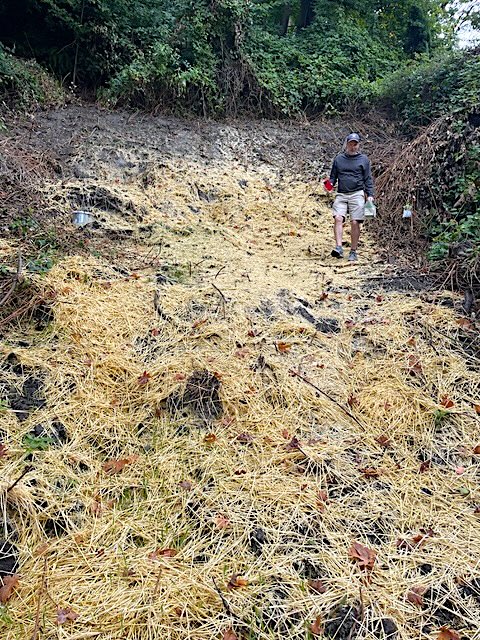
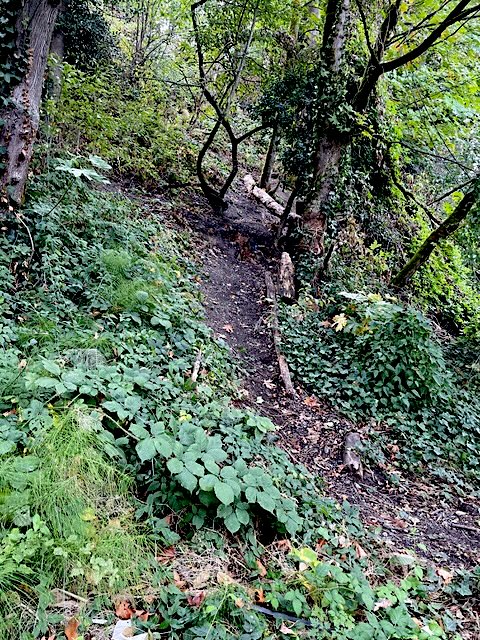
photos by Marilyn Kennell (September 2023)
